|
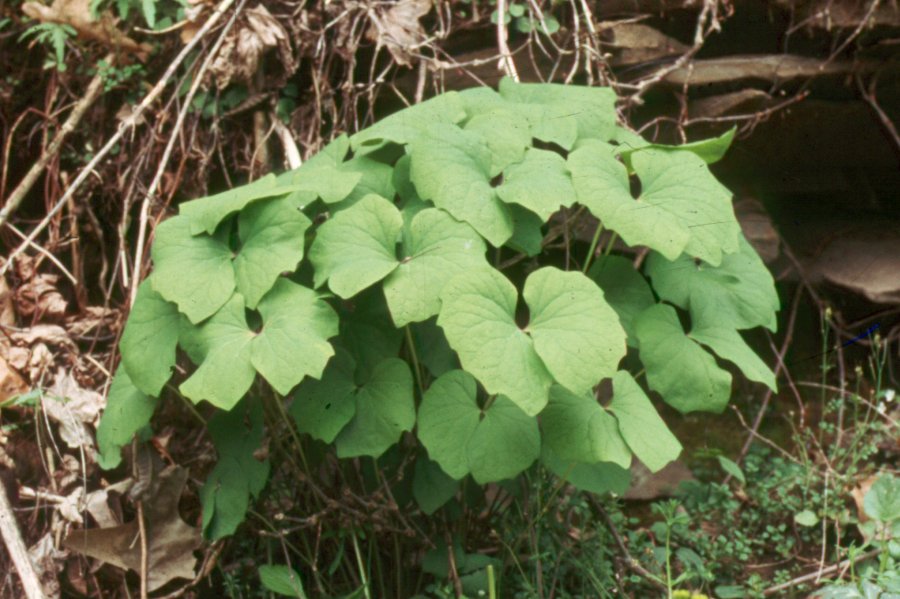
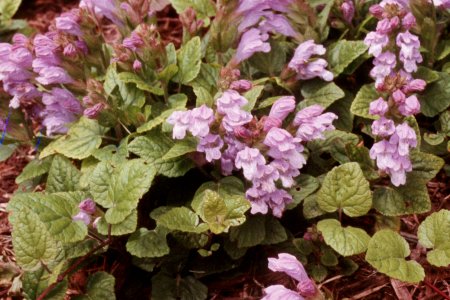
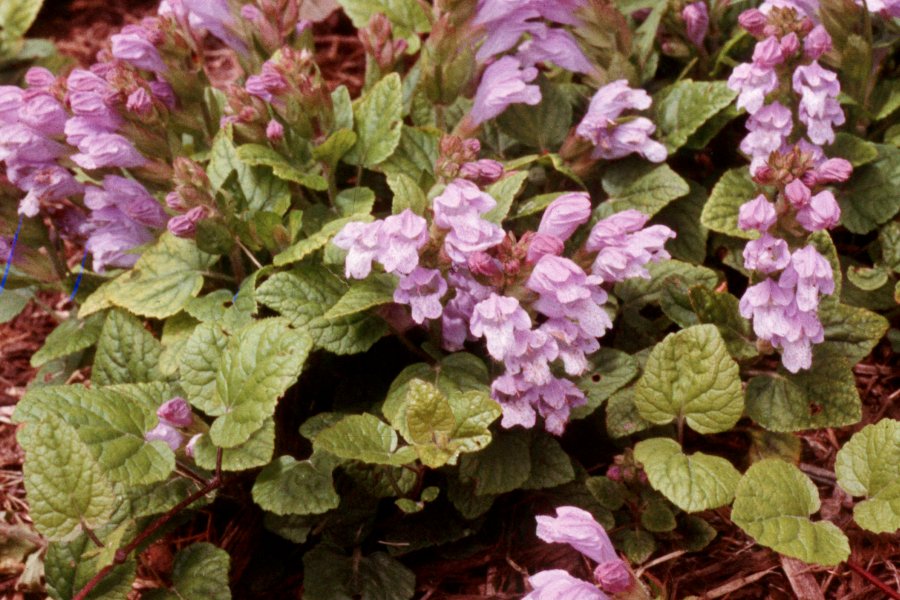
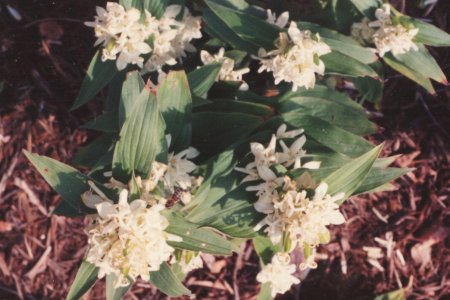
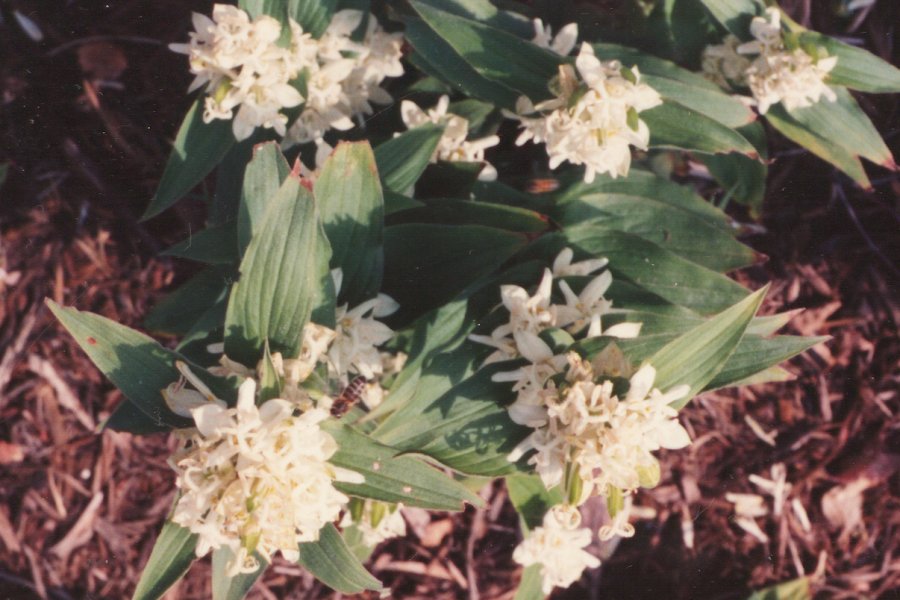
Sunshine Farm and Gardens
Rare and Exceptional Plants for the
Discriminating Gardener and Collector
|
Home :
Plant List
This plant list isn't designed to be a sales catalog, rather,
it is meant as an informative list of some of our interesting and
worthwhile plants.
The definitive, up-to-date list of what's in production for sale resides in
Barry's head.
Please e-mail Barry's head
to inquire about availability.
Where photos are available, you can choose from the following
three sizes depending on the speed of your connection and monitor
resolution:
- sm - 7-20K, 150 x 225 pixels
- med - 30-50K, 300 x 450 pixels
- lg - 100-160K, 600 x 900 pixels
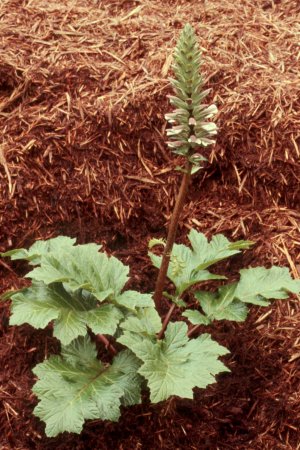
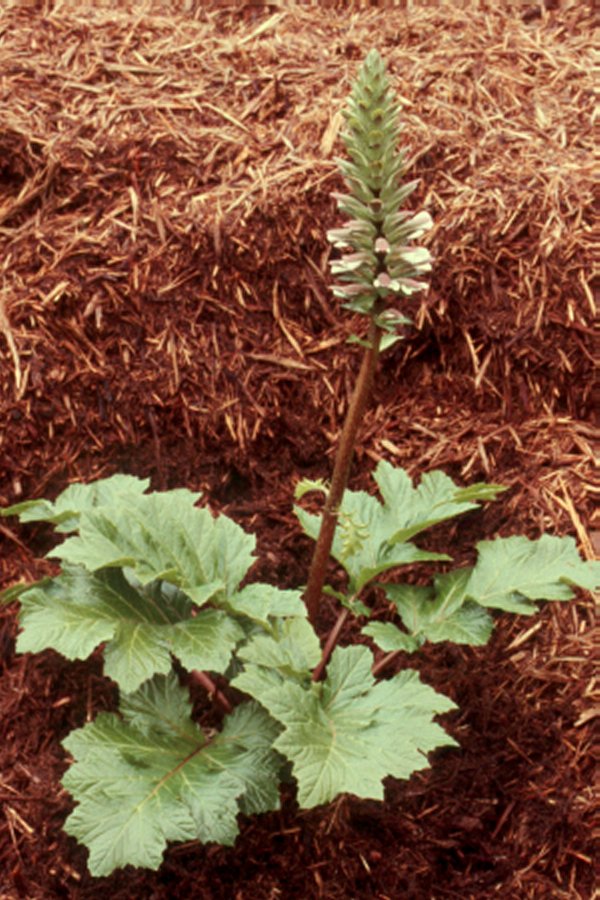
- Acanthus mollis 'New Zealand Gold'
[Photo:
sm
med
lg]
- Huge golden foliage on a very striking plant.
Comes up very late in the Spring and although it will rarely flower in
zone 5 or 6, is a magnificent and hardy foliage plant. When it does flower,
a 1-1 1/2 inch flower stem shoots up from the center of the plant
to about 24"-36" with unusual almost Chelone like white flowers.
- Aceriphyllum rossii
[Photo:
sm
med
lg
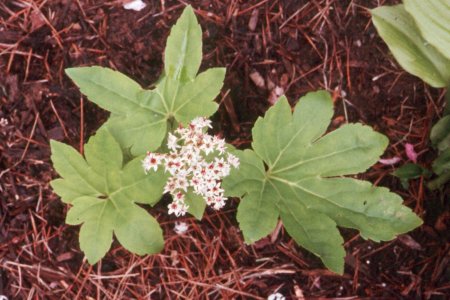
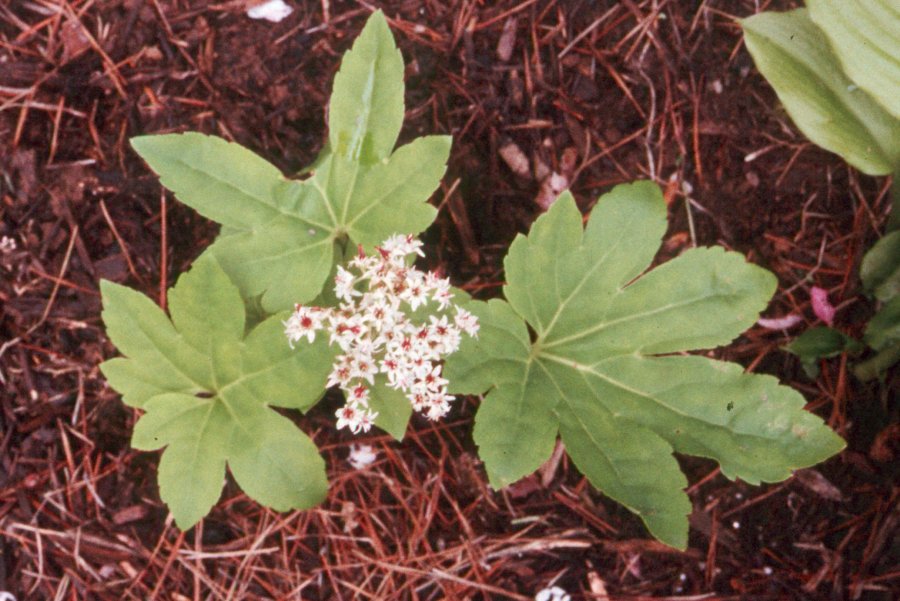
- Acer as in Maple, what a perfect name for this genus. In the early Spring you have a long lasting spray of crisp white flowers and the foliage holds up well all the growing season. I grow it in a rich moist bed that gets a few hours of sun in mid day. Height is about 6" -12" and it forms a clump with multiple divisions of about the same size.
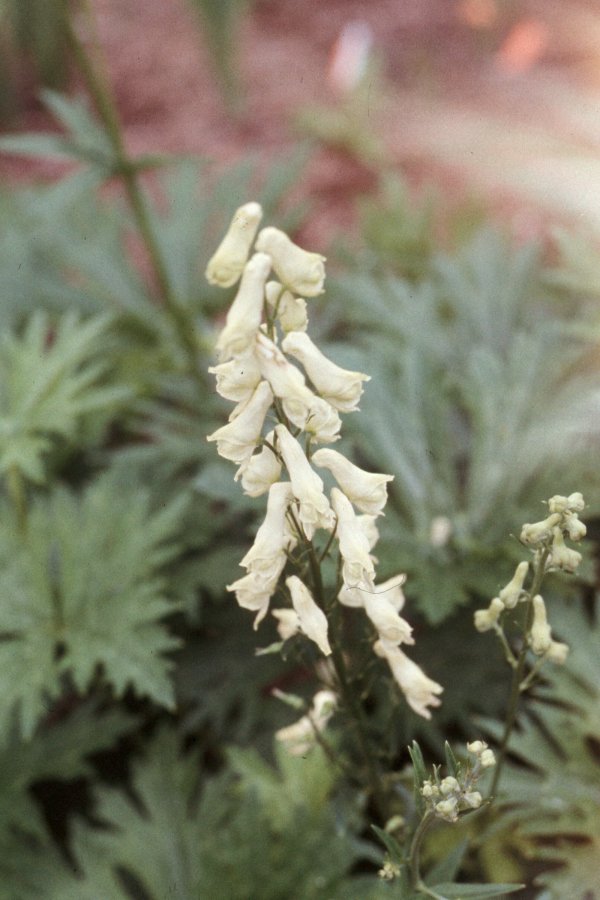
- Aconitum lycoctonum
[Photo:
sm
med
lg]
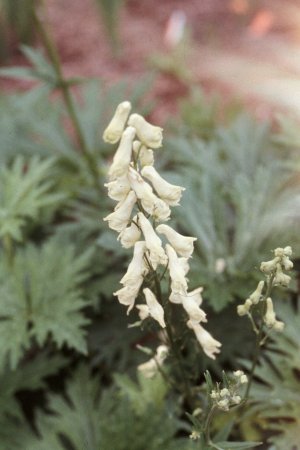
- Interesting white flowers that explain without a doubt, why the common name for plants of this genus is "Monkshood". As I write this, I can't remember much about this plant as far as flowering time or size goes. However, I've never been disappointed by the performance of any plant in this genus or in the entire Ranunculaceae family.
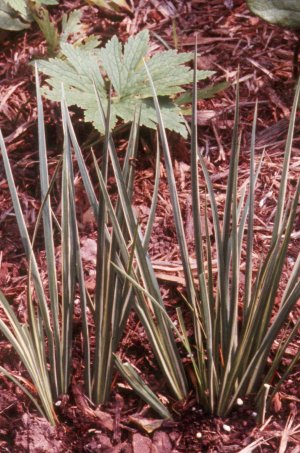
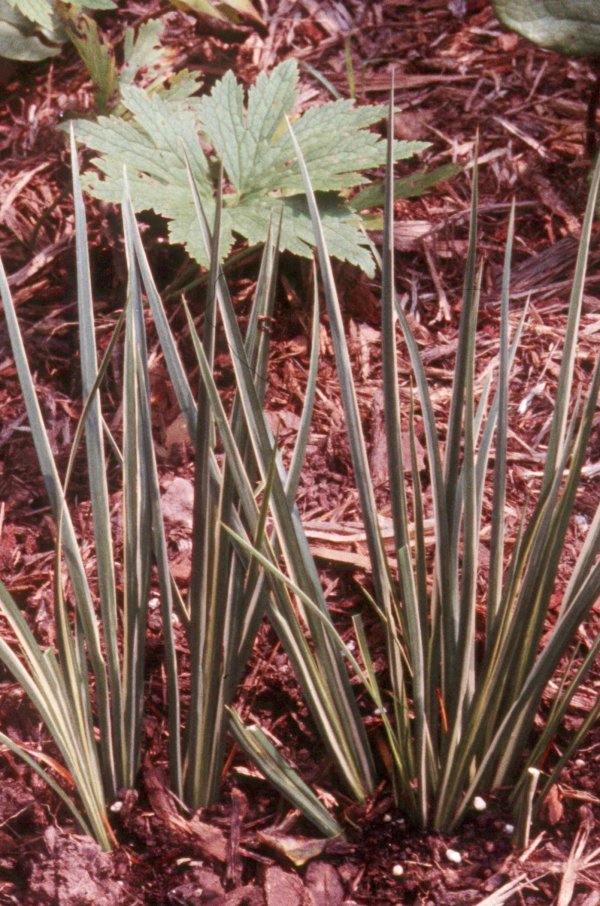
- Acourus graminea 'Himemasamune'
[Photo:
sm
med
lg]
- Boy, where
do the Japanese come up with these names? But in spite of it's mouthful
of syllables, this is one adorable little plant. Only 3"-6" tall and attractively
variegated, it loves moist, boggy conditions, but will do well in any moisture
retentive soil.
- Acourus graminea 'Dwarf Green'
- An iddy biddy
selection of the popular pond side, marginal and bog plant that will actually
do well in an average mulched garden soil. Only gets about 3"-6" tall.
- Acourus graminea 'Dwarf Gold'
- A golden form
of the above.
- Acourus graminea 'Ogon'
- A much taller and
golden - green variegated form of the two guys above. 8"-16" tall.
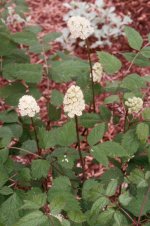
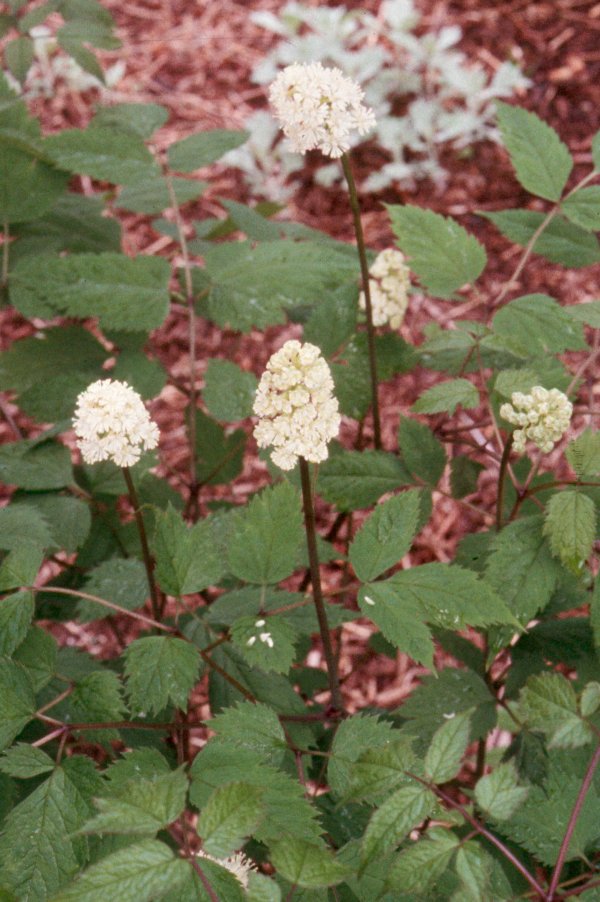
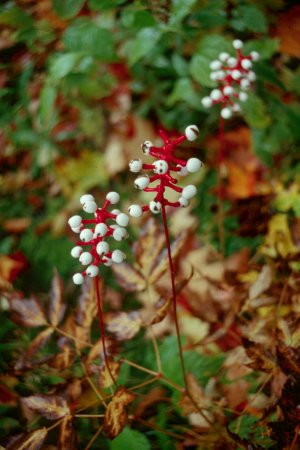
- Actea pachypoda
[Photo:
sm
med
lg]
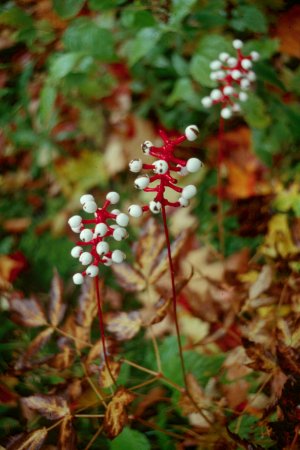
- The common name of this native garden
beauty says a lot about the plant, "Dolls Eyes", but, that only tells you
about the Autumn interest of this old timey favorite. For in the Spring
you have fragrant white soft and fluffy flowers over lush green dissected
foliage. Over the Summer months, these flowers slowly turn into greenish-yellow
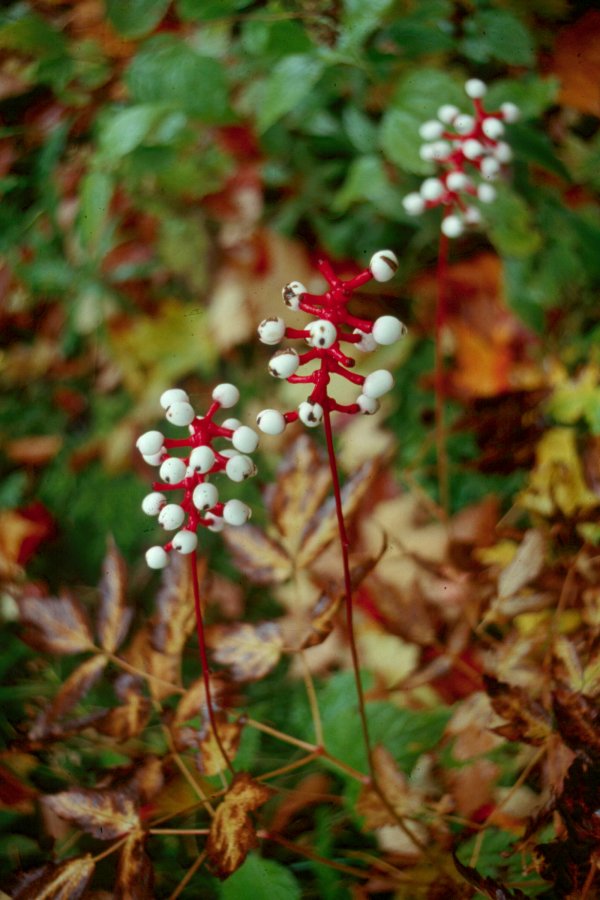
berries and as they finish out their growing season become huge, alabaster
white with black dots at each tip resembling the eyes of a doll.
[Photo of fruit:
sm
med
lg]
Ooops,
I almost forgot to tell you about the thick brilliant red stems that attach
each berry to the stem. Plants stand about 18"-24" tall and do well in
rich woodland shade.
- Actea rubra
[Photo:
sm
med
lg]
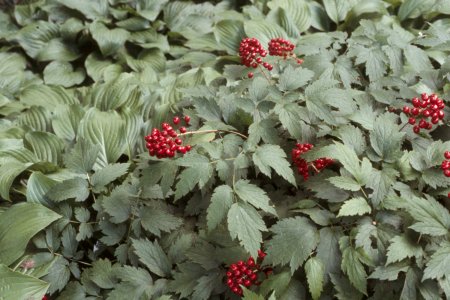
- Similar in stature and color to Actea
pachypoda, but with red berries.
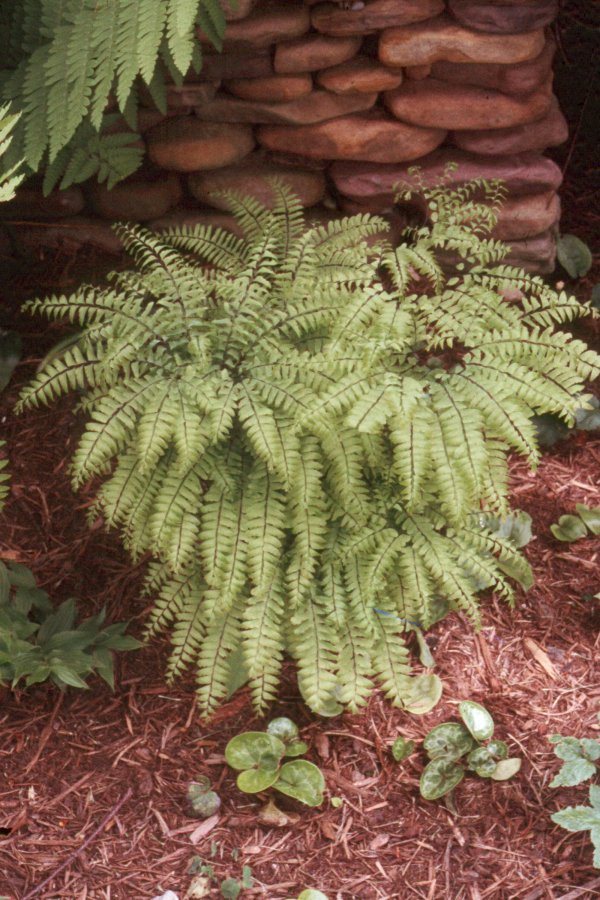
- Adiantum pedatum
[Photo:
sm
med
lg]
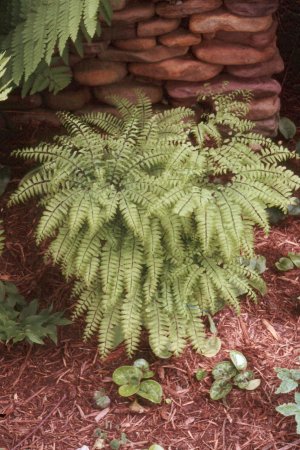
- One of my very favorite ferns, a little slow at the starting gate, but give the "Maiden Hair" fern a year or three and she makes a beautiful display. Full shade to part sun. Height gets up to 24" and slowly forms a colony.
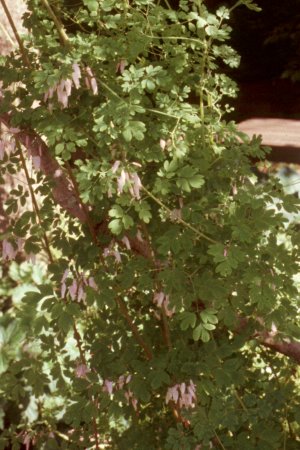
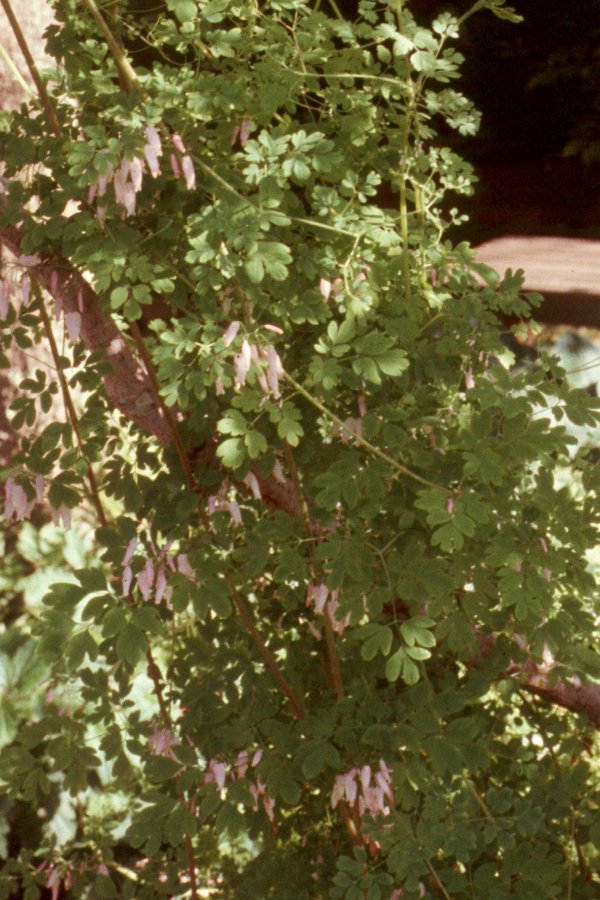
- Adlumia fungosa
[Photo:
sm
med
lg]
- Very interesting vine in the fumariaceae
family. A biennial, but don't worry, it will self-seed in abundance and
be with you always. Imagine a herbaceous vine that can climb over 30 feet
in a year. The foliage is very Corydalis-like and the pendulous pink blooms
are very Dicentra-like, what a great combination.
- Agapanthus 'Headborne hybrids'
- Everyone claims that
these beautiful plants are hardy to zone 6, possibly zone 5, I can't confirm
that as I haven't had the time to plant them out. Stay tuned.
- Agave virginica
- Yes, believe it or not, we have a
native Agave on the East Coast. One of the two genera in the Amaryllidaceae
family in WV, see also Hypoxis, Agave virginica, sometimes known also as
Manfreda virginica, was used by the Cherokee Native Americans as a cure
for diarrhea. Also for treating animals for worms. In these modern times,
I think that we're better off just enjoying the ornamental value of this
really cool plant. From a rosette of fleshy foliage comes a 36"-72" flower scape with interesting greenish yellow flowers in mid to late
Summer. Part shade to full sun.
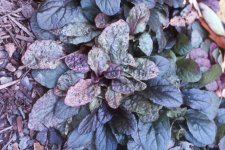
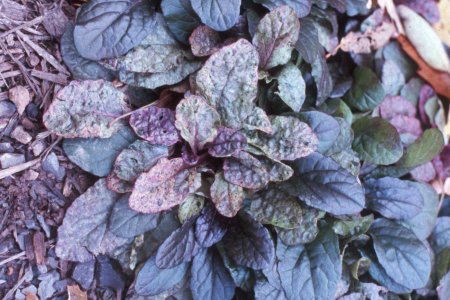
- Ajuga 'Arboretum Giant'
- This name is quite appropriate.
In addition to having extremely large leaves with a dark purple edge, the
flower heads are the biggest that I've seen.
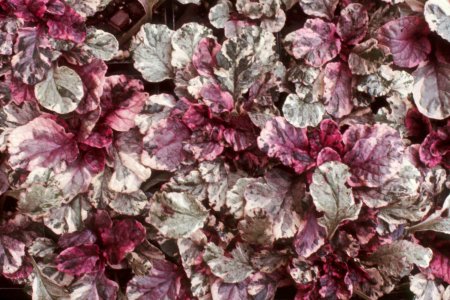
- Ajuga 'Carol'
[Photo:
sm
med]
- This is a sport of who knows what that
I discovered in the garden of Roger and Carol Copland in Wyncote PA.
It starts off the season kinda normal and then in mid season, explodes
into a brilliant array of pinks, whites, reds and cream marbled variegation.
- Ajuga 'Catlins Giant'
- Another large cultivar. I have
this ringing my pond and it provides a dramatic ground covering with very
large flower heads.
- Ajuga 'Chocolate Chip'
- Cute little lanceolate leaves
on this somewhat dwarf form of Ajuga. Lovely chocolate-colored foliage.
I can't comment on the flowers yet as I've just obtained it this Summer.
But the foliage is darling.
- Ajuga 'Pats Selection'
[Photo:
sm
med
lg]
- Selected by esteemed plantsman
and personal friend, Pat McCracken of Zebulon NC, this selection forms
a very tight mat that resists penetration by weeds. The color and variegation
are pleasingly variable.
- Alchemilla mollis
[Photo:
sm
med
lg]
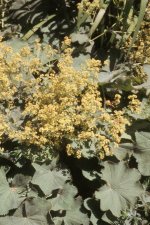
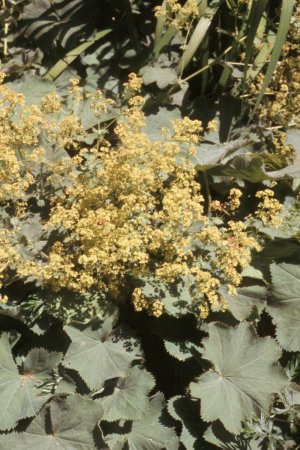
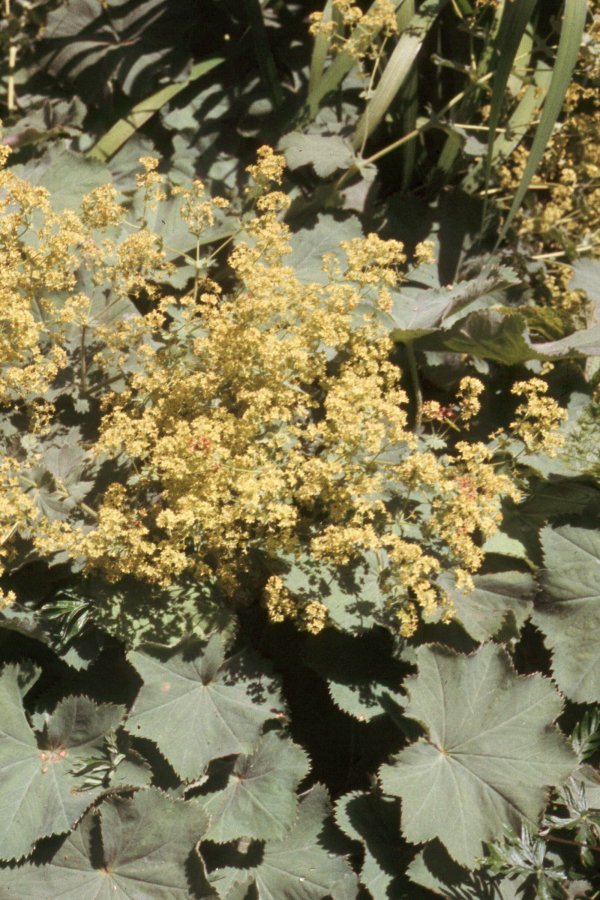
- I love the way that rain droplets bead up on the foliage of this member of the Rose family. The bright yellow flowers last for weeks in mid to late Spring. Forms a huge clump and also will give you lots of new plants from its dust like seeds. Height is 8"- 16"
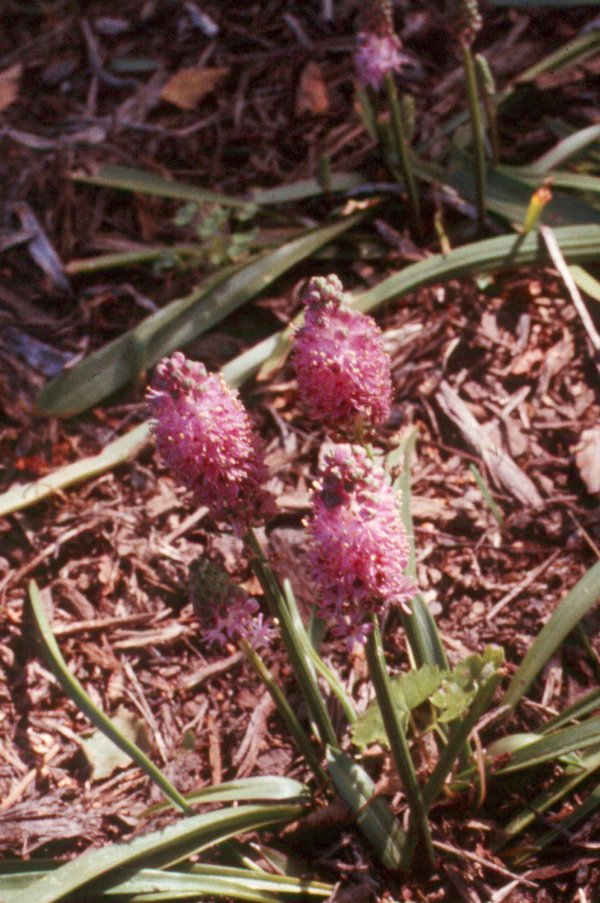
- Aletris farinosa
- From a lovely basal rosette, in
early Summer comes a 12-24" spike of unusual white flowers. Full
sun to part shade. Moist to average soil.
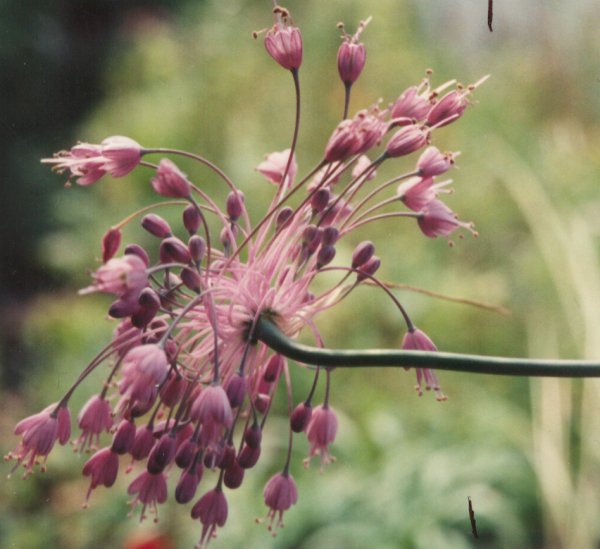
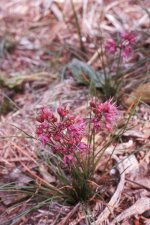
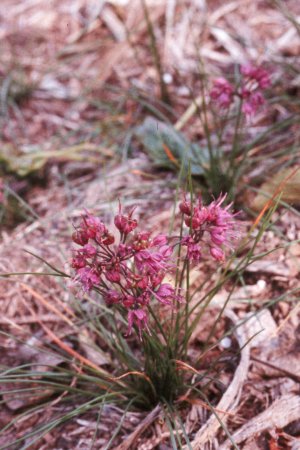
- Allium cernuum
[Photo:
sm
med
lg]
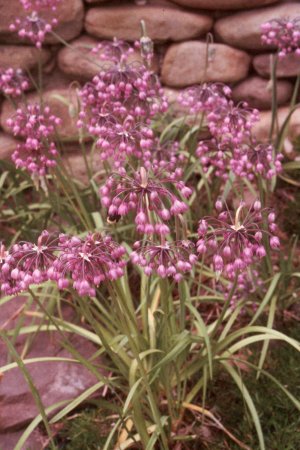
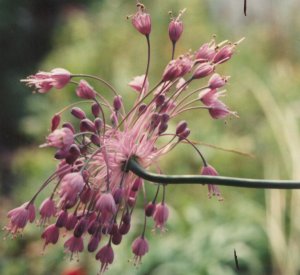
- The specific epithet refers to the
nodding flower heads of this late Summer bloomer. The flower heads are
about 6-18" tall and appear in a multitude of pinkish shades.
Very easy to grow in full sun.
- Allium maximowiczii album
[Photo:
sm
med
lg]
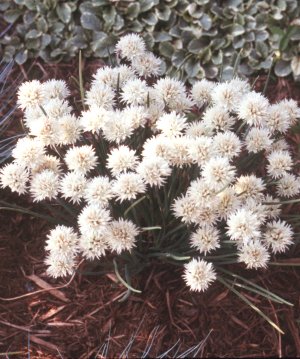
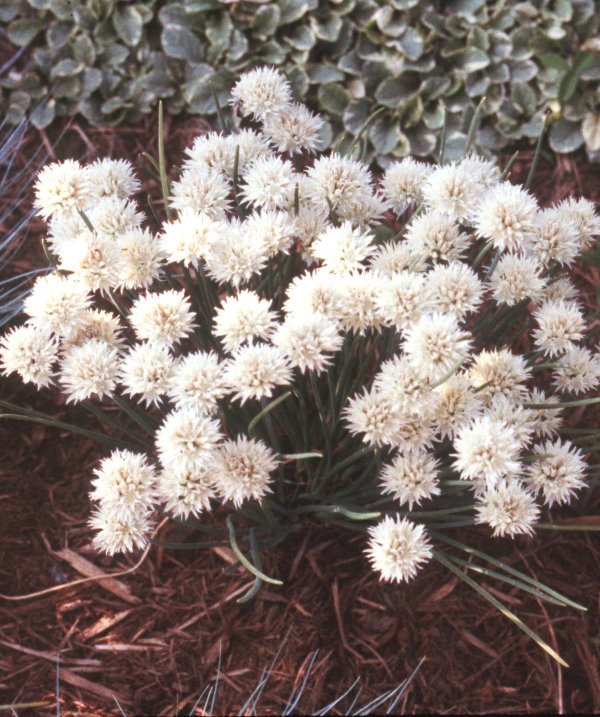
- Really cool clumps of delicate,
bluish foliage produce the cutest little white pom poms that last quite
a while in the very early Spring. Perfect for the front of the sunny border.
Only 3-8" tall. Very quick to increase in clump size.
- Allium pulchellum
[Photo:
sm
med
lg]
- A mid-Summer bloomer with very
flowing deep pink flowers. 12" -24" tall. Perfect for mid border in full
sun to part shade. Will seed in to make a dramatic colony.
- Allium pulchellum album
- A white form of the above
species.
- Allium tricoccum
[Photo:
sm
med
lg]
- One of the most interesting native
plants in these mountains, "Ramps" as they are known locally are a wonderful
medicinal plant. They are a known blood purifier and once you have put
them on a pizza, you'll be hard pressed to enjoy pizza sans "Ramps" again.
Very sexy lily-like foliage in the early Spring, gives way to white silver
dollar sized flowers that set umbels of shiny black seeds when pollinated.
Very easy to grow in the wild shade garden.
- Allium triquetrum
- A tall,
late Winter, early Spring bloomer with white, pendulous, Lily like, almost
Galanthus like flowers with green stripes on 12-18" stems . A very
vigorous grower to say the least.
- Allium virguncule splendens
[Photo:
sm
med
lg]
- Dynamite dwarf plant
from Japan. Double purple flowers on a 3-6" fine textured plant
in September and October. Useful in the front of the border to provide
color when everything else is turning brown.
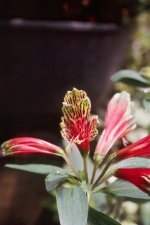
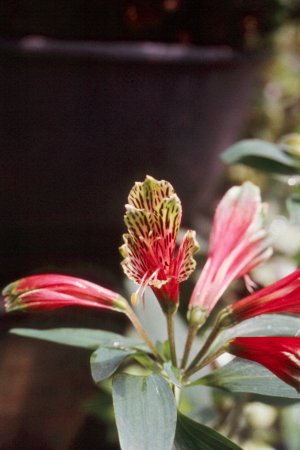
- Alstroemeria psittacina
[Photo:
sm
med
lg]
- From the mountains of Brazil comes this hardy species of one of the
most popular cut flowers ever grown. I've grown it in my zone 5 garden
for over 10 years now, and its made a lovely colony of light green foliage
about 8-12" tall. In early Summer it starts its long period of
bloom, producing volumes of reddish, slightly upfacing, trumpet like flowers
spotted with green and brown.
- Anemone ranunculoides
[Photo:
sm
med
lg]
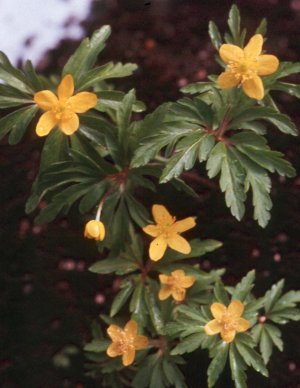
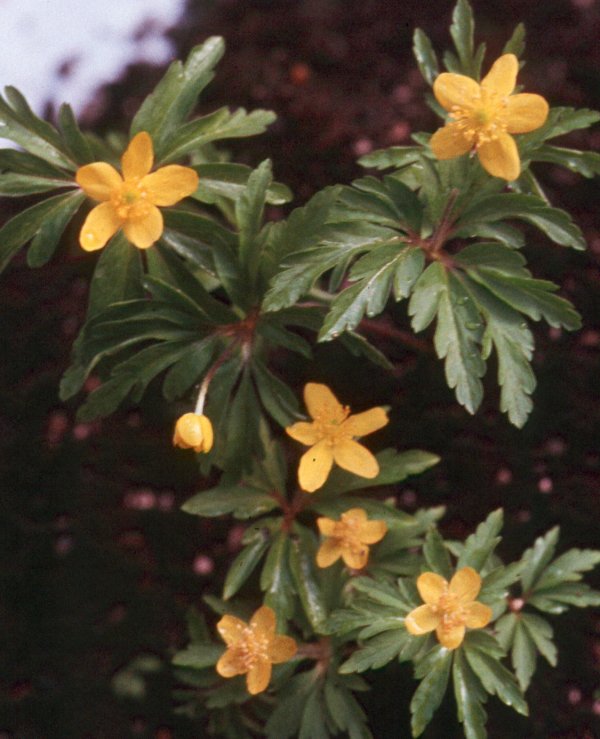
- Bright yellow Buttercup flowers over foliage reminiscent of ferns in the genus Botrychium. Blooms in early Spring. I don't have much experience with this cool little plant yet, but is seems hardy, vigorous and easy.
- Anemonella thalictroides
[Photo:
sm
med
lg]
- One of my favorite little
plants in my favorite family, Ranunculaceae. This is also one of the first
plants to bloom in the Spring. With it's delicate Anemone-like foliage
and its long lasting white blooms, its perfect for the semi-shady rock
garden or the wild shade garden. Height is only 4"- 8" and it will reseed
around to form a colony very quickly.
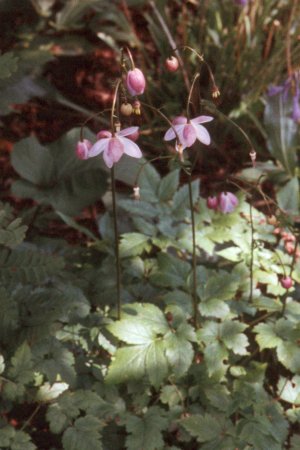
- Anemonopsis macrophylla
[Photo:
sm
med
lg]
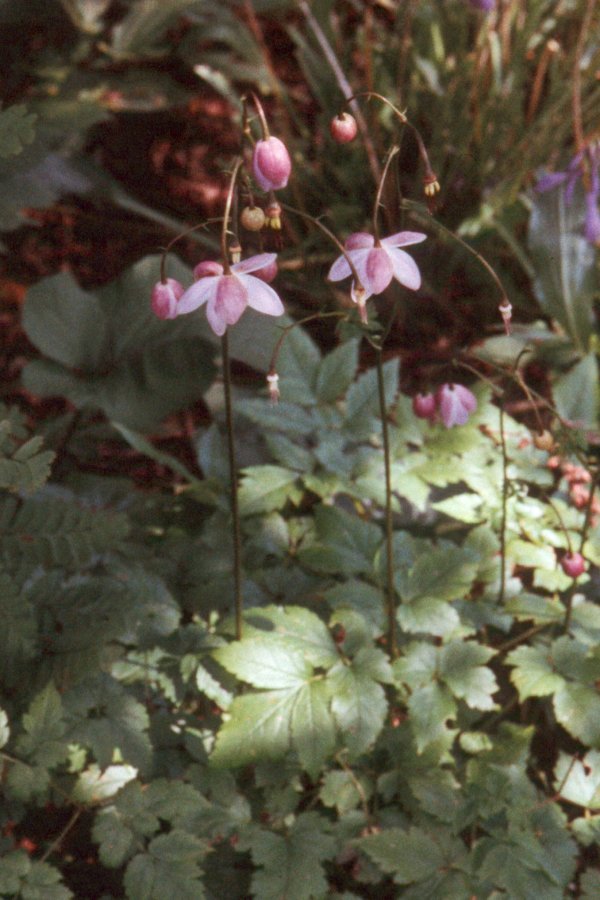
- Very interesting plant, this visitor from Japan. The flowers take on a look that can be described as almost porcelain like on very tall (12"- 24") wiry stems. They're pendulous with a very unique round shape in the center. Foliage holds up well all year. Flowering is in late Summer to early Autumn over a very long period.
- Angelica gigas
-
- Angelica polymorpha
[Photo:
sm
med
lg]
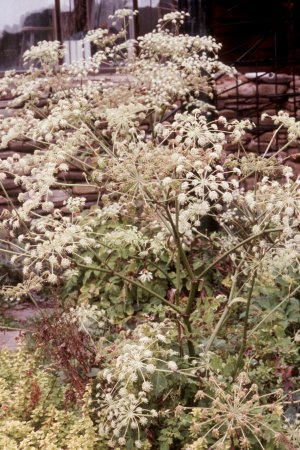
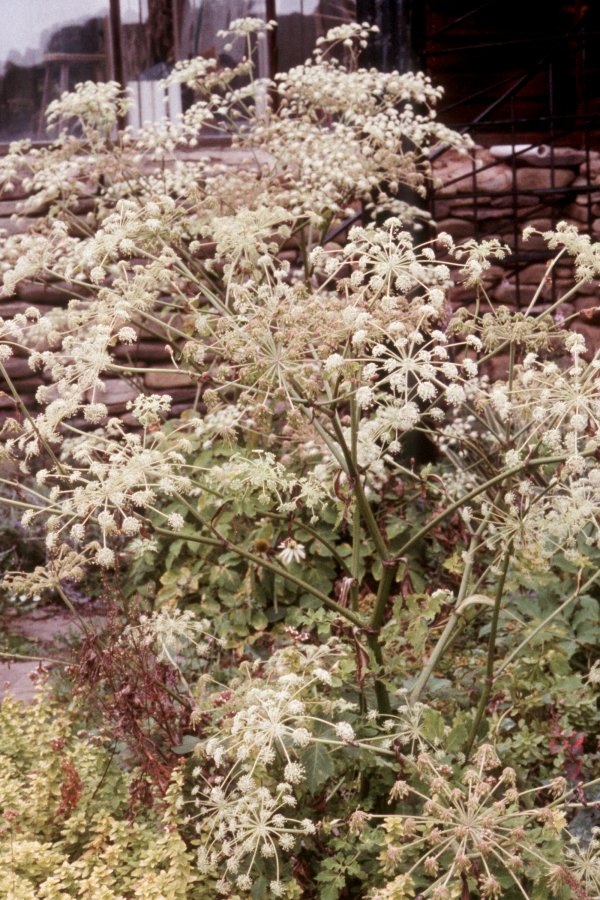
- Whoa,
talk about a specimen or statement plant! This unusual species is bound
to stop visitors to your garden dead in their tracks. Its ?? thick zigging,
zagging stem grows to ??" tall and produces multiple branches to form a
plant ??" wide. And each of these branches terminate in an umbel of creamy
white flowers. I'm not sure if this is a biennial or monocarpic species,
but when its finally done flowering itself silly, you will have more than
enough seeds for all of your gardening buddies.
- Antennaria plantaginifolia
- A great groundcover plant
for the edge of the shade or woodland garden. Just a few inches tall with
silvery white hairy foliage and a multitude of white fluffy flowers.
- Antenneron filiforme variegata
[Photo:
sm
med
lg]
- A native of Japan, and bearing a close resemblance to Tovara, with
stable, attractive, creamy white variegation, you'll have a 24" clump
in no time. Interesting small flowers in red or white form along its slender
wiry stems that reach up another 12" above this 16"-24" plant.
- Aplectrum hymale
[Photo:
med
lg]
- Dynamite native woodland orchid
that has a 7" pleated, silvery striped leaf all Winter, hence the specific
epithet hymale. In late Spring, early Summer, its goes bye bye and the tuber
gives you a pencil think stem of purplish brown orchids which in turn become
attractive, pendulous brown seed pods. After they drop the leaf comes back.
Something for almost every day of the year. Each tuber produces a new tuber
and if you keep removing them and replanting them, you'll have a nice little
colony in a few years. Native Americans used the tubers to make a putty
like glue to repair broken pottery, musta been the first crazy glue.
[Article: The first American Crazy Glue]
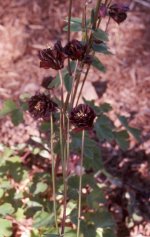
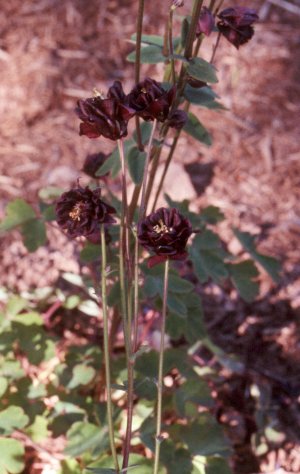
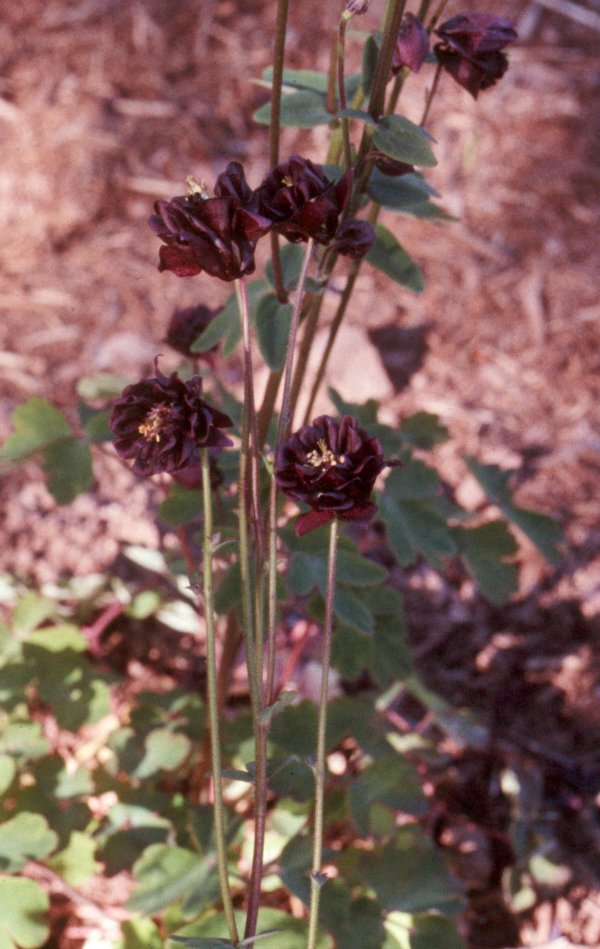
- Aquilegia 'Blackie'
[Photo:
sm
med
lg]
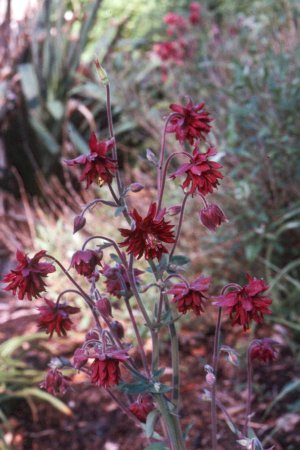
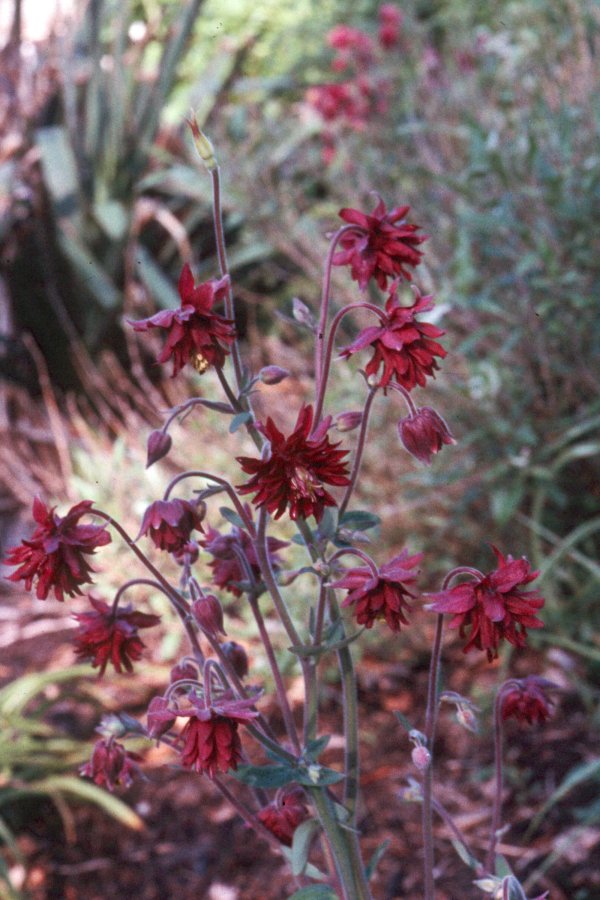
- While these "Double" flowers are not as true black as, let's say, Viola "Molly Sanderson", they are by far the darkest colored flowers that I've ever seen on an Aquilegia. Also interesting is the angle that
- Aquilegia clematiflora
[Photo:
sm
med
lg]
- This has to be one of the coolest, if not THE coolest Aquilegia. A combo of two of my favorite Genera in my favorite plant family. Unfortunately, I lost the only plant, so I won't go on about it too awful much here. Stay tuned, I will get it back sometime soon.
- Aquilegia 'Old English Pink'
[Photo:
sm
med
lg]
- I originally scored
these seeds from a special interest group of the British Hardy Plant Society.
The foliage is rich and full and has a very formal, glaucus appearance.
The flowers stems, and there are an abundance, shoot up another 12"-18"
above the plant which stands 8"-12" on its one. Great color combo of
the burgandyish pink and the bluish green foliage.
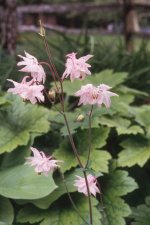
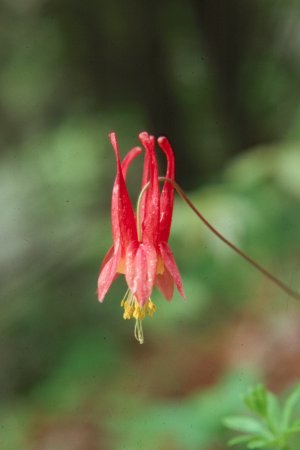
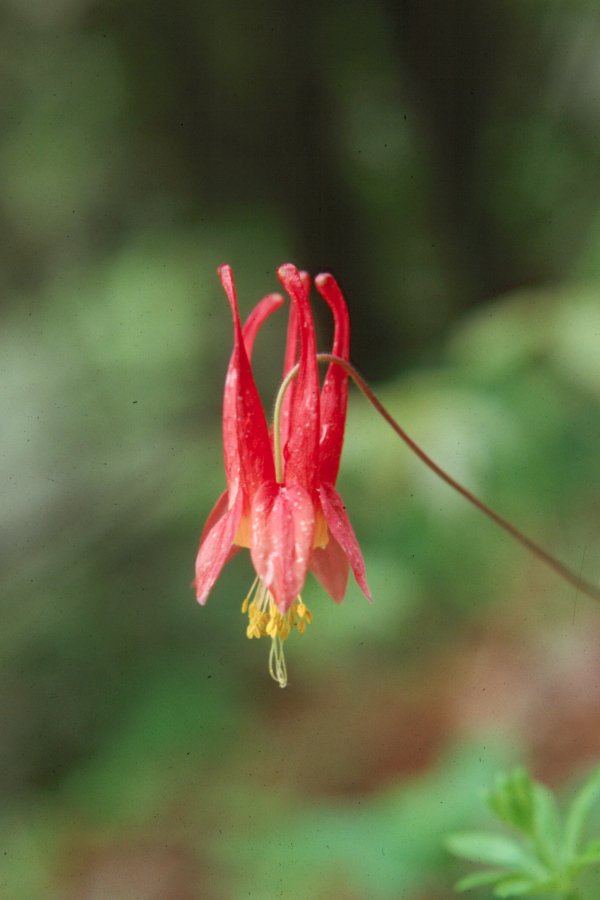
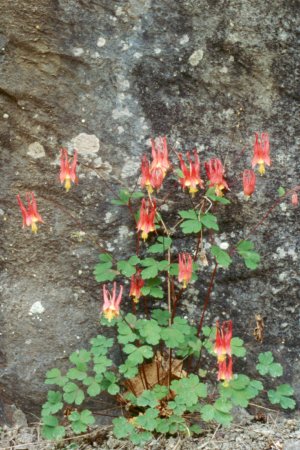
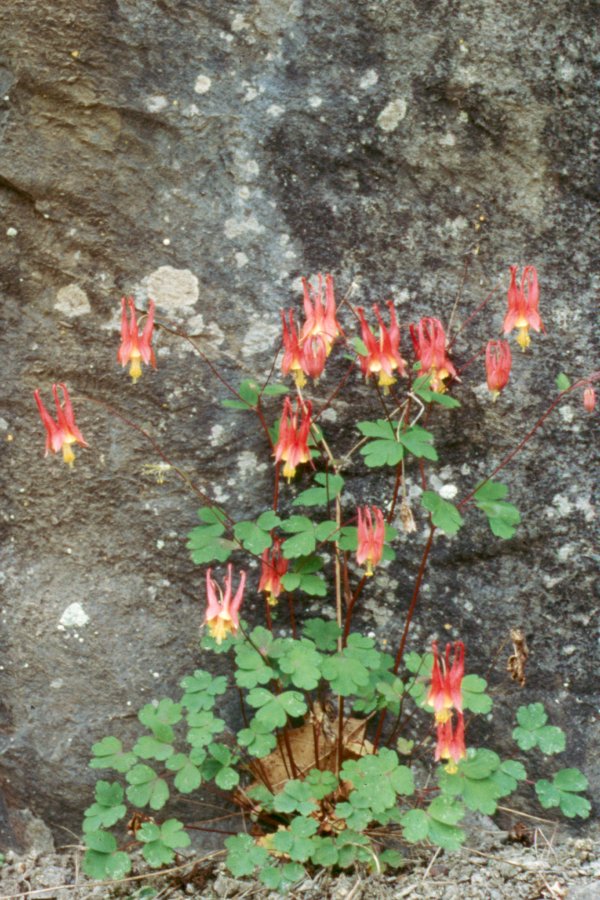
- Aquilegia canadense
[Photo of flower:
sm
med
lg]
[Photo of foliage:
sm
med
lg]
- What more can I tell you about
this old favorite. Variable shades of red and yellow flowers on lovely
dissected foliage. Self sown seedlings abound to form a wonderful drift
of early Spring color in full sun or part shade on 12" - 18" plants.
- Aquilegia flabellata nana pumila alba
- Well if that
isn't enough of a mouthful to spit out, you should know about Diana Reek
of Collector Nurseries named cultivar,
Aquilegia flabellata nana pumila alba 'Rama Lama Ding Dong'
A dwarf white Columbine for
the front of the border or the rock garden. 8"
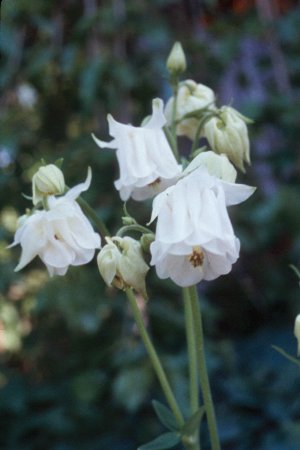
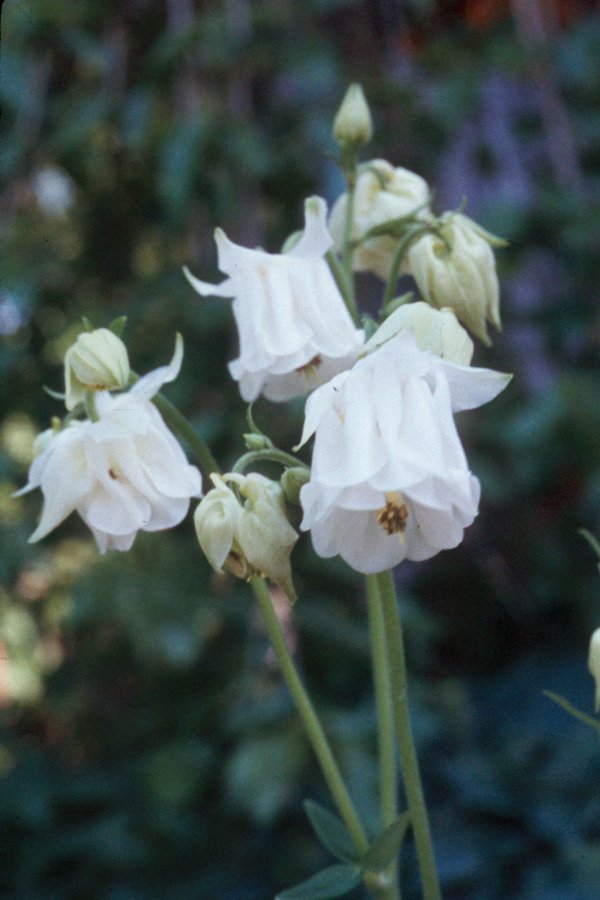
- Aquilegia sp. 'Double White'
[Photo:
sm
med
lg]
- 12" tall. I should probably ask
Dan Heims to come up with some outrageously cool name for this plant like
Vanilla something or other, but I'm satisfied just to call it a double
white Aquilegia for now. Nice foliage with an interesting flower shape
and form. 16"-24" tall, add another foot during flowering.
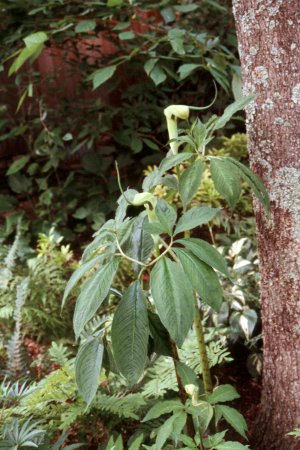
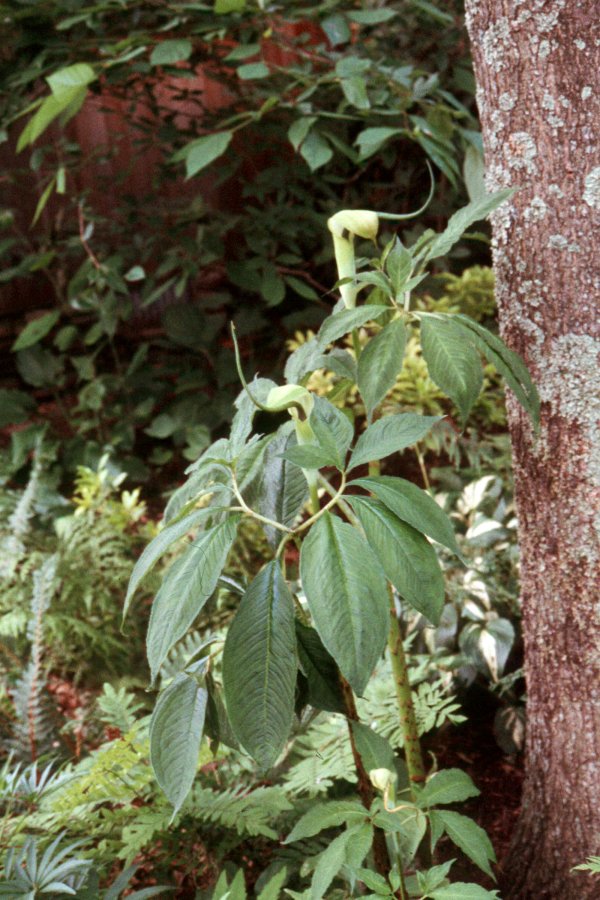
- Arisaema amurense
- From the Amur Peninsula, this "Jack
in the Pulpit" sort of resembles our Arisaema triphyllum in flower in shape
and form, but has five leaflets instead of three. Interesting and variable
markings on the spathe and easy to grow in full shade to part sun.
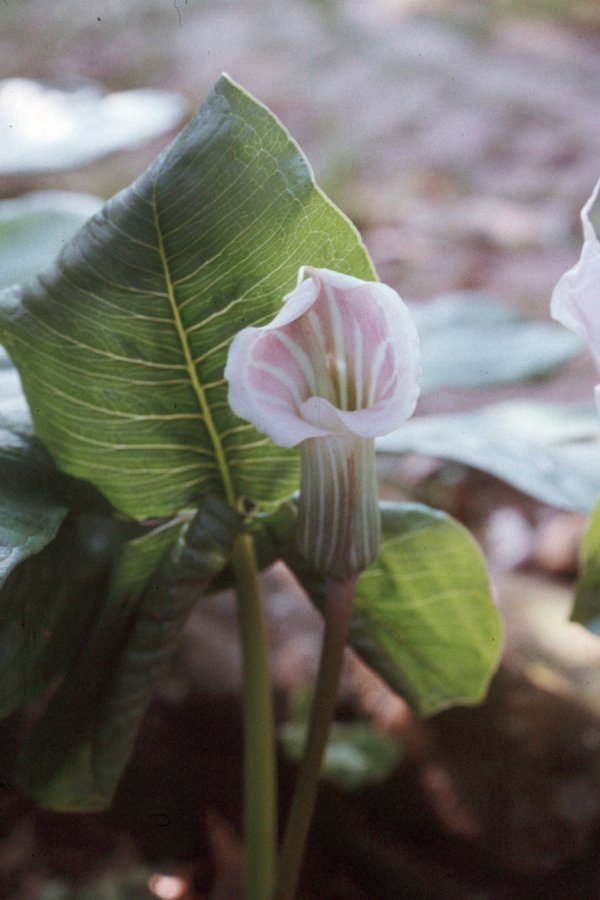
- Arisaema candidissimum
[Photo:
sm
med
lg]
- Many folks insist that there
is a fragrance emanating for the unusual and only pink flowered Arisaema,
but I've never detected any. Very large leaves on a 12" - 24" plant. As
with all of the Arisaemas, full shade to part sun, good rich soil produce
the best plants.
- Arisaema ciliatum
[Photo:
sm
med
lg]
- Tall and slender and very oriental
in appearance is the best way for me to describe this one. At the top of
the 24" - 36" stem the leaf radiates out in a dozen or more directions
with very slender leaflets. The brilliant red clusters of berries produced
in the Autumn can sometimes weight the plant down and you may want to stake
it before the seed heads mature.
- Arisaema dracontium
- Our native "Green Dragon" can
get quite tall if given the moist, rich soil and shade that it loves. It's
very easy to grow and puts out a very large spathe with a single five bladed
leaf. A mature plant can grow up to 4 feet tall under favorable conditions.
- Arisaema ringens
- Blackest of black huge spathe on
this Asian monster. Plants are 12" - 24" when in flower and you get the
true feeling of why this genus is referred to as "Cobra Lilies" when you
see her in flower. The foliage is also huge and looks kinda like a mutated
clover leaf. Easy to grow in full shade to part sun.
- Arisaema tortuosum
[Photo:
sm
med
lg]
- Sometimes known as Arisaema helleborifolium,
so you know why this is one of my favorites. It's risen to over 4 feet
in my garden with the most unusual markings on its thick, firm stem. The
flowers are huge as are the seed heads. The foliage really does resemble
Hellebore foliage and no special care is required to grow it. Mine are
quite happy in full shade under an Oak tree.
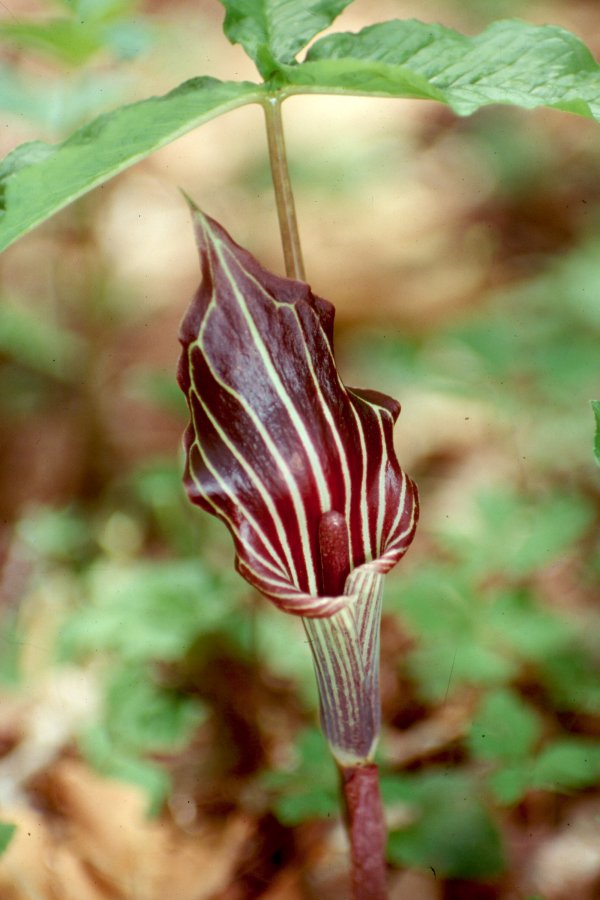
- Arisaema triphyllum
[Photo:
med
lg]
- Our three leaved native "Jack
In The Pulpit" provides 3 seasons of interest in the shade garden as its
early Spring blooming, unique flowers turn into striking heads of red berries
in the fall. I've seen plants reach up to 36" in height under ideal conditions.
Typically they are 12" - 24" tall.
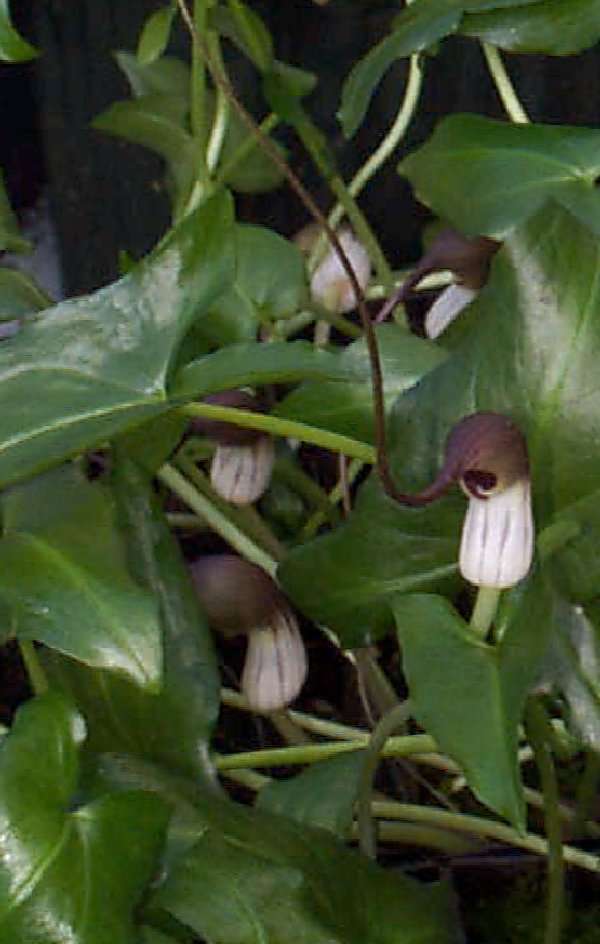
- Arisarum proboscideum
[Photo:
sm
med
lg]
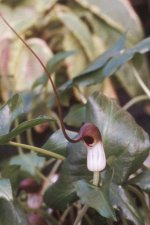
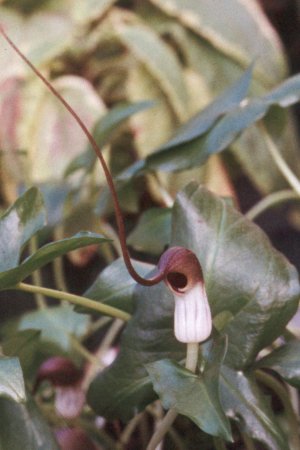
- "The Mouse Plant" is a very prolific member of the Aroid family. A single
plant in a 2" pot multiplies eight fold in a year. A cute flowering spathe
with a long mouse like tail in early Spring over 3" dark green, aroid foliage.
- Armeria alliaceae
- Nice tight clump, tighter than
most of the Armeria species or selections that I've seen. The usual kind
of pink flowers, but what makes this plant unique is the bright red color
at the base of the new growth.
- Artemesia lactiflora
[Photo:
sm
med
lg]
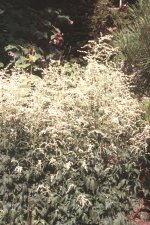
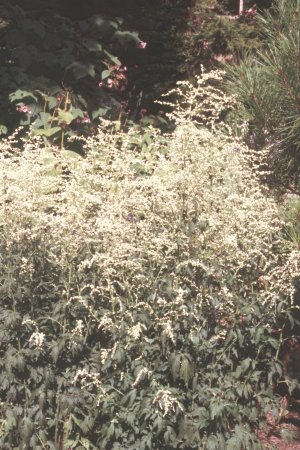
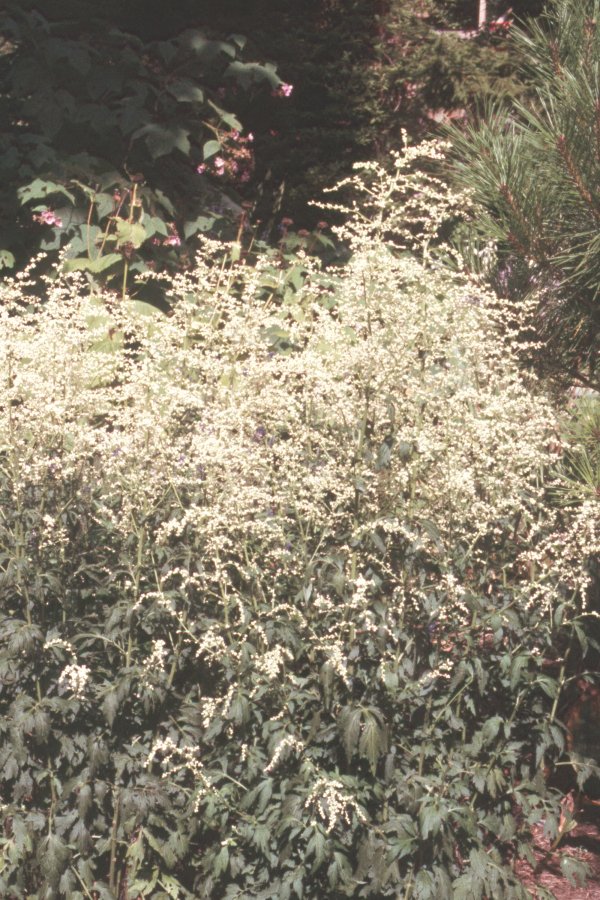
- Not one of those invasive running
Artemesias, this is a medium green clump forming species from China.
24-36" tall in flower with sprays of milky white flowers in late Summer when
there really isn't much else blooming. Grows equally well in sun or shade.
- Artemesia lactiflora 'Guizho'
- A form of the above species with red petioles, darker and more dissected foliage, whiter
blooms.
- Arum dioscoridis
- Somewhat similar to the Arum listed
below, but produces a dramatic black mottled spathe in the Spring. Sort
of a scary looking flower with a rather unpleasant scent. But well worth
growing. I haven't had a chance to grow it outside yet, I'm assuming that
its only slightly less hardy than A. italicum,
- Arum italicum 'Pictum'
- In the U.K., these
babies are referred to as "Cuckoo Pint" or "Lords and Ladies". In the US,
most gardeners don't even know them. They've been hardy here for many years.
Lovely 4-8" silvery marbled leaves, interesting flowers and brilliant
clusters of bright red berries in the Autumn.
- Aruncus dioicus
-
- Asarum canadense
[Photo:
sm
med
lg]
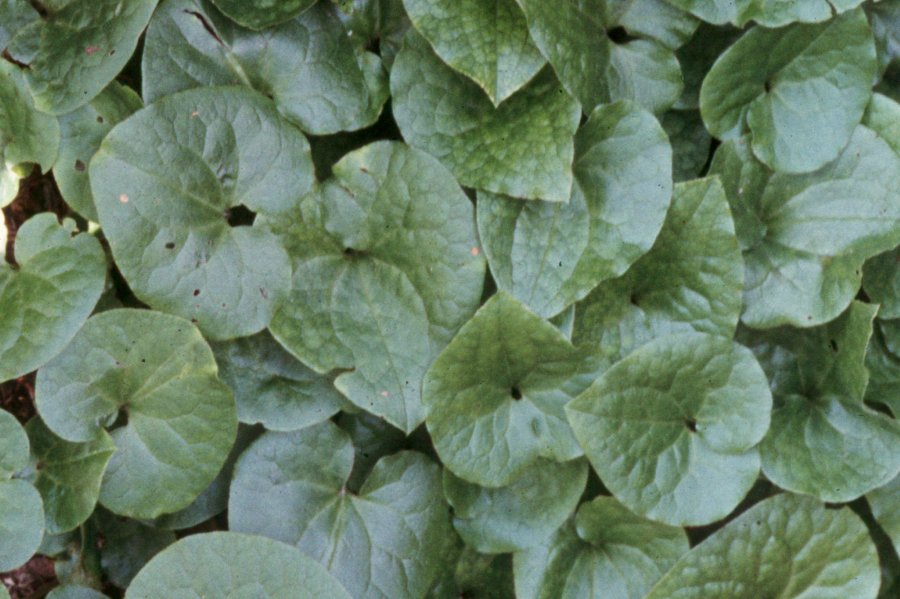
- The East Coast native herbaceous
wild ginger has long been a favorite of many a shade garden. I've had foliage
as big as your head when grown in rich moist soil with lots of organic
matter. Curious flowers produce lots of seeds to soon make an impenetrable
mat of snaking rhizomes that will exclude even the most pernicious weeds.
The roots can be used as a substitute for the culinary ginger in cooking.
[Article: Walking Gingerly through the Woods]
- Asarum caudatum
[Photo:
sm
med
lg]
- This is the West Coast counterpart
to the above and is somewhat similar in form and stature. I must
take the time to closely compare the two.
[Article: Walking Gingerly through the Woods]
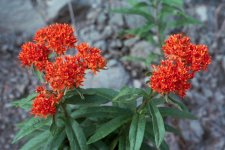
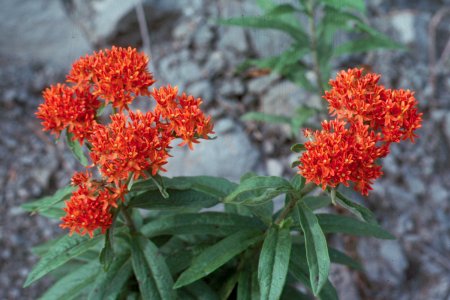
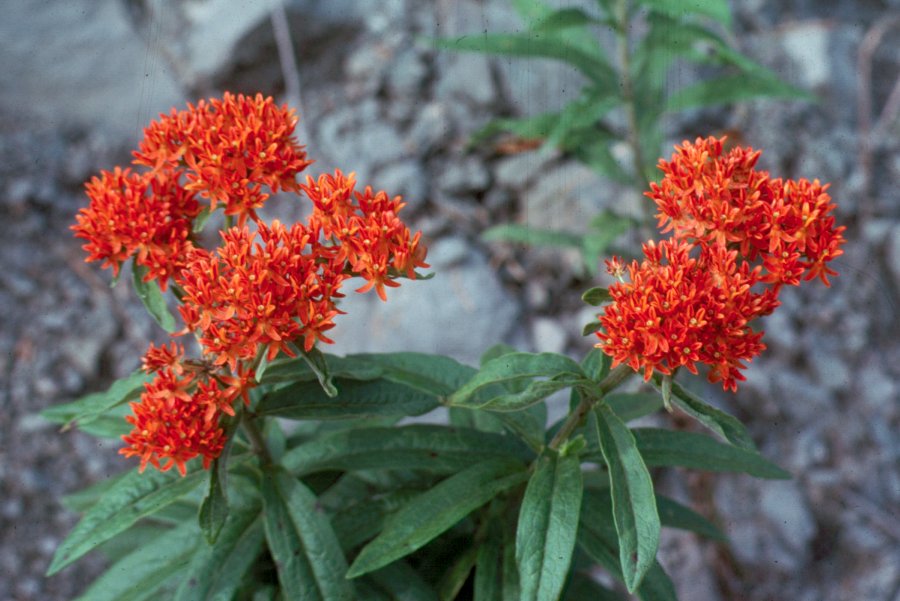
- Asclepias tuberosa
[Photo:
sm
med
lg]
- Brilliant orange, late Summer
blooms over attractive dark green foliage attracts Butterflies and other
pollinators. 18-24" tall. Full sun to part shade.
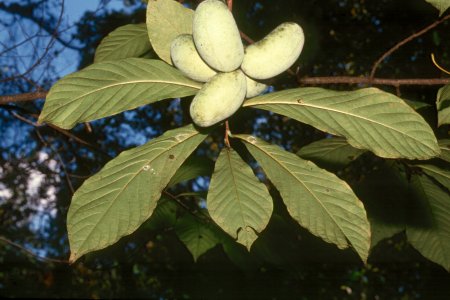
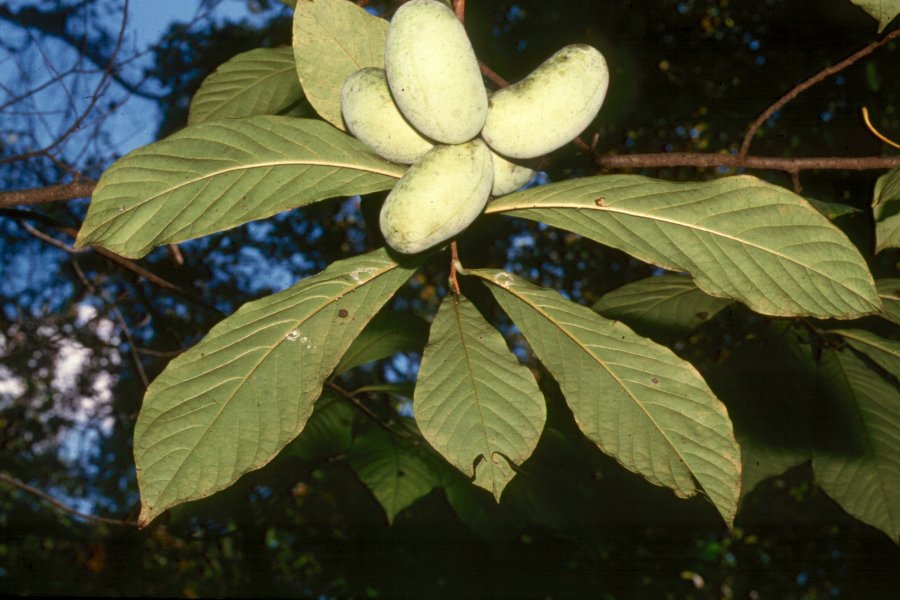
- Asimina triloba
[Photo:
sm
med
lg]
-
[Article: A Tropical Tree for the Temperate Zone]
- Asplenium platyneuron
- A darling little fern that
grows in rich moist woodland conditions, but is adaptable to almost any
garden setting that can offer it at least a half day of shade. 3"- 6" tall,
slender upright fronds that are a deep dark green.
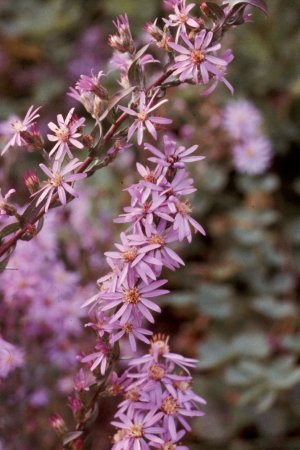
- Aster concolor
[Photo:
sm
med
lg]
-
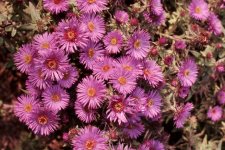
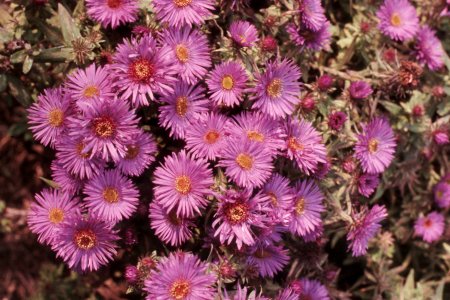
- Aster 'Purple Dome'
[Photo:
sm
med
lg]
- Dick Lighty of The Mount Cuba
Center in Greenville Delaware spotted this dwarf form of
Aster novae angliae
along a Pennsylvania roadside. It blooms in late Summer with dark purple
flowers with yellow centers. And instead of the typical 5'-6' height, only
reaches 8"-14" tall. Ideal for the front of the border.
- Aster tataricus
[Photo:
sm
med
lg]
-
If you're on the lookout for something to liven up your garden from mid-Autumn
to mid-Winter, you need this guy. He's a tall one from the Tatar
Mountains in Russia and blooms his head off with medium sky-blue flowers
on 5-7 foot stems from October till those killing freezes. Very,
very vigorous.
- Astrantia 'Shaggy'
[Photo:
sm
med
lg]
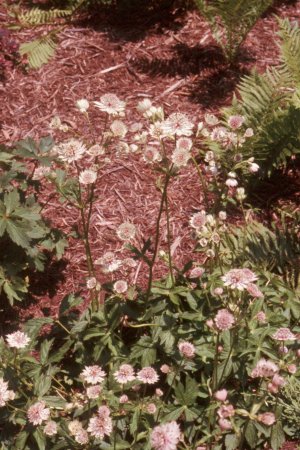
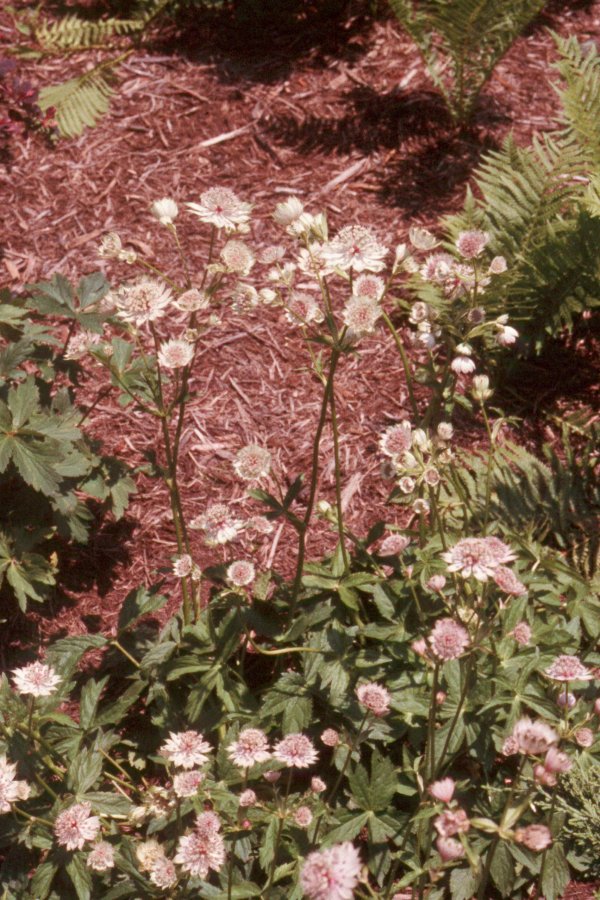
- Not sure why people make such a big deal about this cultivar of Astrantia major. I don't consider it to be any different than the species, unless my clone is misnamed. However, Astrantia major as a species is a very cool plant and has a place in virtually any garden.
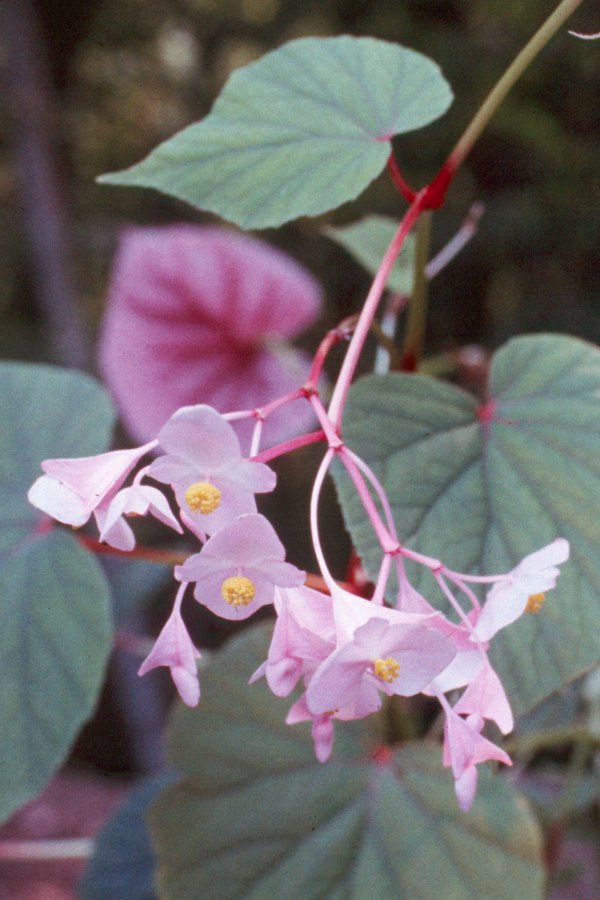
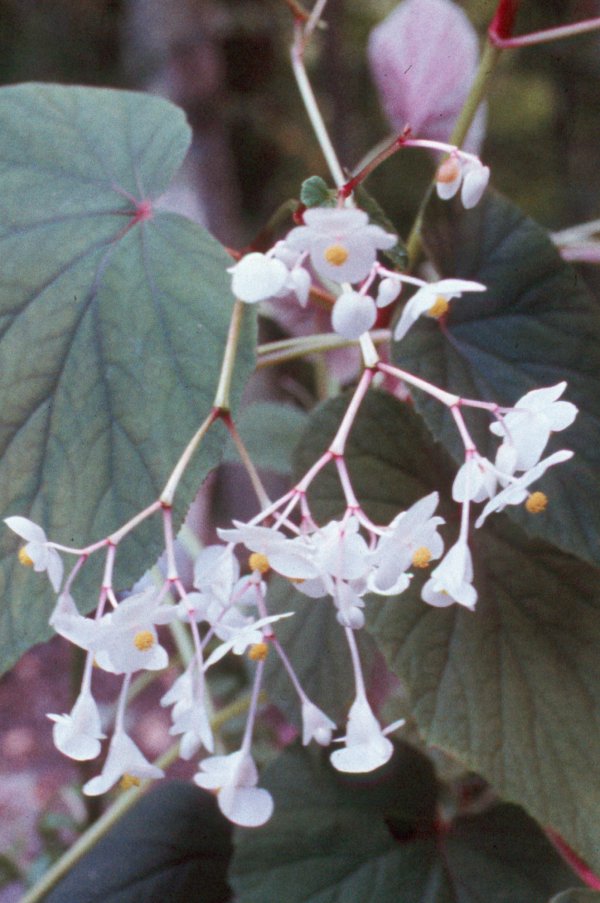
- Begonia evansii
[Photo:
sm
med
lg]
- A hardy Begonia?? Of course.
And although it over winters from the rootstock in zone 5 and possible
colder, it is very late to emerge in the Spring and very easy to over plant.
Preferring moist shade it'll grow up to 30" tall with pink or white flowers.
Bulbils are produced in the axils and drop to the ground to sprout the
following year. A colony is formed rather quickly and can be quite dramatic.
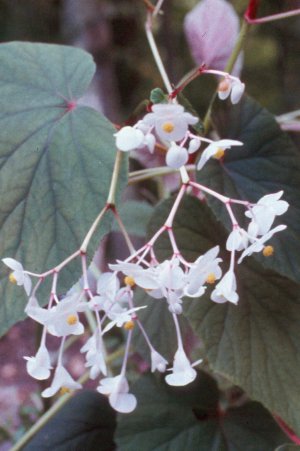
- Begonia evansii alba
[Photo:
sm
med
lg]
-
- Bergenia ciliata
[Photo:
med
lg]
-
- Caltha palustris
[Photo:
sm
med
lg]
- OOOPS, a lousy picture of a great plat. Remind me sometime to reshoot it in focus. In the meantime, know that although the "Marsh Marigold" loves moisture it grows well in average garden soil. The moister the soil, the more sun she can take.
- Camassia scilloides
- Star like bluish flowers on a
12" to 18" stem. Full shade to part sun, prefers rich organic soil.
- Campanula 'Constellation'
[Photo:
sm
med
lg]
-
I was given this plant by the man who literally wrote the book on Campanulas,
Peter Lewis in the UK. It forms a short (3-6") dense mound of dark green
toothed foliage and during the Summer months is covered with pointed starry
like deep blue flowers.
- Campanula 'Dicksons Gold'
- Similar to the above except
the foliage is a light golden color and the flowers are pale blue. A delightful
combination. Not nearly as strong a grower as C. 'Constellation' as there
is a definite lack of chlorophyll, but well worth growing for that highly
desirable shade of pale blue.
- Campanula 'Dwarf Tornado'
[Photo:
sm
med
lg]
- Named in honor of my vertically
challenged, yet incredibly dynamic friend, Stephanie Cohen, C. 'Dwarf Tornado'
blooms about a month after C. glomerata and is somewhat similar in form,
yet much shorter overall. Its deep blue flower last for weeks on 3"-8"
plants.
- Campanula glomerata 'Joan Elliott'
[Photo:
sm
med
lg]
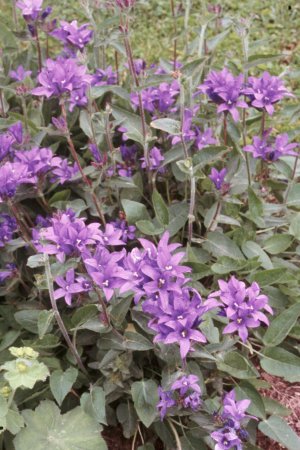
- One of
the earliest blooming of all the Bellflowers and easy as pie. Forms a tight
colony as it spreads slowly. Rich dark blue flowers on 12"-24" plants.
Full sun to part shade.
- Campanula takaesimana
[Photo:
sm
med
lg]
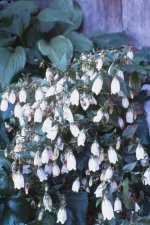
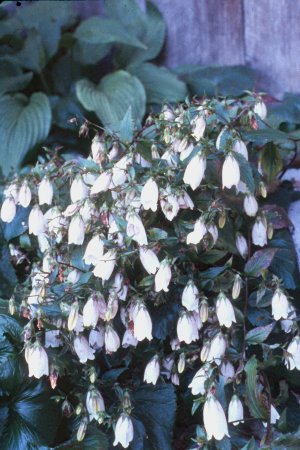
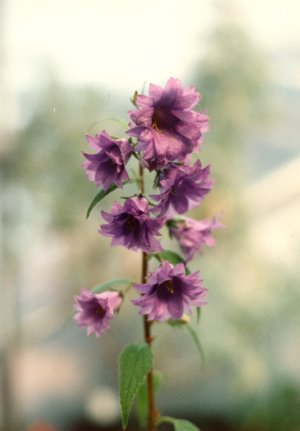
- A very vigorous visitor from Japan to say the least.
Really neat bells in a creamy white with a cranberry tinge at the base.
Full sun to part shade, average moisture. Plants are about 12" tall,
adding about another 12" while in flower in mid Summer.
- Campanula trachellium
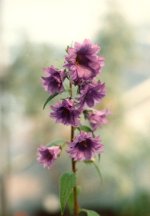
- Tall spikes of trumpet shaped
flowers in mid-Summer. 24"-36" tall. Nice arrow shaped, slightly dentate
foliage. Self seeds to form a pleasant colony. Full sun to part shade.
- Campanula trachellium 'Bernice'
[Photo:
sm
med
lg]
- A double flowered
selection of the above described species.
- Carex species
There are currently over 150 different Carex
species under evaluation here. Many are long time proven plants, but most
are species that are not in commercial cultivation anywhere else. Some
of the most popular are Carex elata 'Bowles Golden',
Carex morrowii var.,
Carex siderostricta var.,
Carex flacca,
Carex Speciosa 'The Beatles' and
Carex muskingumensis. Some of the newer ones are,
Carex hordesticha,
Carex demissa,
Carex divulsa,
Carex leporina,
Carex flava,
Carex phyllocephela,
Carex bohemica,
Carex sylvatica,
Carex frankii,
Carex flaccosperma,
Carex remota etc. etc.
Virtually every imaginable shape, size and texture is represented. Carex
are extremely easy to grow, have a very important place in the garden,
and should not be overlooked.
- Carex Nigishiki???
-
- Carex chabertii
- One of my proudest discoveries! Really
sharp looker. Interesting vase like habit of flowing fine textured foliage.
Forms a large clump very quickly. Interesting seed heads reach out another
??"" as they flow away from the center of the plant. I have a row in full
sun and its doing wonderful. I haven't tried it in shade yet, but it seems
that most Carex species are quite adaptable.
- Carex conica variegata
[Photo:
sm
med
lg]
- Tight little clumps of variegated
foliage, completely stable. Great in the front of the sunny border.
3-6" tall and flowing.
- Carex elata 'Bowles Golden'
[Photo:
sm
med
lg]
- Carex flacca
[Photo:
sm
med
lg]
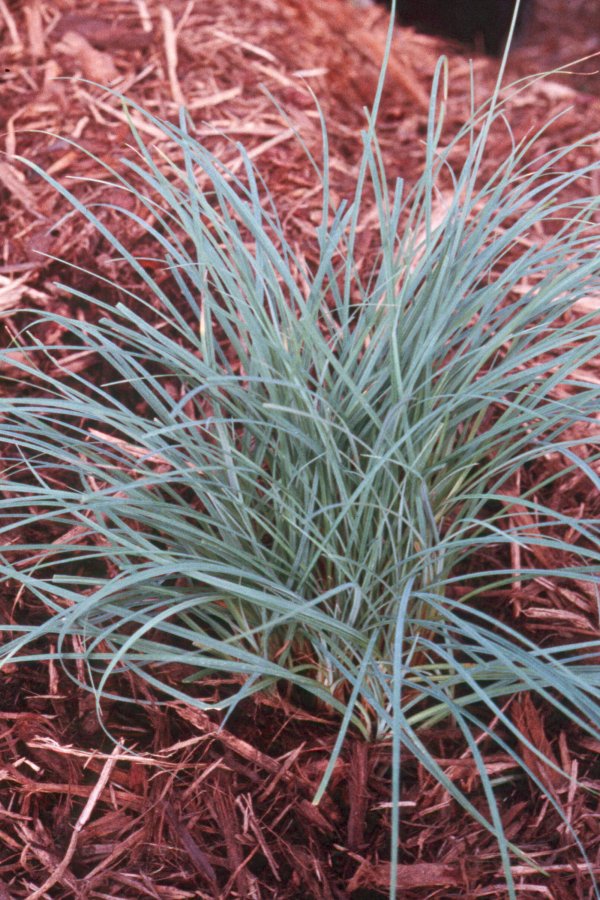
- This fine textured, bluish-green grass-like plant is a
very vigorous sedge. It grows equally as in full shade as
it does in full sun. Height is 4"-8" and it spreads quickly,
but controllably by rhizome.
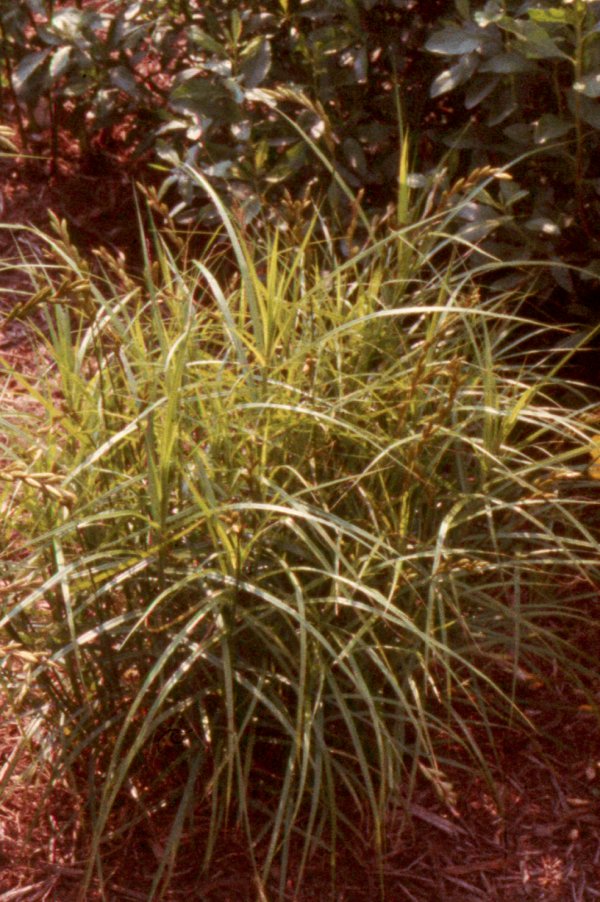
- Carex grayii
[Photo:
sm
med
lg]
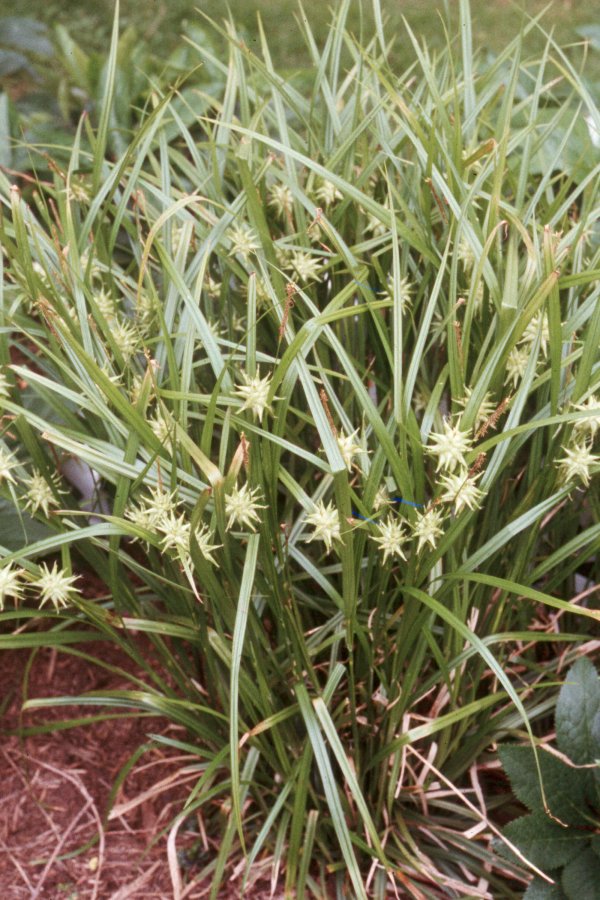
- An 18-24" tall clump of coarse
textured grassy foliage about the same diameter. Prefers, but doesn't demand
a moist shady site. Grows well in full sun in average soil. In late Spring
and early Summer, curious flowers produce tall stems of mace like seeds
heads that are useful green in cut flower arrangements and dry in dried
flower arrangements.
- Carex hachijoensis 'Evergold'
[Photo:
sm
med
lg]
-
Of all the variegated Carexes that are coming on the market now, this is
the most vibrant. The brilliant variegation seems to be 100% stable. The
blades and very wide (????) and the plant forms a nice clump, ????, Full
sun or part shade doesn't seem to matter.
- Carex muskingumensis
[Photo:
sm
med
lg]
- Known as the "Palm Tree Sedge", this Great Lakes native is one of the tallest Carex species in cultivation.
It's graceful weeping like foliage and height make it a natural for the
middle of a sunny border or as a stand alone statement plant just about
anywhere in the garden.
- Carex otrubae
-
- Carex phyllocephela
-
- Carex siderosticha variegata
[Photo:
sm
med
lg]
- With its wide, almost Hosta-like foliage, this sedge will fill in an area at a medium pace. I love it's flowing habit and it rally looks good at the edge of a railroad tie or a rock wall. Sun or shade. 100% stable variegation.6" -12" tall.
- Carex 'The Beatles'
[Photo:
sm
med
lg]
- I know I use the word "Adorable" much too frequently to describe plants, but if you can come up with a better word to describe this adorable little plant, my hat is off to you.
This "moppy" plant makes a fine groundcover as its swirly foliage sweeps around, gracefully flowing on the ground below its crown. I'd love to see a whole lawn carpeted in it as it would mean no mowing, the height rarely exceeds 3"-5".
Probably showing my age by understanding that this plant was named for "The Fab Four" and I'm sure that some of you weren't even born in 1964 when the Beatles made their debut on the Ed Sullivan show, so bear with me here.
Full sun to full shade, moist to average soil, ANOTHER "Idiot Proof" plant.
- Caryopteris divaricata
-
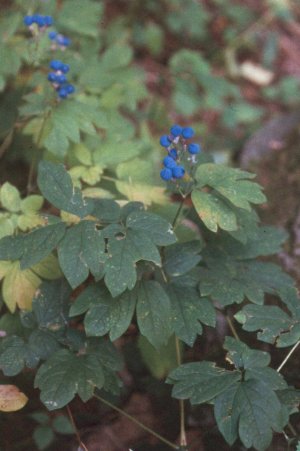
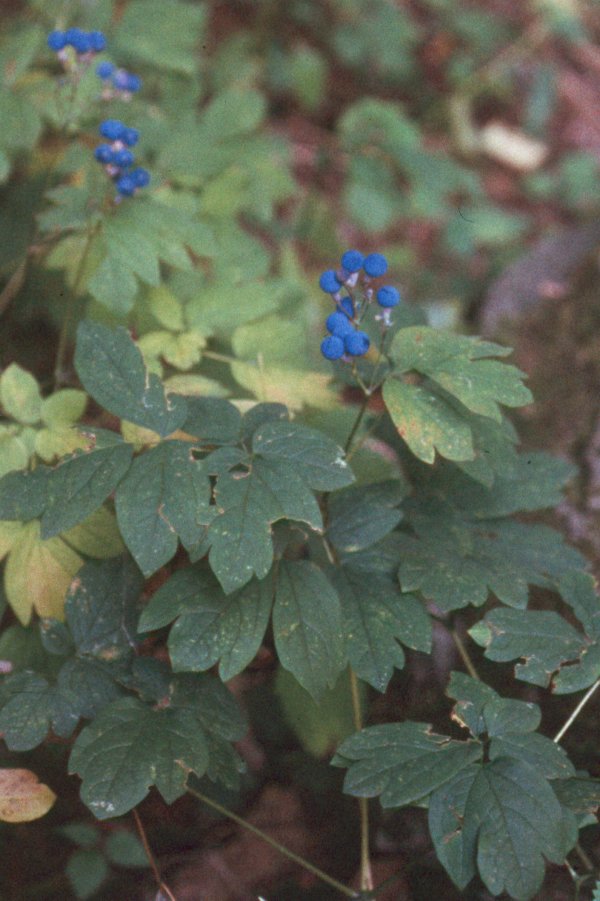
- Caulophyllum thalictroides
[Photo:
sm
med
lg]
- Lovely bluish green foliage
on this East Coast woodland native show off its small but unique yellowish
brown flowers in early Spring. The foliage holds up very well as the large
dark blue berries mature over the Summer.
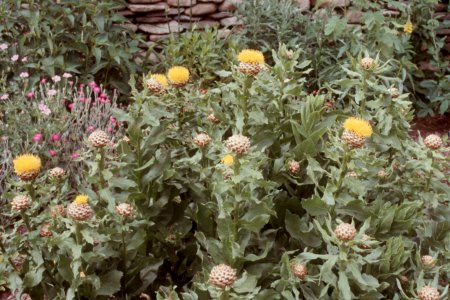
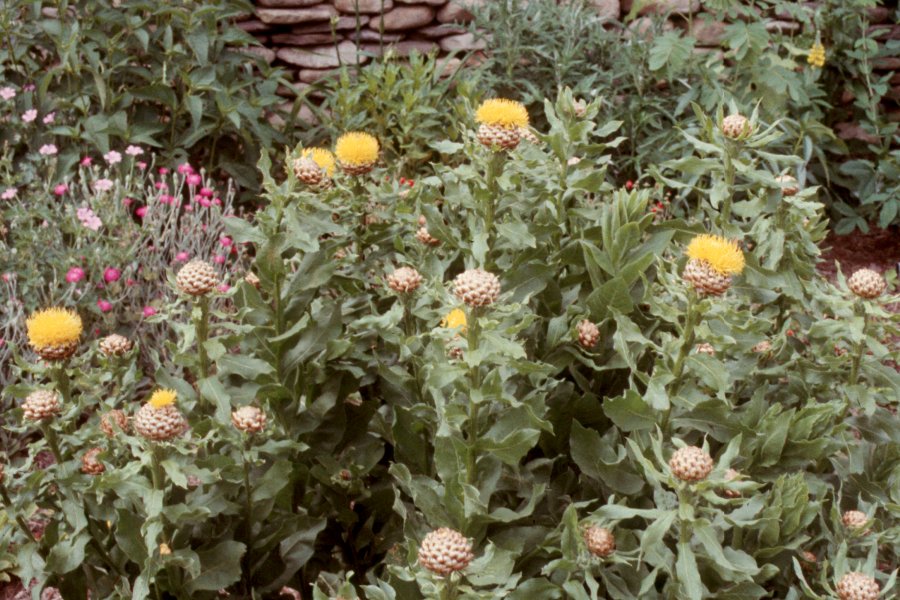
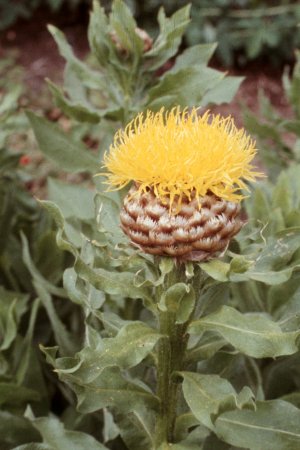
- Centauria macrocephala
[Photo:
sm
med
lg]
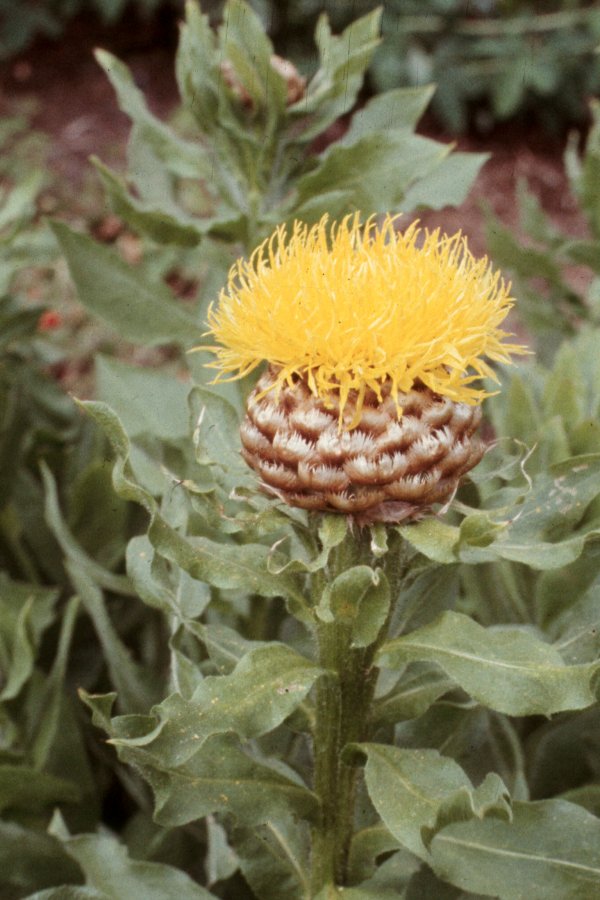
- I love the papery feel of
the blonde sepals that sheathe and support the brilliant yellow flower.
[Photo of flower:
sm
med
lg]
A very easy plant for the mid to back of the sunny border as they can grow
from 24"-36" tall.
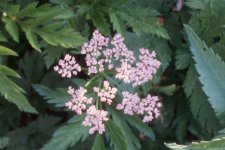
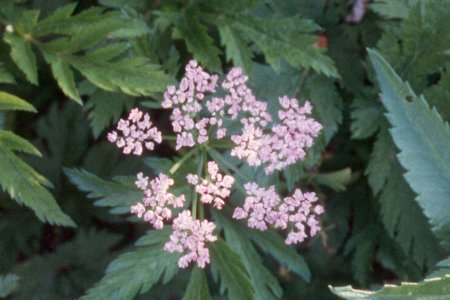
- Chaerophyllum hirsutum roseum
[Photo:
sm
med
lg]
- This low growing umbellifer
from Europe is a very perennial reliable bloomer. It has nicely dissected
foliage and umbels of light pink flowers in early Spring. Height is about
8"-16" tall.
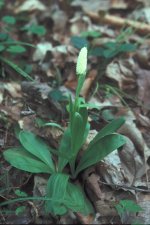
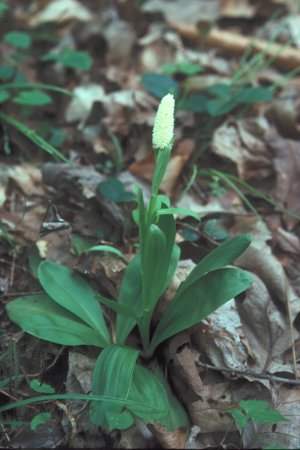
- Chamaelirium luteum
[Photo:
sm
med
lg]
- 12" - 24" spikes of soft fluffy
white flowers from a tight basal rosette on this native woodland plant.
Male and female flowers are produced on separate plants.
- Chelone glabra
- The white form of the "Pink Turtlehead".
- Chelone lyonii
[Photo:
sm
med
lg]
-
- Chimaphila maculata
-
- Chrysanthemum nipponicum
- Who knows anymore?? Chrysanthemum,
Leucanthemum, Dendranthemum, the taxonomists have been hard at work confusing
us with more revisions. I've always called this cool plant with succulent
foliage Chrysanthemum. It has large daisy like flowers in mid to late Summer.
- Chrysanthemum Venus
[Photo:
sm
med
lg]
- Give this Autumn blooming plant plenty of room because she is a very
fast grower. The salmon colored flowers last for weeks at a time when
there is not much else going on in the garden. A tall plant at 24" or so.
Full sun to part shade.
- Cimicifuga japonica
- The Asian counterpart of our
native listed below is only about 18" - 24" tall, besides being shorter
in stature, the leaves resemble a cross between Oak and Maple leaves and
are quite lovely. Flower spikes and times are somewhat similar.
- Cimicifuga racemosa
- Our native "Black Snakeroot"
or "Black Cohosh" can grow as tall as 6 feet. I've even seen it shoot up
to 9 feet at Rainforest Gardens in British Columbia. I love the fragrance
of its long spikes of fluffy white flowers in mid Summer. Easy to grow
in full to part shade.
- Cimicifuga ramosa 'Brunette'
[Photo:
sm
med
lg]
- Slightly shorter
than C. racemosa, but taller than C. japonica, the almost black, beautifully
dissected foliage of this named cultivar, is a plant that's never failed
to stop traffic along the border in my garden, where its comfortably made
itself at home. I can't say whether the flowers are whiter than all of
the other Cimicifugas, or its just the contrast with the foliage. The flowers
even smell more fragrant.
- Claytonia caroliniana
- Named for one of our early
American botanists, John Clayton (1693-1773), who lived in Virginia, "Carolina
Spring Beauty" as it is known in these here parts lives up to that common
name. One of the earliest of wildflowers, it blooms for weeks in early
March before it goes dormant in mid Spring. The flowers are white or pink
with darker pink stripes. All Claytonia species prefer rich moist soils
and light shade and are tasty additions to that wild foraged salad. C.
caroliniana has ovate lanceolate foliage and grows into a plant about 3-6"
tall. A good companion plant would be ferns as they start unfurling
their fiddle heads around the same time that Claytonia is going beddy bye.
- Claytonia sibirica
[Photo:
sm
med
lg]
- Unlike our two native, extremely ephemeral, East Coast Claytonias,
or as they are appropriately known, "Spring Beauties", what you get here
is a remarkable little plant that will just flower itself silly. Beginning
in early Spring and going all the way through Summer and into Autumn, not
only is the foliage supple and perpetual, but the small pink and white
striped flowers just keep on a comin'. Self-seeding is welcomed and not
a nuisance. Plants get up to about 6" and prefer moist shade.
- Claytonia virginica
- Similar in culture and flower
as Claytonia caroliniana, but with more elongated and narrow foliage.
- Clintonia umbellulata
[Photo:
sm
med
lg]
-
Let's be adults here and resist all of the Monica Lewinski jokes as we
break into discussion of "Clintons Lily" Named for DeWitt Clinton (1769-1828
and a Governor of the State of New York), not Wild Bill Clinton (1946-?)
and Prez of the US. Really cool, globular black berries follow umbels of
bright white flowers on 6" to 16" stems. This species is stoloniferous
and will make a tidy little display clump in just a year or two. She prefers
a moist, cool root run in humusy rich soil.
- Clematis stans
[Photo:
sm
med
lg]
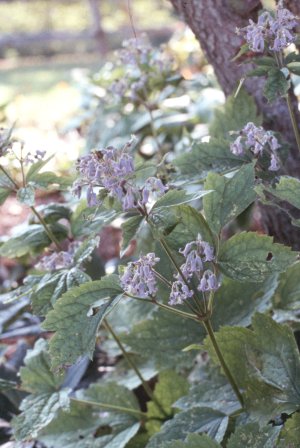
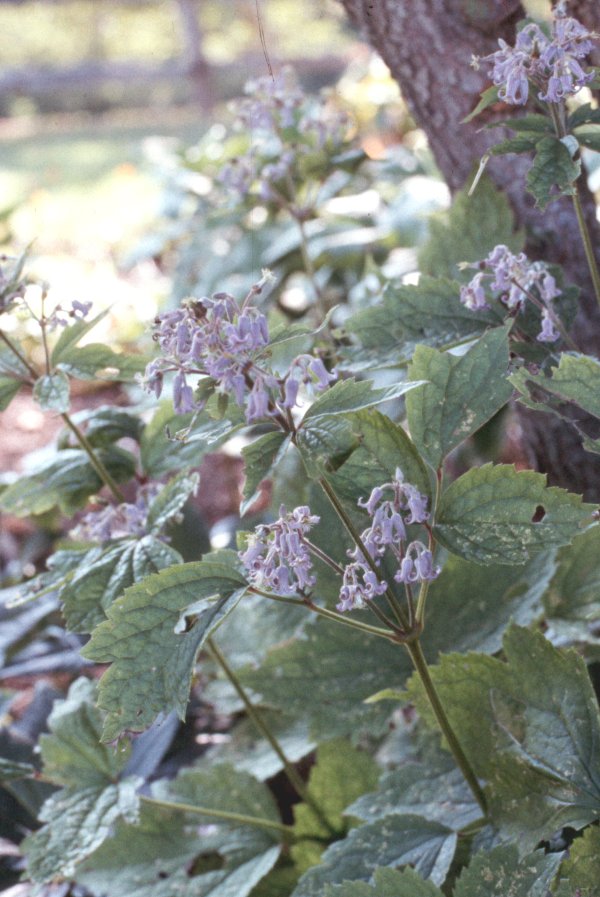
- Small, but adorable little pendulous, violet- lavender flowers in late Summer with recurved petals on a shrubby, erect plant. I got the seeds from the Ofanu Botanic Garden in Kanagawa prefecture Japan. It's growing very well in full shade under a Dogwood tree. Very interesting.
- Clintonia borealis
[Photo:
sm
med
lg]
- Similar in stature and habit as Clintonia umbellulata, which is described below. Flowers and goes dormant about a month earlier. Lovely yellow flowers.
- Codonopsis lanceolata, ovata etc.
[Photo:
sm
med
lg]
- I say etc. here
because I'm muddled in a very confused nomenclature situation. It seems
that the species that I've been growing as C. ovata is not C. ovata. according
to leading Codonopsis authority, Paul Kneebone, it's?????. He doesn't even
know but he thinks that its very interesting and unusual. Anyway, what
are Codonopsis?? It's a genus of about 32 species of climbing plants in
the Campanulaceae family native to Central and Eastern Asia. They seem
hardy and easy enough to grow, so stay tuned as this mystery genus unfolds.
- Conopholis americana
[Photo:
sm
med
lg]
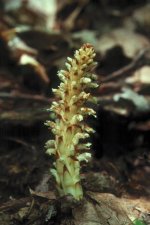
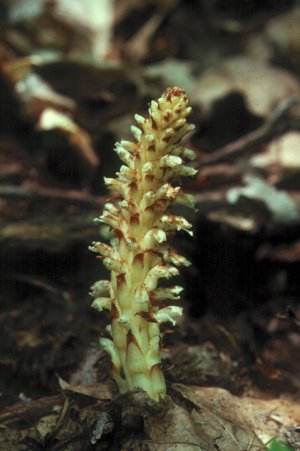
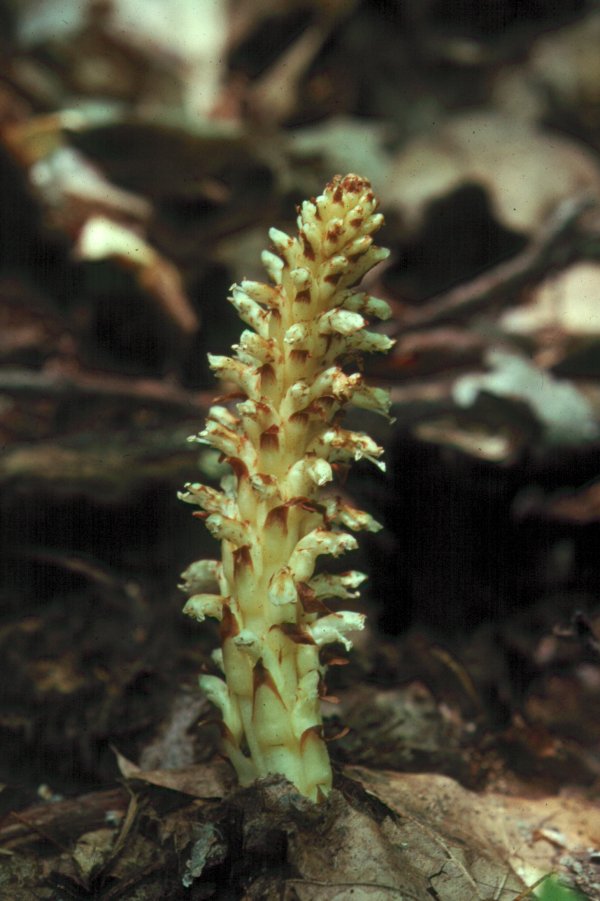
- This is here for educational purposes only as I have tried several times to grow these interesting tree root parasites in the garden with no success. I've also ruined a chainsaw chain and bar trying to get the root out of the ground. If anyone has mastered this plant, I'd love to hear about it.
- Convallaria montana
- Our Native counterpart to the
early flowering Spring favorite, "Lily of the Valley". A much more graceful
plant when compared to its European cousin, with a graceful arching flower
stem. 4-8" tall and sometimes a shy flowerer, but well worth
growing.
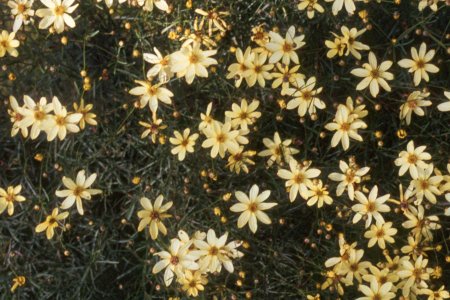
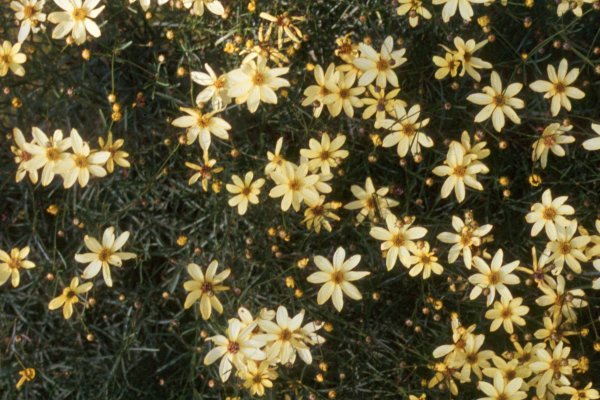
- Coreopsis 'Moonbeam'
[Photo:
sm
med
lg]
- One of the easiest plants in the world to grow and a fine plant to boot. Bright yellow flowers over fine textured foliage for weeks in mid Summer. 12" -24 " tall, full sun to part shade, almost any soil will be tolerated.
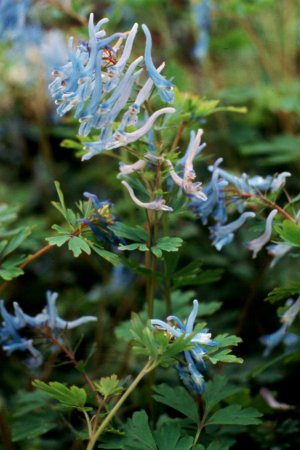
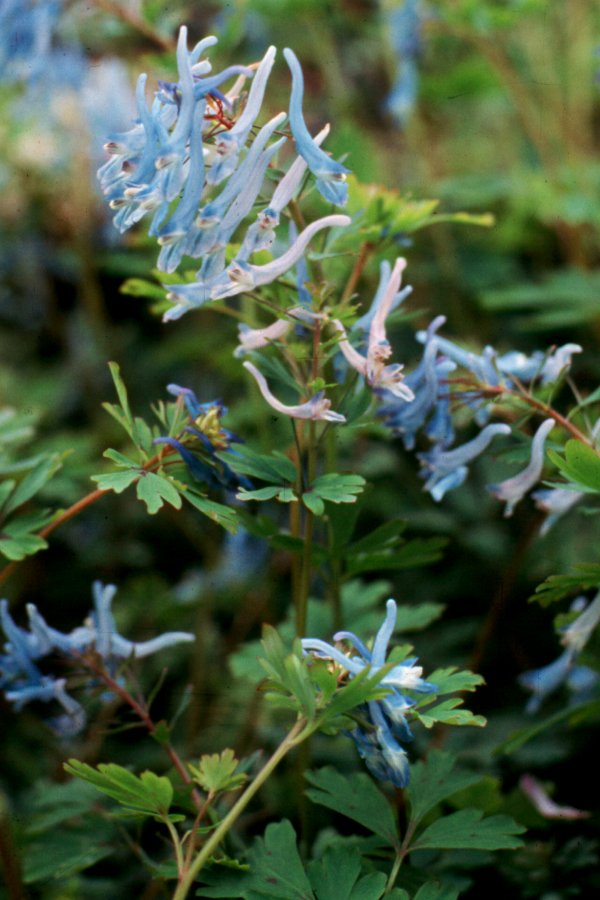
- Corydalis flexuosa 'China Blue'
[Photo:
sm
med
lg]
- I've got a
love/hate relationship with this plant. The lovely dissected foliage is
quite attractive, the flowers are a blue that gardeners would kill for
and the fragrance, oh the fragrance. But I can't seem to keep it alive in
the garden. Everyone that I talk to has the same problem, yet they keep
buying it year after year by the thousands. I know that it needs moist
shade and can tolerate dry during its Summer dormancy, but.... think that
most gardeners would do well to grow it as an annual or tender perennial
that you bring a small piece of inside for the Winter. It does well in
a pot and will increase so rapidly that all of your friends will have a
pot before you know it.
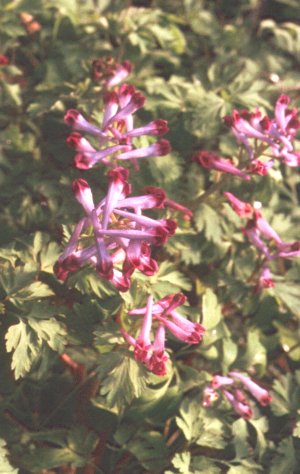
- Corydalis incisa
[Photo:
sm
med
lg]
- An almost indescribable shade of
lavender with dark purple tips is the best way that I can describe the
flowers of this bulbous, biennial Corydalis species. The foliage is soft
and very dissected, somewhat glaucous and kind of delicate. Lament not
that it isn't perennial, as it will set copious amounts of shiny black
seeds and you will never be without it. Plants are about 8-12"
in flower. They seem to do equally as well in sun or shade.
CYCLAMEN
- Cyclamen cilicium
- A hardy species with flowers somewhat similar to
Cyclamen hederifolium and leaves somewhat similar to Cyclamen coum.
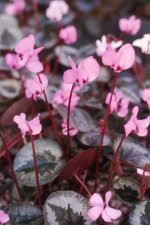
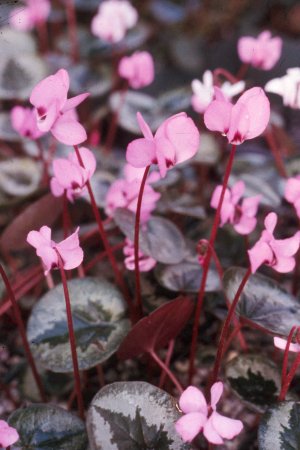
- Cyclamen coum
[Photo:
sm
med
lg]
- Similar to C. hederifolium, described
below, with the exception of a more rounded leaf and even more variable
flower color, this species flowers after the foliage appears, usually in
November in my garden, and continues through the end of the year.
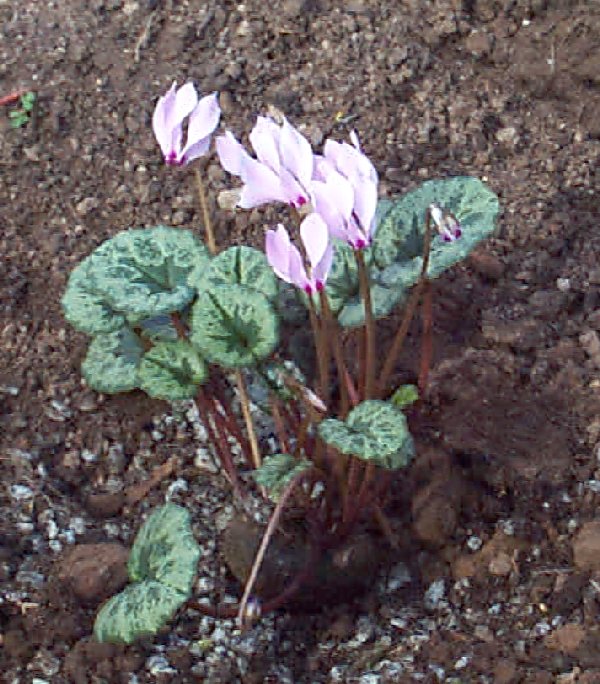
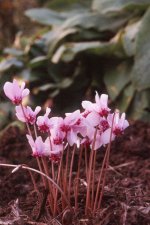
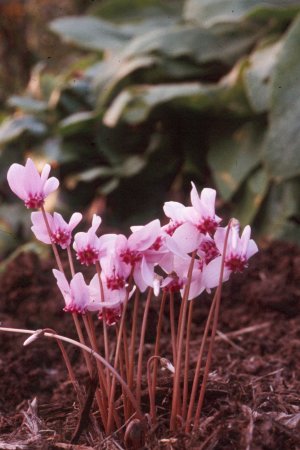
- Cyclamen hederifolium
[Photo:
sm
med
lg]
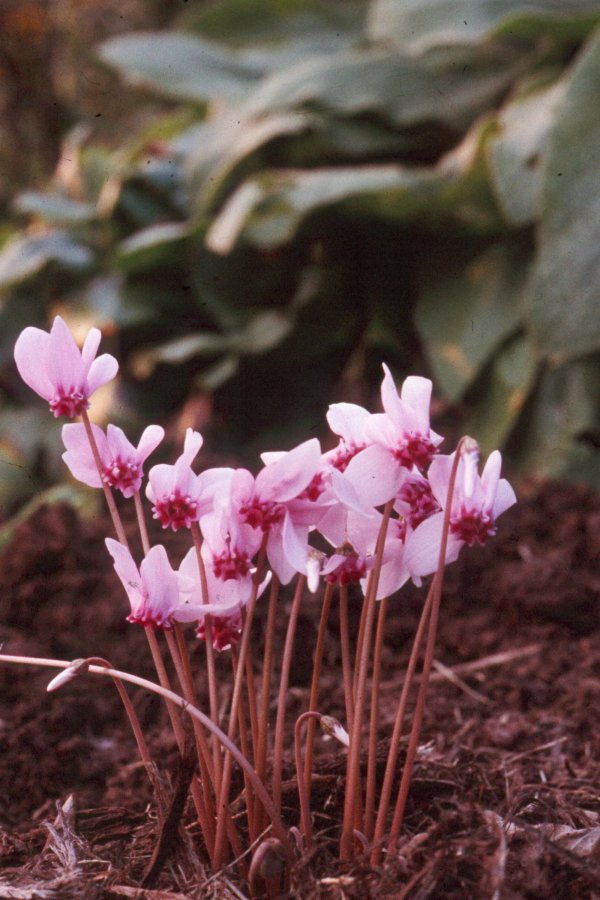
- Where do I begin talking about
a group of one of the easiest to grow, most misunderstood plants ? If I
can only use one word it would be DRAINAGE! Especially during their short
Summer dormant period. What other plant gives you beautiful pink and white
pendulous flowers in September and Octpber and spectacular silvery mottled, immensely
variable foliage all Winter? Plant with the bulbs slightly above soil level
under a tree for shade and drainage and you'll soon have a huge colony.
- Cymophyllus fraseri
[Photo:
sm
med
lg]
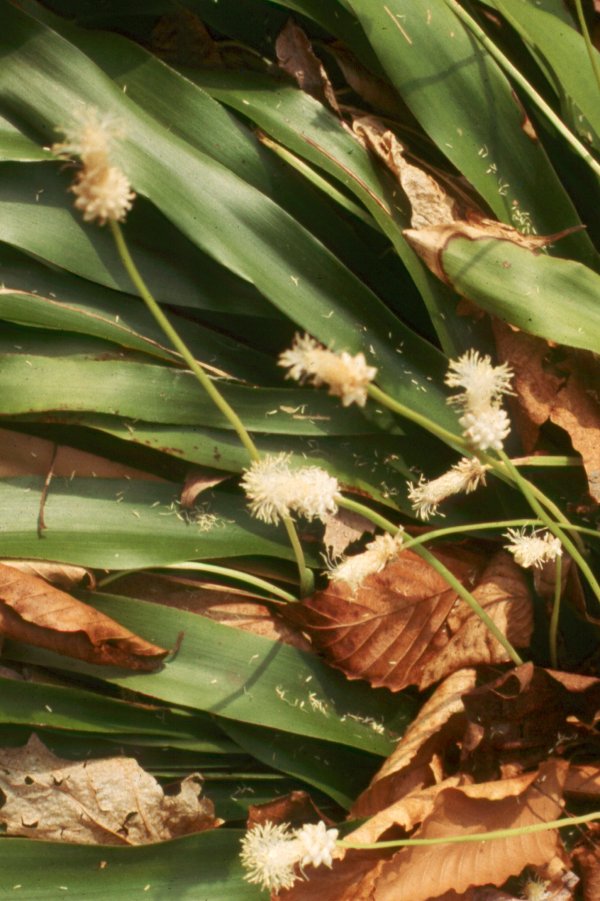
- Once at home in the genus Carex,
this shade loving, unique plant now has its own monotypic genus. The up
to 2" wide 12-24" long dark green, glossy leaves are a great
Hosta companion in your rich moist shade garden. In early Spring, they
send up interesting large white, fluffy flowers that resemble Sanguisorba.
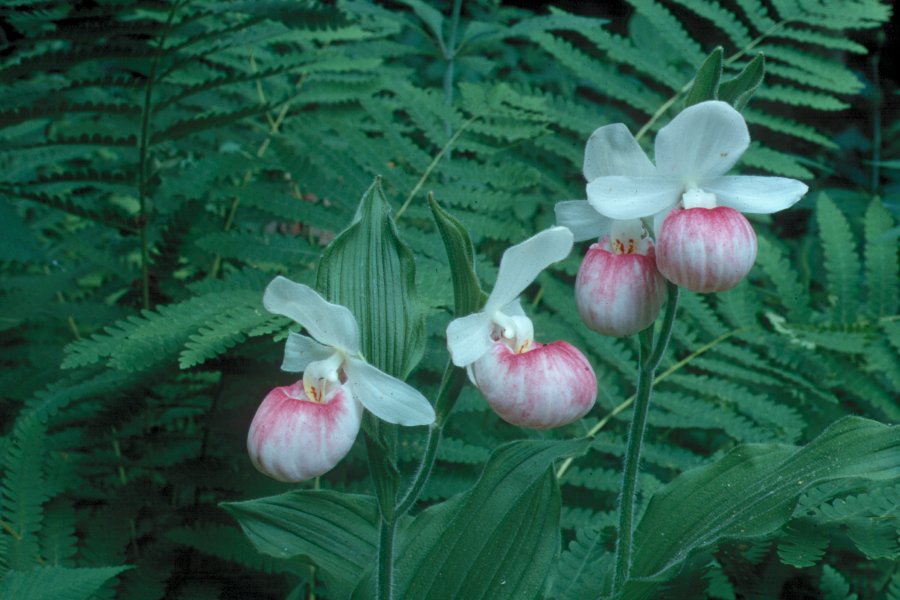
- Cypripedium acaule
[Photo:
sm
med
lg]
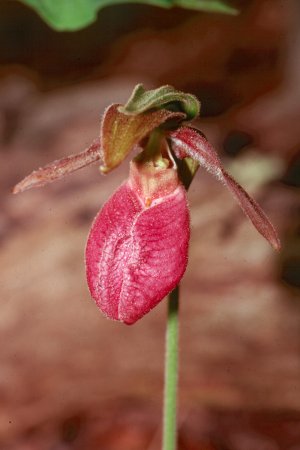
- Another plant here for educational purposes only. I don't know anyone that has successfully grown this plant in the garden. Seems that there is a primitive mycorhizal fungal relationship with soil fungi. If you see this plant in the wild, enjoy it, but leave it alone.
- Cypripedium parviflora pubescens
[Photo:
sm
med
lg]
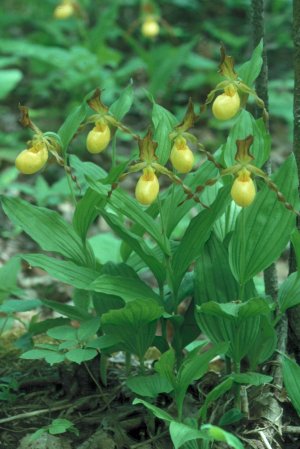
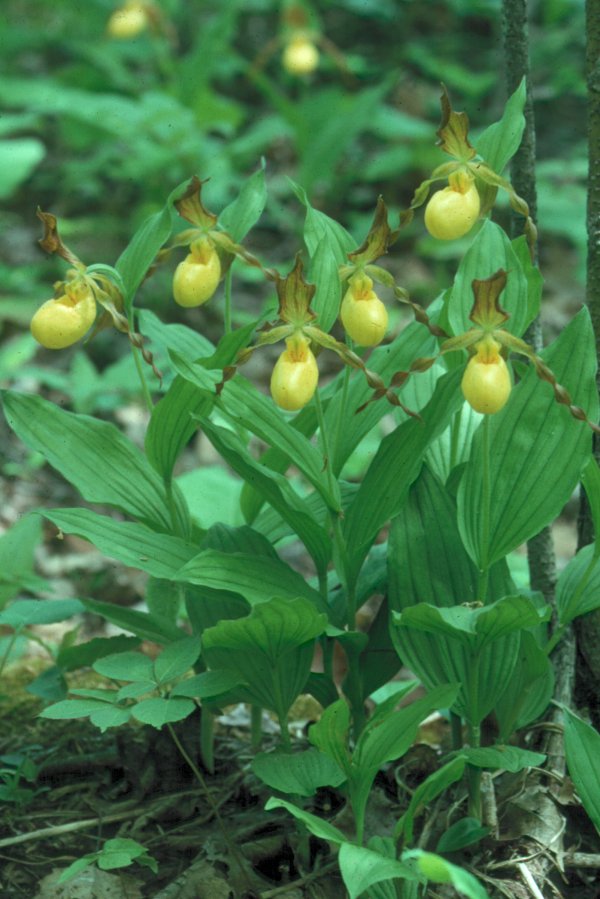
- The small flowered Yellow Lady Slipper is easy to grow in the garden. Although we don't have it in production, we have several friends that offer it. It can be visited in our display gardens in mid Spring.
- Cypripedium reginae
[Photo:
sm
med
lg]
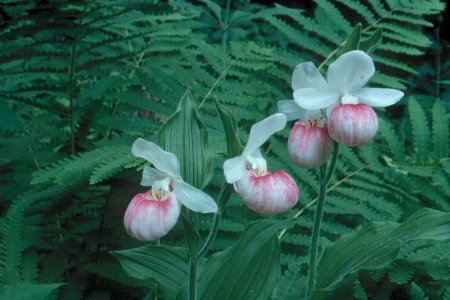
- The Showy Lady Slipper is easy to grow in the garden. Although we don't have it in production, we have several friends that offer it. It can be visited in our display gardens in mid Spring.
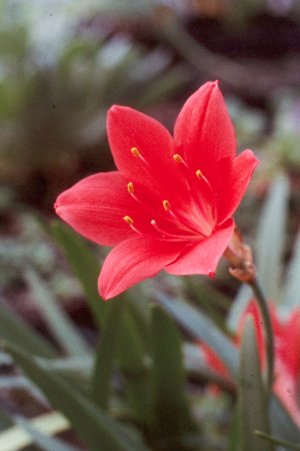
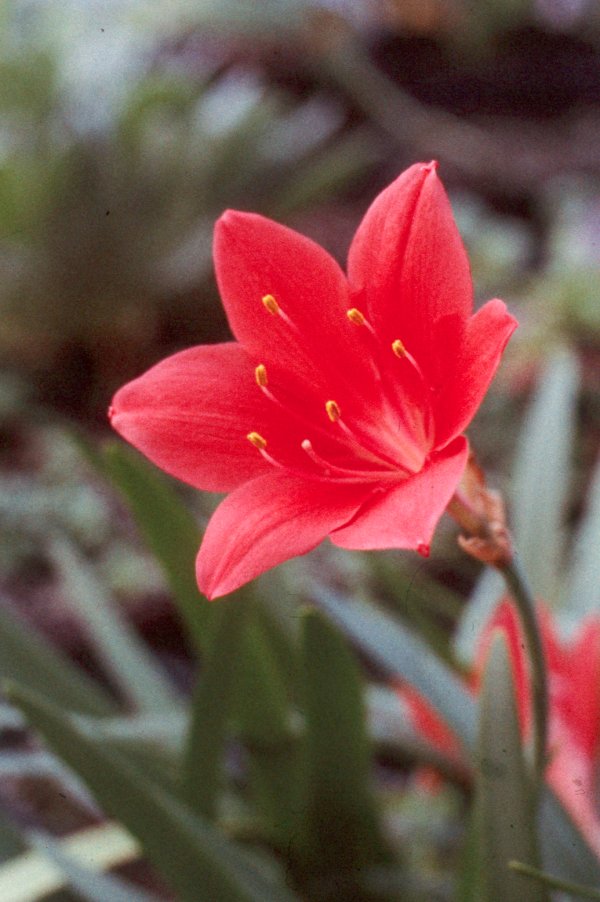
- Cyrtanthus elatus
- Once known as Vallota speciosa,
this Amaryllis family member is a tender perennial that when grown as a
houseplant, quickly fills a pot and flowers a couple of times a year with
pinkish -
Not hardy here in zone 5, in fact I don't know what the hardiness is
of this cool little "Houseplant". We grow it in a 6" pot that it fills in
a matter of months, once the pot is full it will commence to
flowering several times a year and producing copious amounts of
new bulbs that can be easily peeled off and given to friends.
Huge, red Amaryllis-shaped flowers last for quite a long
time with several flowers per stem.
- Cyrtanthus elatus
[Photo:
sm
med
lg]
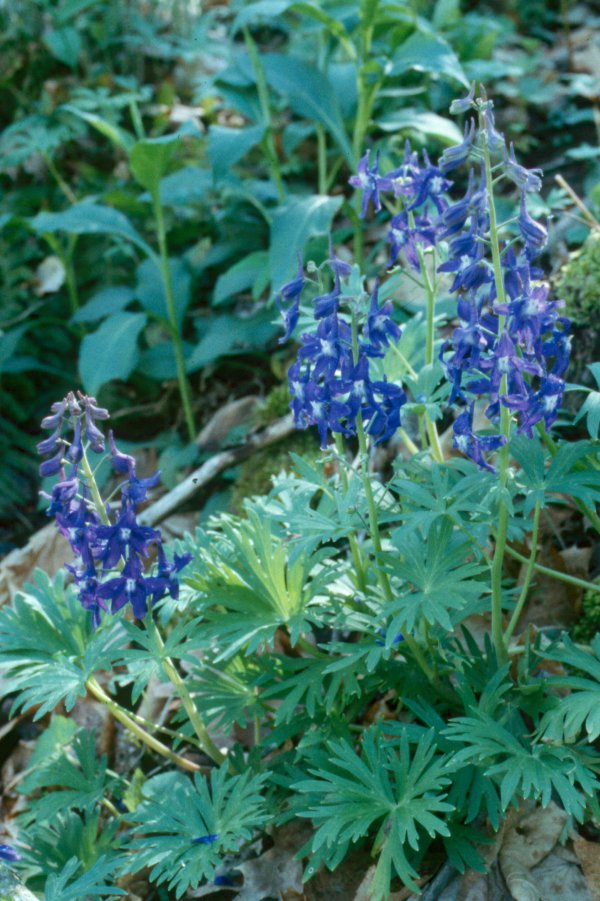
- Delphinium tricorne
[Photo:
sm
med
lg]
- A lovely dwarf, ephemeral "Larkspur"
for the front of a woodland border. Plants form sort of a mound of dark
green dissected foliage and shoot up dark purple flower spikes in early
Spring. They never need staking and go dormant after spilling their cargo
of seed.
- Dentaria diphylla
- The common name, "Toothwort" (get
it dent=teeth, huh?) is appropriate as the foliage is quite toothed. A
very nice clump is formed in full sun or full shade. Pinkish white flowers
are held about 3" to 6" above the 12"- 18" plant. Although an early Spring
bloomer, the plant hangs around and keeps up its good looks all the growing
season long.
- Dentaria laciniata
- Cousin to the above species, this
is a bit more ephemeral. But the foliage is finely dissected and is quite
lovely as it whorls itself around the stem.
- Deschampsia caespitosa 'Northern Lights'
- Interesting
clumps of variegated grassy foliage. This is a very new introduction and
I haven't had much experience with it, but, as a rule they are idiot proof
plants to grow. Rarely reverts. 6"-12" tall.
- Dianthus andronatii
- Probably the tallest Dianthus
species that I have ever imagined. Picture florescent pink flowers atop
36-48" stems emanating from a clump of finely textured, glaucous
foliage.
- Dianthus japonicus
[Photo of flower:
sm
med
lg]
[Photo of foliage:
sm
med
lg]
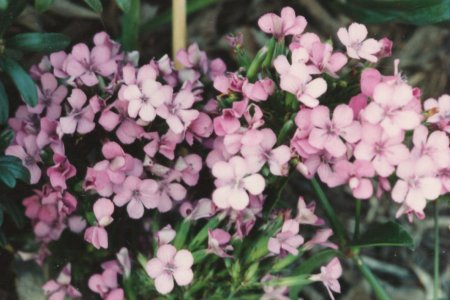
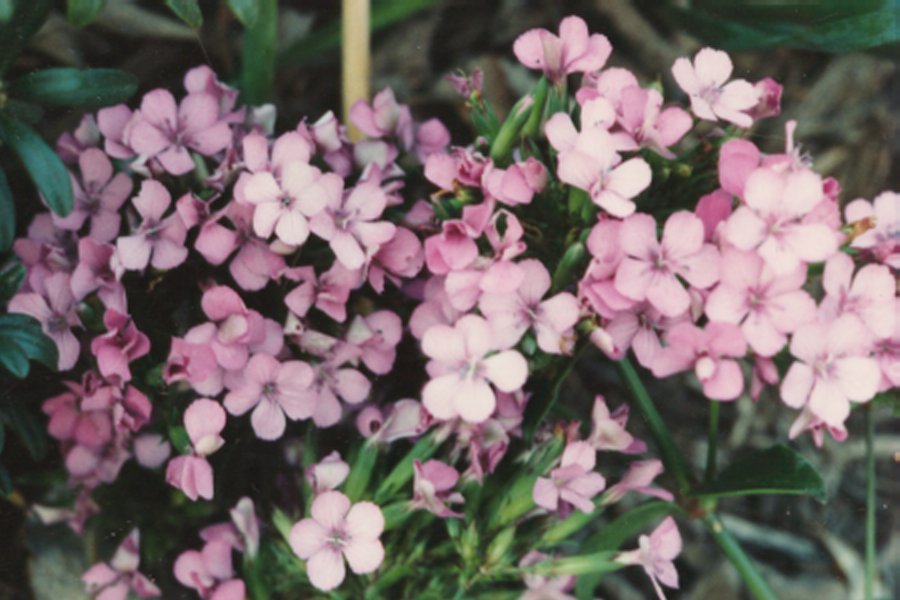
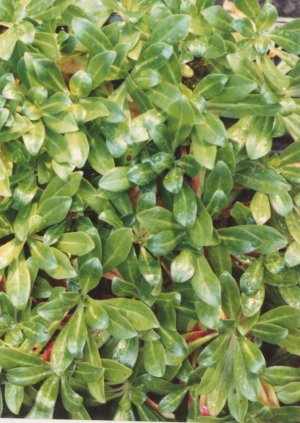
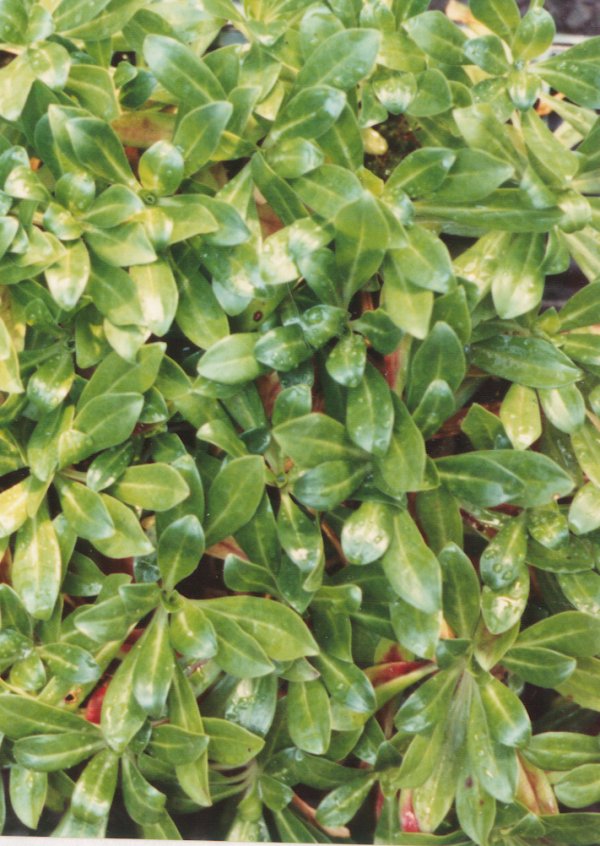
- Most everyone that's seen
this plant has failed miserably in the identification of even its family.
With 3" long, 1/2" wide, dark, evergreen, glossy, wax-like foliage, this
plant continues to confound and amaze. If that weren't enough, stand back
in early Summer as it produces
large heads of pink flowers that last for weeks. As with most Dianthus,
this species is a perennial, but short-lived plant although it self-sows
into a lovely colony and will be around for years.
- Dianthus kitabelii
[Photo:
sm
med
lg]
- You'd think that you were looking at a difficult to grow, rock garden plant
when you see this baby. A 8"-12" cushion of tiny bristly foliage that sends
up lotsa 6" stems of extremely fragrant, pure white flowers in late Spring.
But noooo, its happy just about anywhere.
- Dicentra canadense
[Photo:
sm
med
lg]
- Called
"Squirrel Corn" by the mountain folk because the little round tubers that
they grow from look like corn kernels. It's ephemeral, finely-cut glaucous
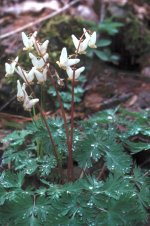
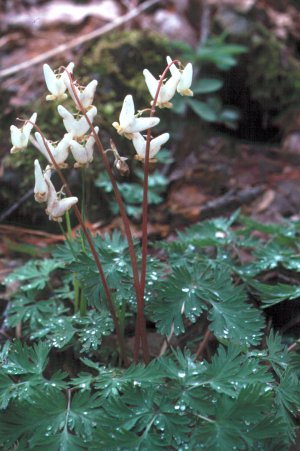
foliage shows off the interesting creamy white, pendulous, fragrant flowers
in early April through mid to late May.
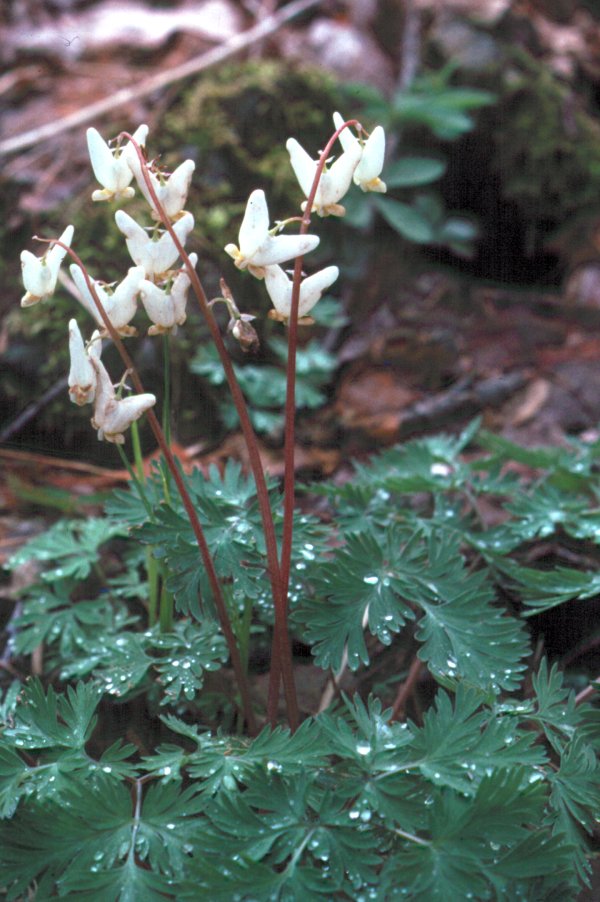
- Dicentra cucullaria
[Photo:
sm
med
lg]
-
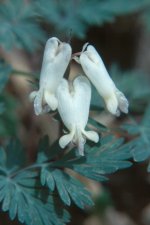
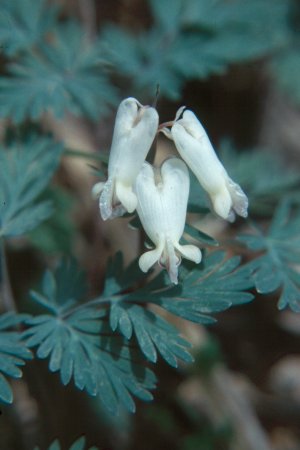
Somewhat similar to the above but with larger, very interestingly shaped
pendulous flowers. Both species are ideal for the front of the woodland
border, but should be interplanted with other types of plants due to their
early disappearing act.
- Dicentra eximia
[Photo:
sm
med
lg]
- This species of Dicentra is more suited to the sunnier areas of the garden.
I grow it in full sun and also in a part sun bed. It seems to flower at
varying intervals throughout the Summer. Plants grow to about
12-18" and have very interesting pendulous flowers in varying
shades of pink and red. Their shiny black seeds are easy to germinate
and before you know it you will have an impressive stand.
- Digitalis parviflora
[Photo:
sm
med
lg]
- A perennial "Foxglove" that grows from a 6"-10" plant with flowing dark
green foliage. In early Summer each plant sends up a slender spike of brilliant
yellow, small pendulous flowers. It flowers for quite an extended period
and will self seed graciously to form a lovely colony.
- Diphylleia cymosa
-
Stand back and give this fellow some room, especially if your soil is moist
and rich. Impressive, large scalloped leaves on 18-24" stems.
Small white flowers in early Spring followed by dark berries. Foliage holds
up well all season long. Prefers cool, really moist shade, but will do
well in the average shade garden.
- Disporopsis pernyii
[Photo:
sm
med
lg]
- Very interesting plant from the Himalayas. The two clones that we are producing
are from Elizabeth Strangman at Washfield Nursery in Kent, England. One
has clear white pendulous Disporum like flowers below the horizontally
weeping sprays of dark green glossy foliage and the other form has dark
stripes on the flowers. Plants grow to ??" tall and form a clump of 6-12
plants in a year or two.
- Disporum lanuginosum
-
Nodding greenish yellow bell shaped flowers on a 12" 36" plant in mid Spring. light green, deeply veined foliage. Neat orange
berries in late Summer through Autumn. Loves moist woodland conditions.
- Disporum maculatum
[Photo:
sm
med
lg]
- What a great delight for very early Spring. Creamy white, frilly flowers
festooned with fine chocolate speckles. After the flowers set seed the
plant is adorned with pendulous red berries. Plants are 12-18"
tall and prefer average to moist woodland conditions.
- Disporum sessile variegata
- Similar in habit and cultural
requirements to the above Disporum species. However this variegated form
of the Asian species is sort af aggressive. The drier the soil the less
vigorously it will behave.
- Diuranthera major
[Photo:
sm
med
lg]
- A hardy "Spider Plant"??? Yep, not only is this Chlorophytum (Hanging basket
house plant) relative, hardy from the rootstock, but it will seed around
and form a really cool colony of plants with long narrow foliage and thick
stems of unusual white flowers with yellow anthers.
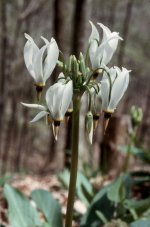
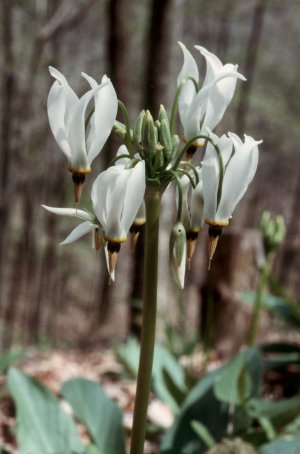
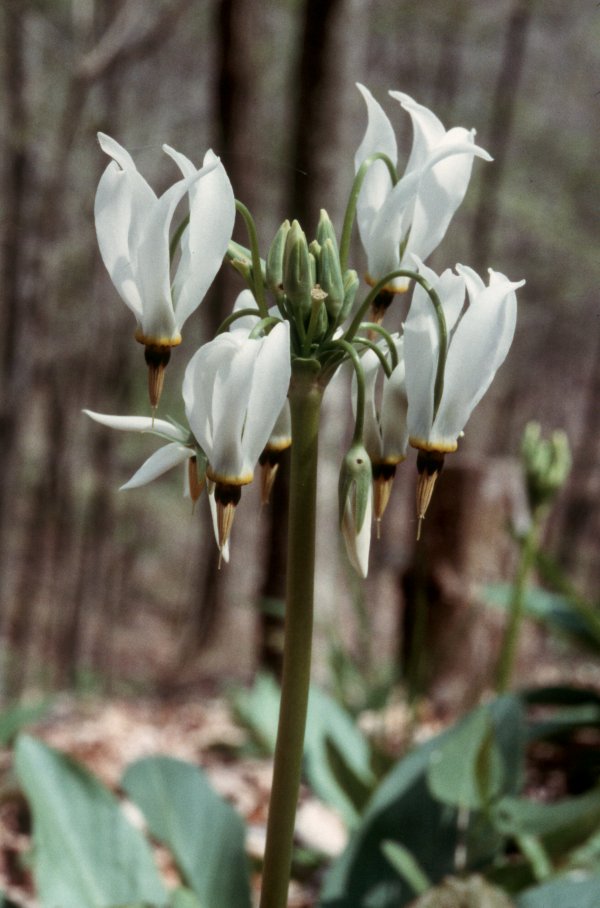
- Dodecatheon meadia
-
Fragrant, white pendulous flowers resemble "Shooting Stars", hence the
common moniker. A very early Spring bloomer fades away into the sunset
once the upfacing capsules of seeds ripen to a rich brown color. This Primrose
relative is very easy to grow from seed. Flower stalks emanate from a basal
rosette and reach up 12-18". A large colony is quite a statement.
- Dodecatheon meadia alba
[Photo:
sm
med
lg]
- Dorycnium hirsutum
-
Soft, silvery, furry foliage grace this sun loving, drought tolerant Mediterranean
native. In the late Summer it is covered with pinkish white flowers. I'm
not 100% confident about the hardiness, although it may have been in too
moist a location to survive more than a few years.
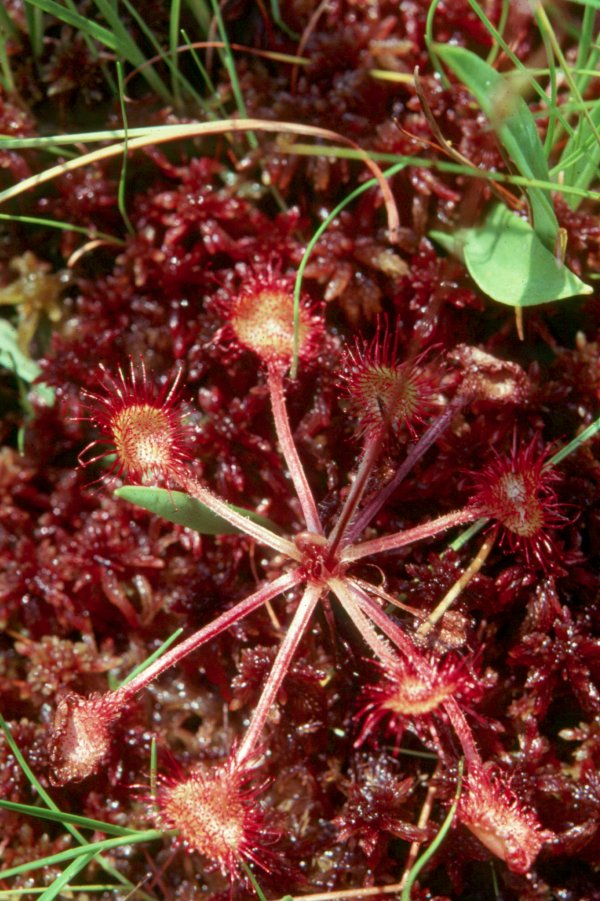
- Drosera rotundifolia
[Photo:
sm
med
lg]
- While carnivorous plants are not currently in our repertoire, I couldn't resist showing you this adorable little "Sundew" This was photographed in a bog of billions of them at the "Dolly Sods', a great natural area here in WV.
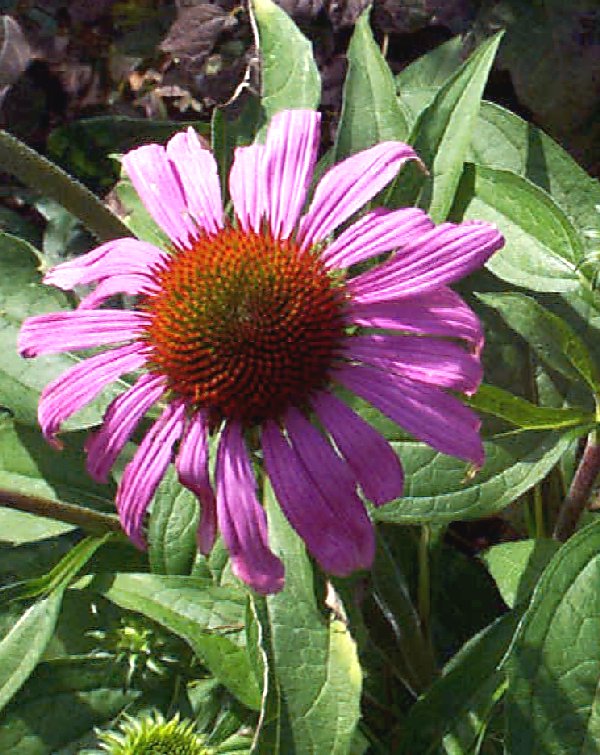
- Echinacea
purpurea
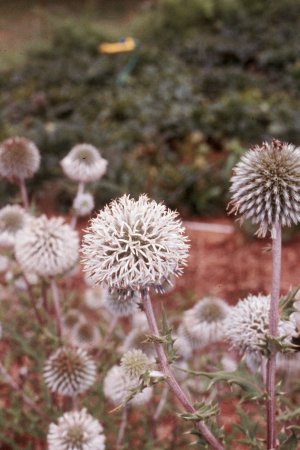
- Echinops 'Arctic Glow'
[Photo:
sm
med
lg]
-
Large white globular flowers on 24-30" stems. The lower part
of the foliage starts getting a little ratty in mid Summer as the plant
comes into flower. I recommend planting it in mid border so that something
a little shorter can skirt the lower part of the plant.
- Erythronium americanum
[Photo:
sm
med
lg]
-
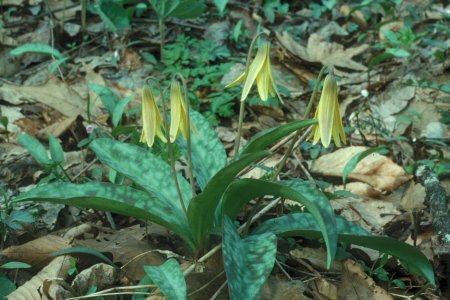
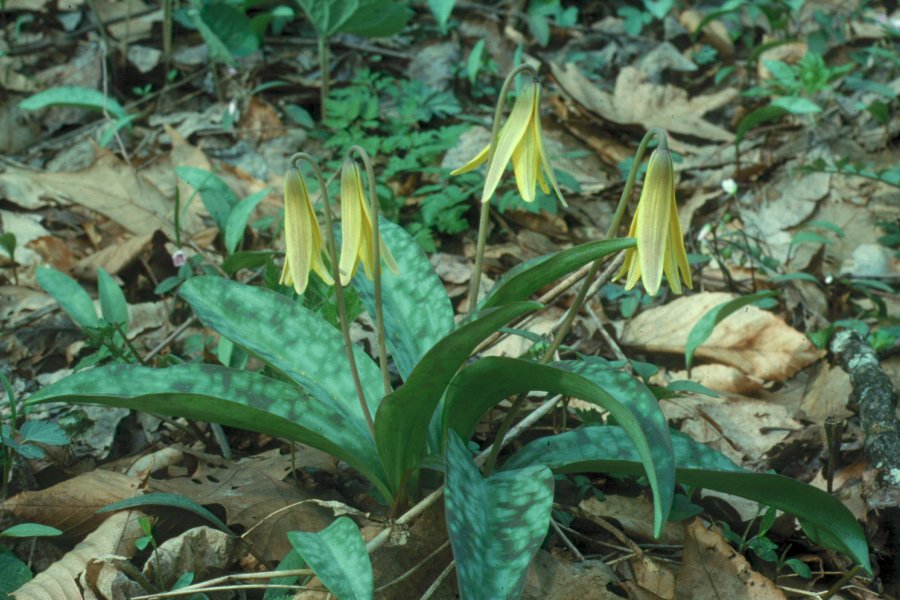
The first Wildflower that I learned when I moved to West Virginia and started
exploring the woods around my farm. Brilliant yellow nodding flowers over
supple, interestingly mottled foliage. Blooms March through April. 3-6" tall. Full shade to part sun.
- Euonymus fortuneii 'Kewensis'
- Adorable little "micro foliage"
on a creepy crawly little plant that's a perfect ground cover in a rock
garden or just about anywhere.
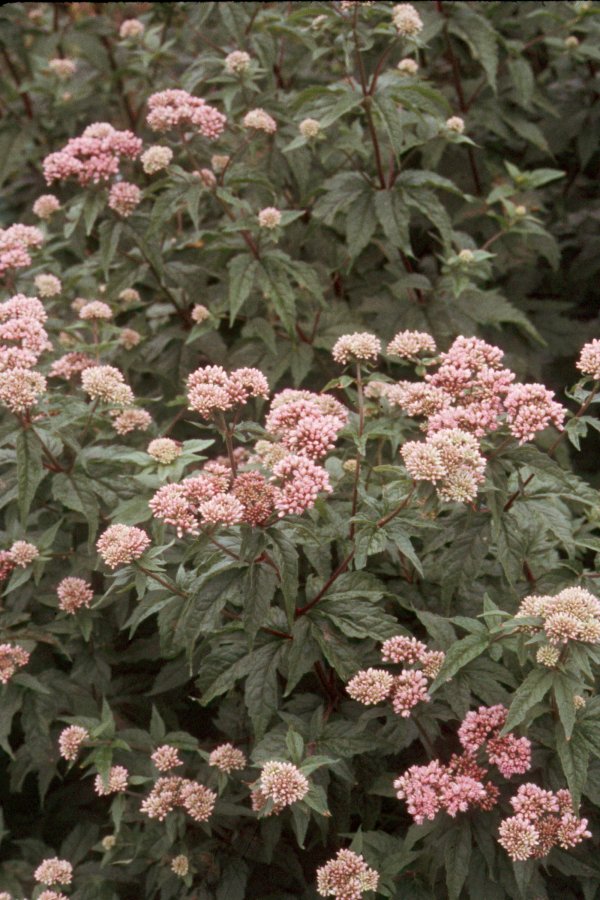
- Eupatorium cannabinum 'Flore Plena'
[Photo:
sm
med
lg]
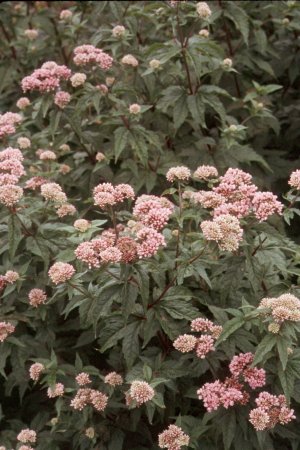
- This European "Joe Pye Weed" has lovely Marijuana-like foliage, unfortunately
without the THC. We'll bail you out if you get busted with it, but no matter
how naive your local fuzz is, when they see the double pink flowers that
are sterile and last for weeks and weeks they'll ????????????.
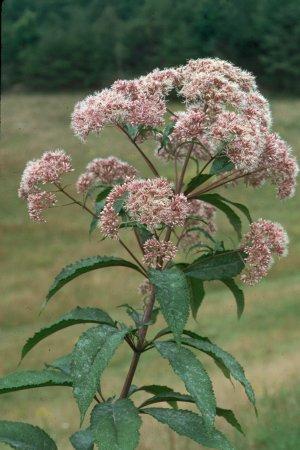
- Eupatorium fistulosum
[Photo:
sm
med
lg]
-
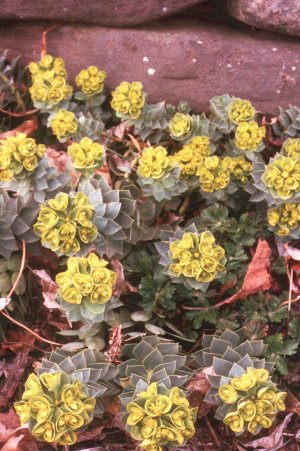
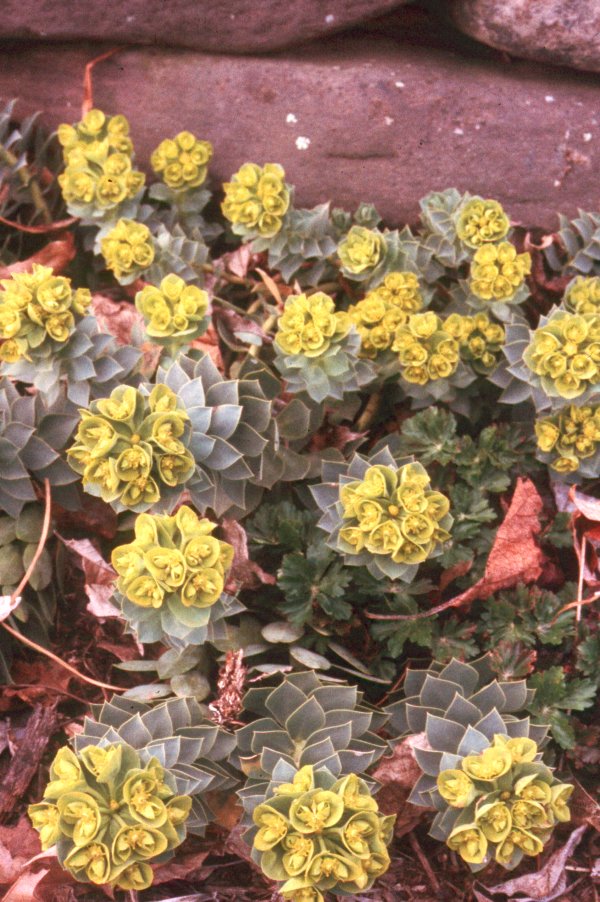
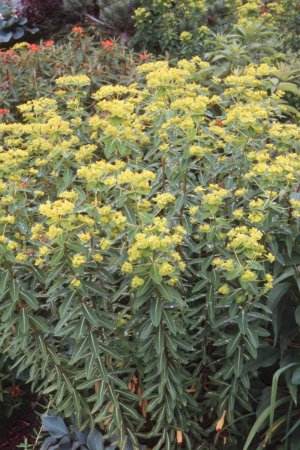
- Euphorbia 'Chameleon'
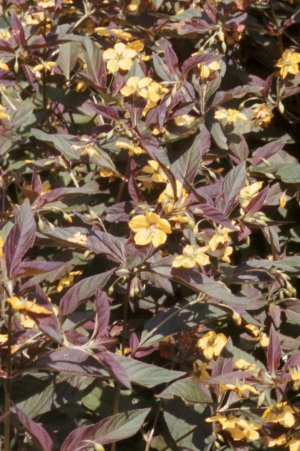
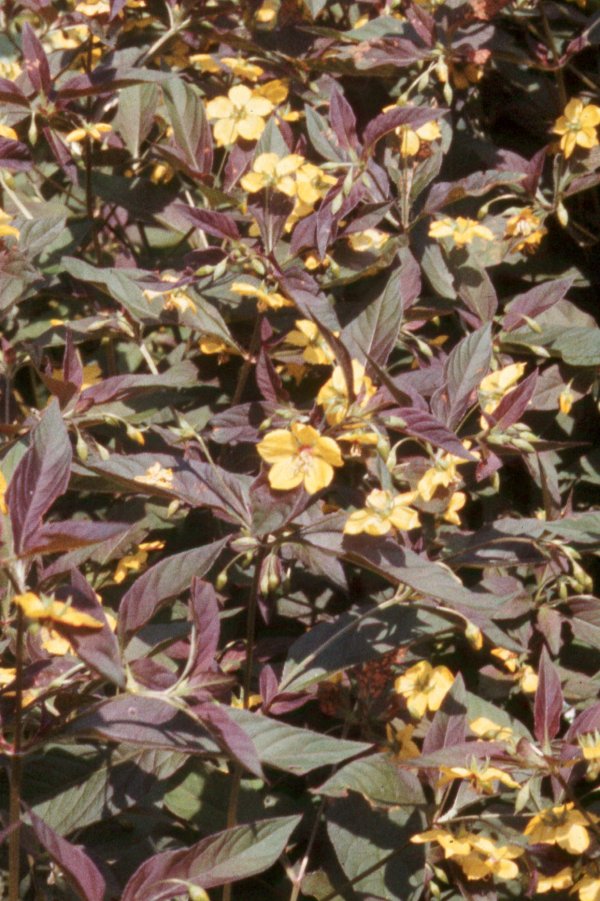
- Dark burgundy foliage provides a great foil for the small yellow flowers on
a 12" -24" plant. Self seeding can be a slight nuisance, but the seedlings
pull up very easily.
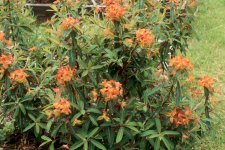
- Euphorbia griffithii 'Fireglow'
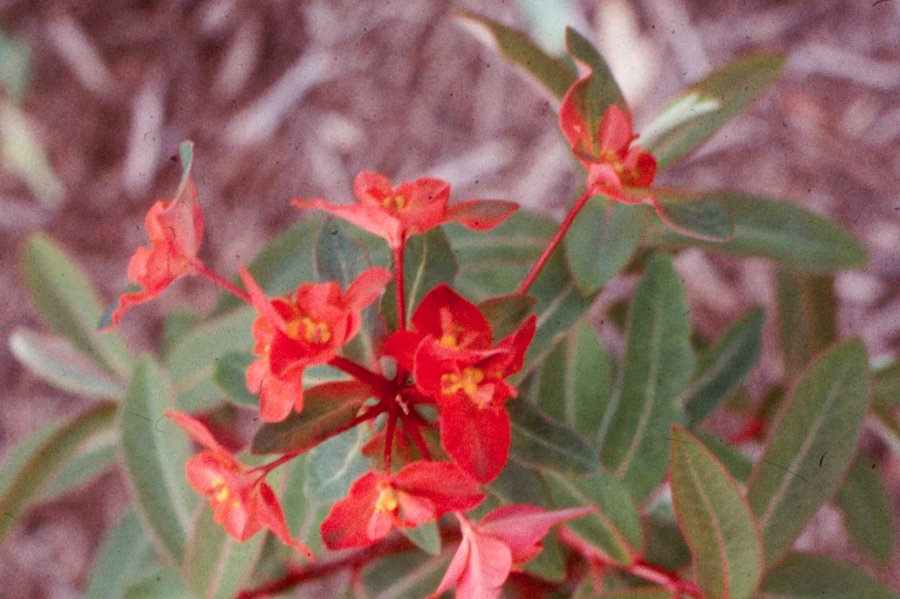
[Photo:
sm
med
lg]
[Photo of flower:
sm
med
lg]
- Give this baby plenty of room
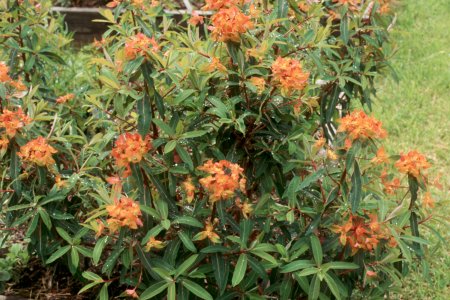
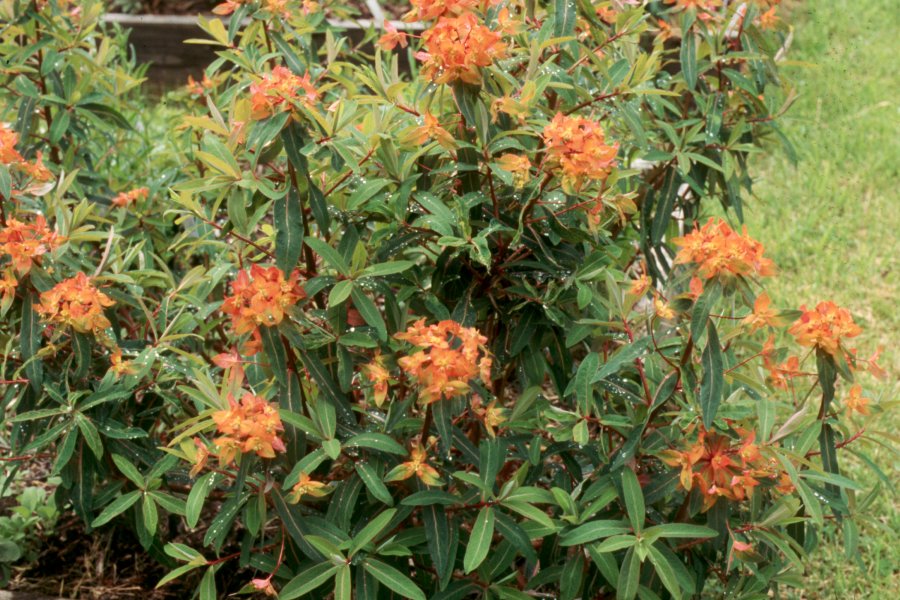
as it loves to sprawl. The brilliant orange Poinsettia like flowers seemingly
last for months as they slowly fade. Good cut flower.
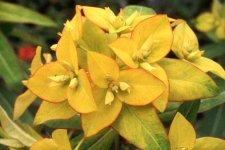
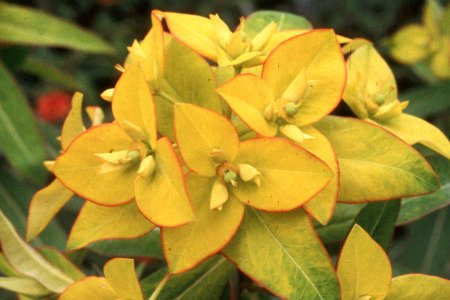
- x Euphorbia 'Jessie'
[Photo:
sm
med
lg]
- An interspecific cross between
E. griffithii 'Fireglow' and
E. polychroma with the
best attributes of both in a totally different and unique plant. Erect
stems up to 36" with brilliant yellow bracts, so intense that the color
bleeds on to the upper leaves. But....the real kicker is the bright perfectly
formed orange margin around each of the bracts. In tissue culture now,
and multiplying quite well, thank you, it will be available to flower for
you this Summer in limited quantity.
Click for further information.
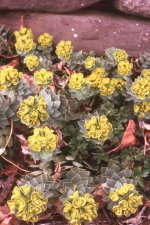
- Euphorbia myrsinites
[Photo:
sm
med
lg]
- The bluish/green sprawling stems of this spurge resemble the old favorite house plant "Burros
Tail". Brilliant flowers are produced in early Spring at the tip of each
stem. I let it seed around the garden and who knows where it will pop up,
wherever it does, it's welcome.
- Euphorbia polychroma
[Photo:
sm
med
lg]
-
- Festuca 'Golden Toupee'
-
Soft golden yellow mounds of fine textured grassy foliage in the full sun.
Slightly greener in the shade. 3-6". Average moisture.
- Festuca armoricana
- The "Breton Fescue" The common name was all the information that I could
locate on this plant that seems to be a British native. It's really fine,
"Angel Hair Pasta" like texture is a graceful addition to the front of
a border. In full sun plants attain a height of about 6-9". The
tan flowers in mid Summer are very interesting.
- Galax urceolata
- Full
shade to part dun for this acid-loving East Coast native. Large, evergreen,
glossy leaves and cool white flower spikes in mid Spring. Lovely fall color.
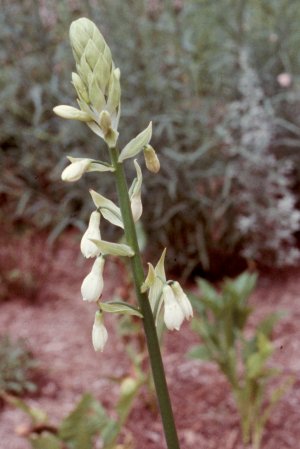
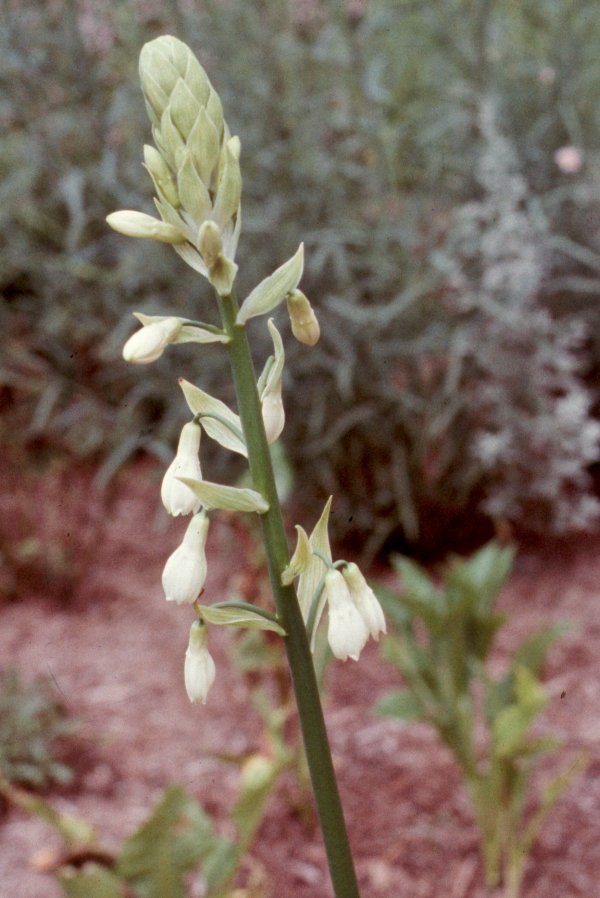
- Galtonia candicans
[Photo:
sm
med
lg]
- There
are three species in this South African genus, this is the most prolific.
They're all easy to grow. The 8-12" long 2" wide leaves produce
a 24-36 " flower spike with many pendulous white flowers in mid
Summer. Full sun to part shade seems fine. Self-sown seedlings make an
attractive display over the years.
- Galtonia viride
-
Actually my favorite species in the genus. This is a smaller plant than
the above, only growing 12-18" tall. Its pendulous flowers are
a soft olive green color.
- Gentiana fetisowii
-
A medium sized, 12-18" and somewhat sprawling Gentian from India
I believe. A reliable, blue flowering plant for part sun and average moisture.
- Gentiana tibetica
[Photo:
sm
med
lg]
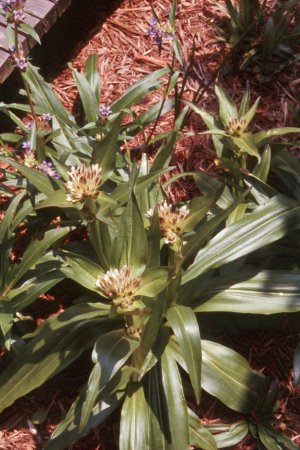
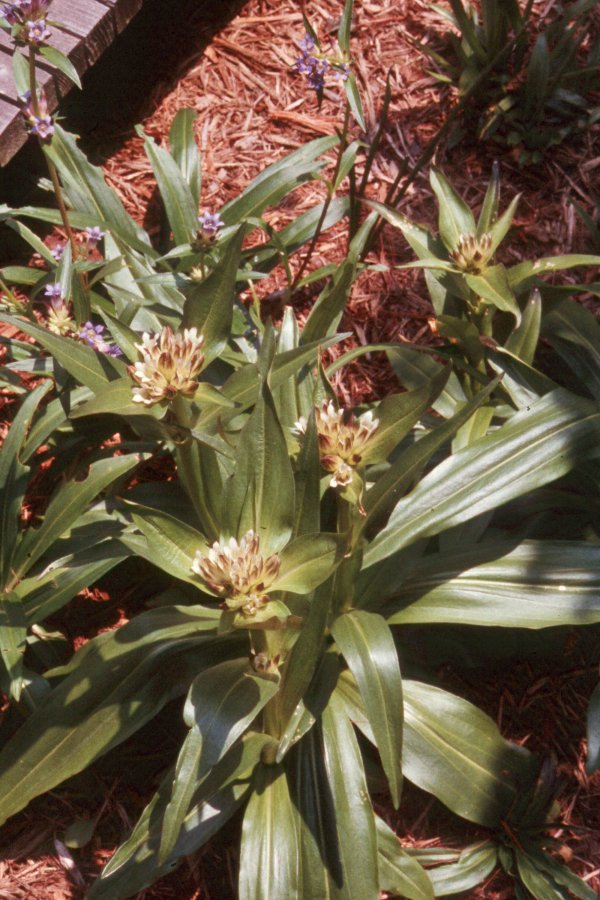
- Large,
strapping foliage holds up well all season and doesn't seem to garner interest
from our slimy, sluggy friends. Makes a good Hosta companion. Unusual,
smoky topaz flowers look good even after they are done blooming in mid-Summer.
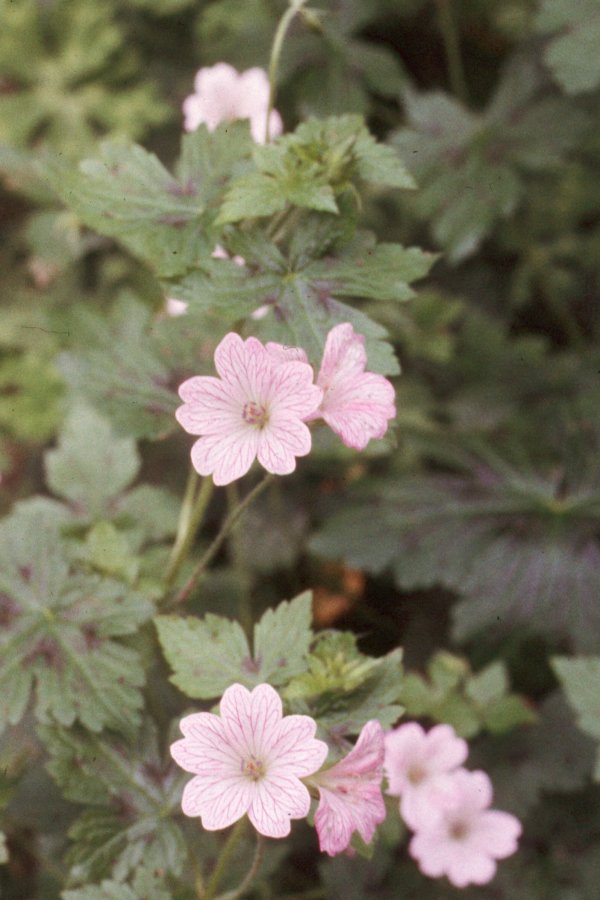
- Geranium 'Biokovo'
[Photo:
sm
med
lg]
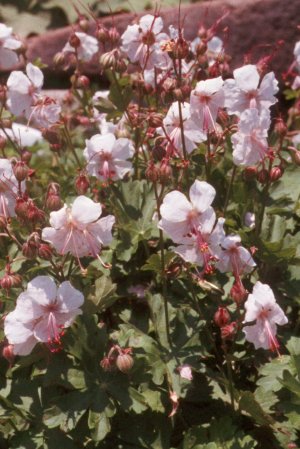
- Copious
amounts of pinkish white flowers in late Spring and then sporadically throughout
the growing season over attractive somewhat dissected foliage. A former
Perennial Plant Association plant of the Year.
- Geranium macrorhizum 'Spessart'
- This is a very fast growing selection
of the species. The large foliage is fragrant and its dark purple flowers
are produced in abundance. Full sun to part shade
- Geranium maculatum
[Photo:
sm
med
lg]
-
Our native woodland Geranium flowers in mid Spring to early Summer. It
grows well in just about any soil in just about any location. The variable
colored flowers range from magenta to purple on 12-18" plants.
I'm on the trail of an elusive white form. Stay tuned kids.
- Geranium'Walters Gift'
[Photo:
sm
med
lg]
-
Very interesting garnet markings on the foliage make this a very worthwhile
plant to grow even if it didn't have lovely pink and white flowers. Quick
to form a nice clump and happy in full sun to part shade.
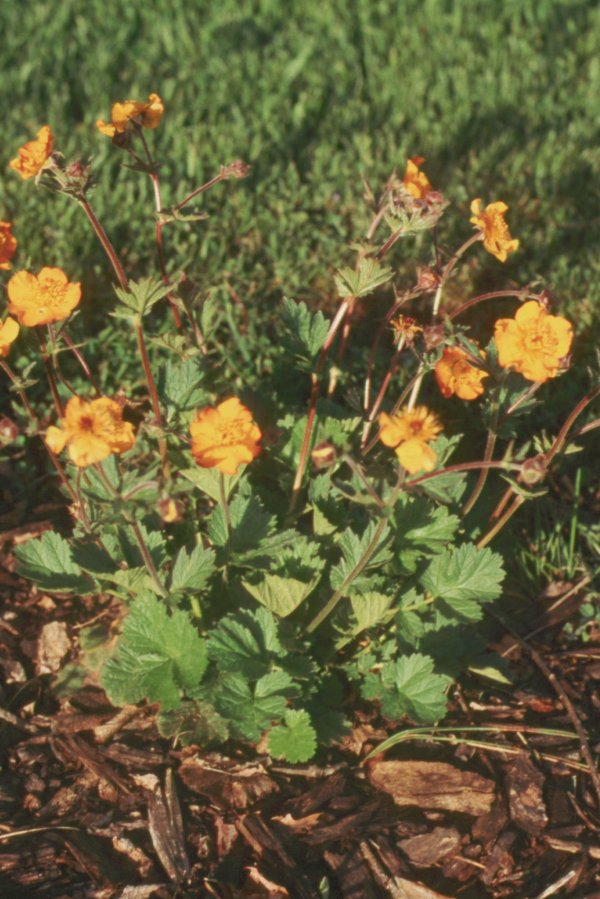
- Geum 'Georgenburg'
[Photo:
sm
med
lg]
- Imagine Apricot flowers held close
to attractive, evergreen foliage and you'll know this plant. In a year,
you'll have a 12" clump from a 2" pot.
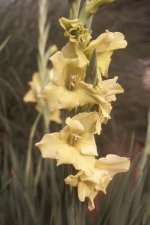
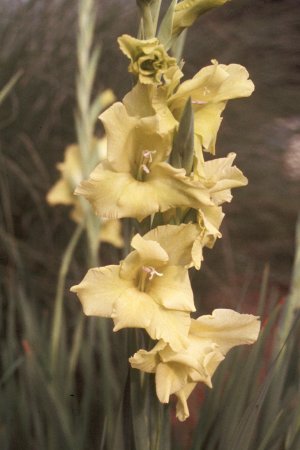
- Gladiolus 'Green Queen'
[Photo:
sm
med
lg]
- My
own selection and somewhat similar to the below described, interspecific
cross. Lime green flowers, perhaps the tiniest bit showier (I hesitated
to use the word gaudy as this is how I feel about most of the modern hybrids)
than the species.
- Gladiolus x gandavensis
- In 1826 in the town of LeMoine France, Louis Van Houte crossed two species,
Gladiolus natalensis with Gladiolus oppositiflorus and created the first
Gladiola hybrid. What a great feat had he accomplished. For all of the
amazing and sometimes gaudy hybrids that followed, this, IMHO (in my humble
opinion) is still the best. A 2" pot makes a 12"-18" clump in less than
2 years of graceful iris-like foliage. In mid-Summer, dozens of 24" stems
are graced with the softest yellow flowers painted with a delicate red
blush in the throat. And to top all this off, its been hardy outside for
over 10 years in my brutal zone 5 garden. WOW!!!
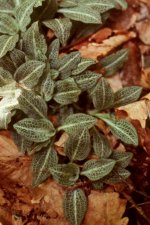
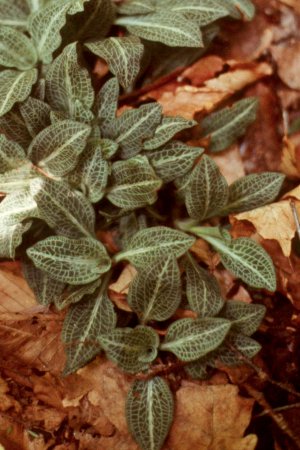
- Goodyera pubescens
[Photo:
sm
med
lg]
- A
cute little woodland orchid species with beautiful, silvery veined foliage
and interesting spikes of small white flowers.
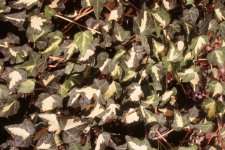
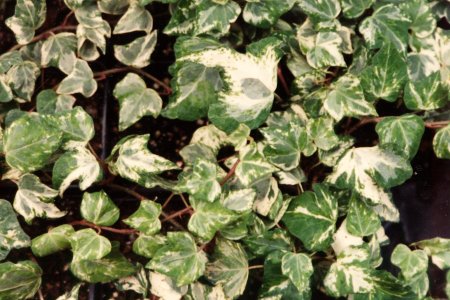
- Hedera helix 'Gold Heart'
[Photo:
sm
med
lg]
- You won't mind pruning out an occasional reversion to all green when you
see how this English Ivy cultivar glows in the shade with its golden leaf
hearts. It's been quite hardy for me for well over 10 years now.
- Hedera helix 'Congesta
- One of the weirdest plants that I've ever grown. This erect
"English Ivy" has the tiniest of leaves that are so close together, you
can't even see the stem. I've never grown it outside so I can't attest
to its hardiness. Though, it just may be. It is however a plant that's
sure to arouse a conversation.
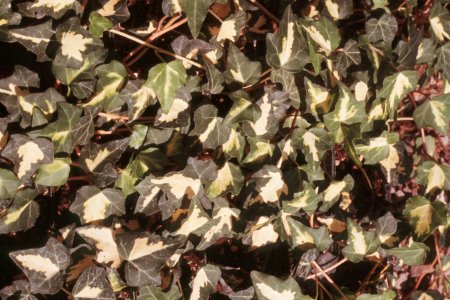
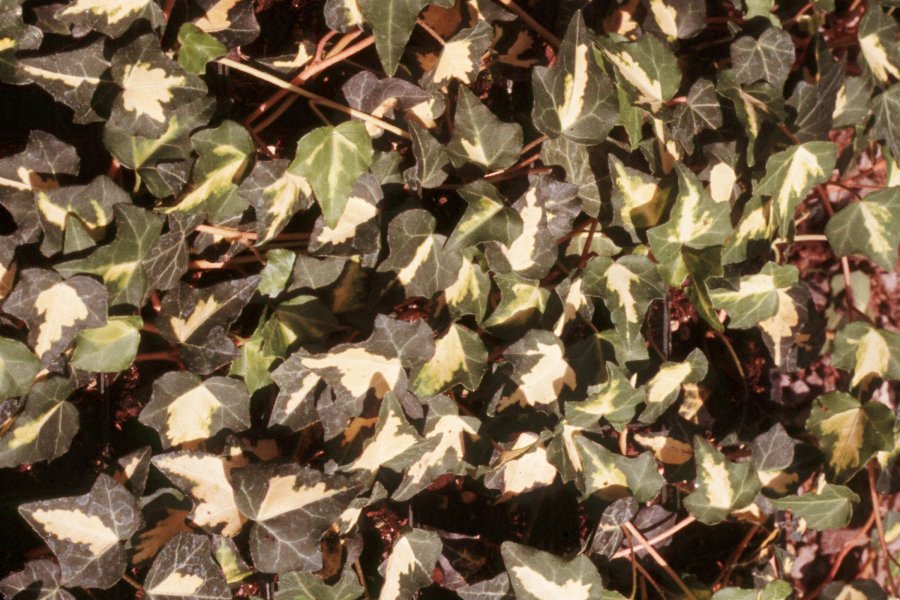
- Hedera helix 'Japan'
[Photo:
sm
med
lg]
- Not really sure about the hardiness of this one either. Dan Heims gave me a
piece of this Japanese named cultivar several years ago. I planted it outside
one year and it didn't make it. I haven't gotten around to trying it again,
but it makes a great hanging basket plant with its beautiful creamy white
variegation.
- Hedera helix 'Treetop'
- This is the adult form of the species. Named by Richard Davis of Ivy Farm several
years ago. It is shrub-like in appearance and supposedly hardy to zone
5. Interesting flowers and dark black berries on a 24-36" plant.
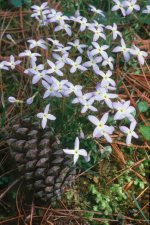
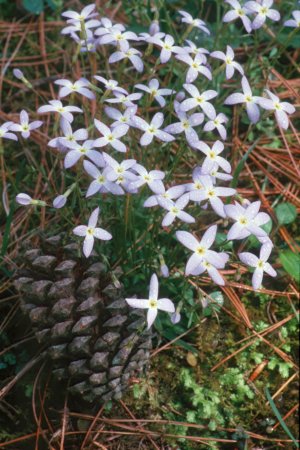
- Hedyotis caerulea
[Photo:
sm
med
lg]
- Ahhhh, "Bluets". Formerly Houstonia caerulea.
You can give her a new name,
but she's still just as sweet as ever. Creamy blue flowers from a tight
little clump in the very early Spring. Flowers shoot up about 6-9"
from the basal clump. Full sun or part shade.
HELLEBORUS
Hellebores are a specialty of the house. See Focus on Hellebores
for articles and picture galleries of plants in our large-scale
Helleborus x hybridus breeding program as well as
Helleborus species.
Hemerocallis 'Autumn Minaret'
In my quest to build a pure species collection of the genus Hemerocallis,
there has been one stumbling block, H. altissima, however on that
journey, I've met a lovely plant along the way. It seems every time someone
sends me a purported H. altissima, its really a lovely cultivar
of her named "Autumn Minaret". She Flowers very late in the season with
6' tall flower scapes bearing yellowish orange outfacing flowers and blooming
over a long period.
Hemerocallis 'Star Dream'
My favorite yellow cultivar may not seem that dramatic as far as
some of the newer tetraploid daylillies go, but its a very reliable bloomer
with copious amounts of bright yellow, somewhat fragrant flowers that come
out at just the right angle to get into your face and grab your attention.
A good cultivar to put in mid border as it gets up to about 36" in flower.
Hemerocallis 'Sunshine Spectaculars'
From the fields of one of the most famous Daylily breeders in all the world,
these unnamed cultivars, mostly diploids and tetraploids come in an array
of colors that cover the entire daylily spectrum. Many plants are worthy
of naming by current standards. Their reasonable price make them a good
choice for mass planting.
Hemerocallis thunbergii
What a great Daylily species! SIX FOOT tall flower stems with brilliant
yellow FRAGRANT, day-blooming flowers! What more needs to be said about
this one, huh?
Hepatica acutiloba
Ohhhh, the Hepaticas, probably my favorite early Spring flowers, very early,
very robust, yet at the same time very delicate. The first reminders of
what is to come in the woods and meadows.
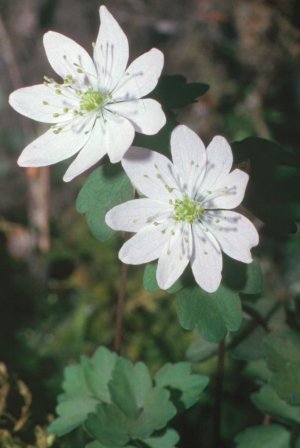
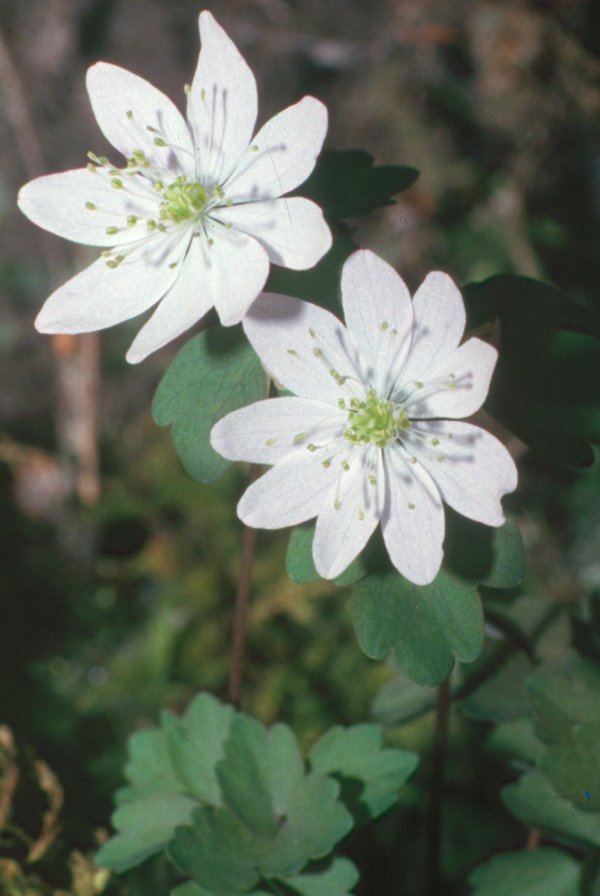
Hepatica acutiloba is
very easy to distinguish from its sister species
Hepatica americana,
by its three-lobed sharply pointed leaves. White to blue flowers with all
shades in between last for weeks. Full shade to part sun, moist but well
draining soil. 6-12" tall.
Hepatica americana
Similar
to the above species except differing in the shape of its rounded leave
tips. I've noticed slightly more marbling patterns in the foliage of this
species. Culture is identical to the above.
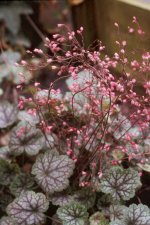
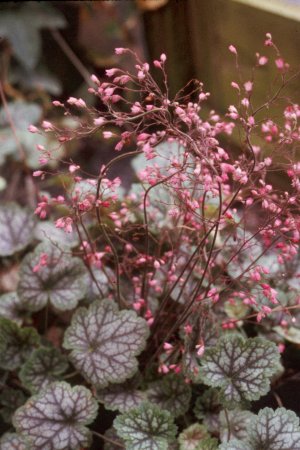
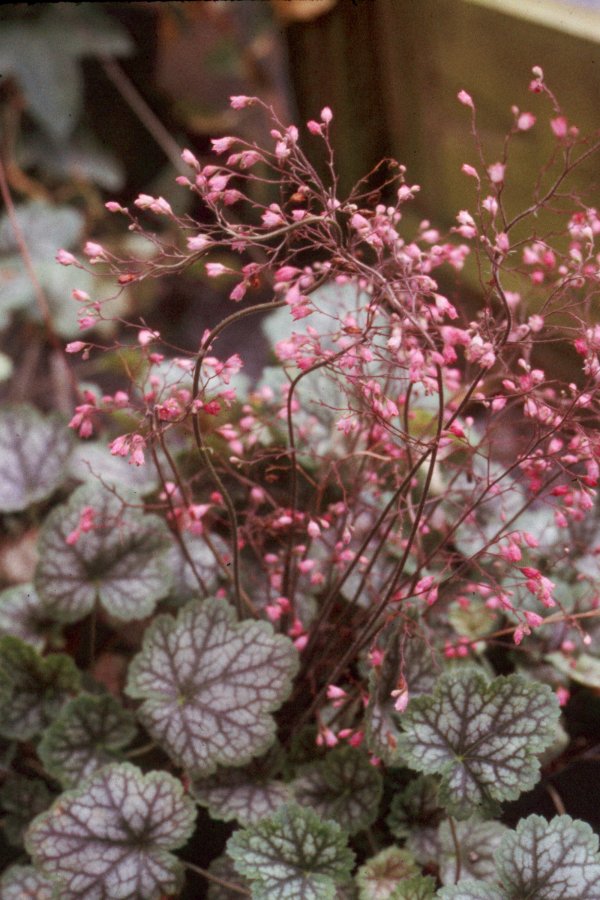
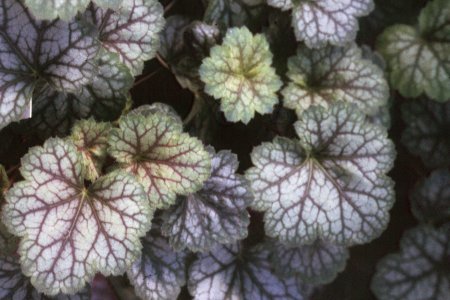
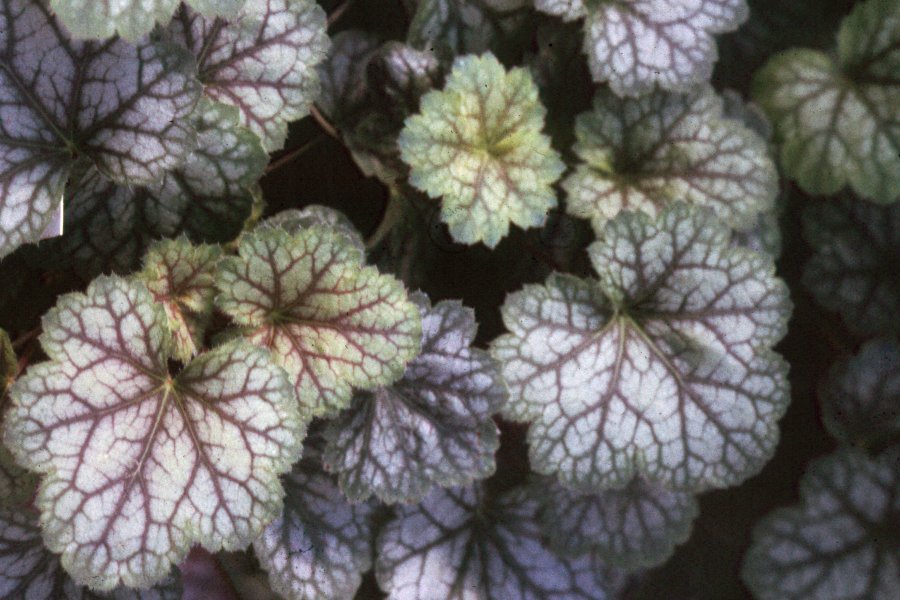
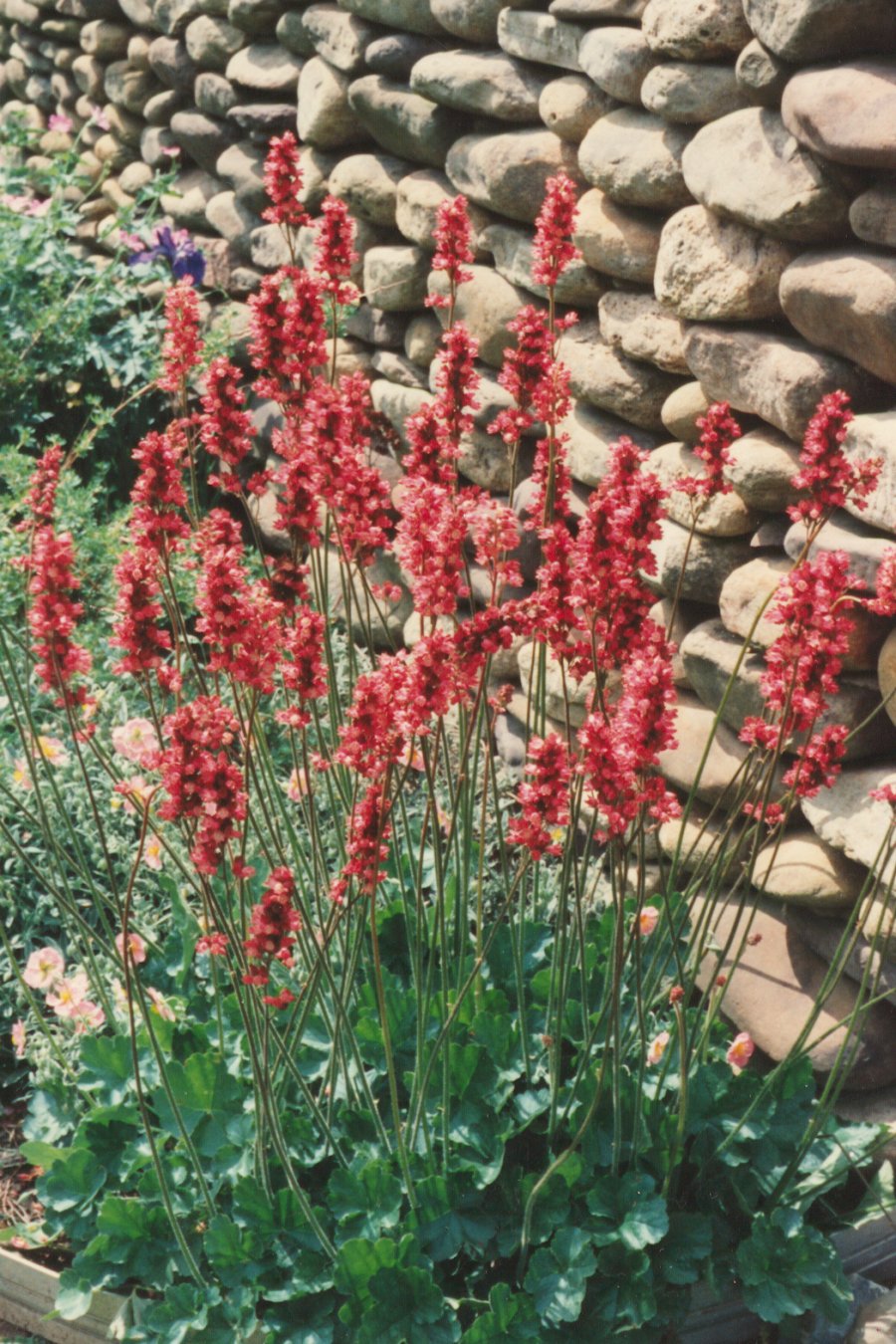
Heuchera 'Oakington Jewel'
[Photo:
sm
med
lg]
[Photo foliage:
sm
med
lg]
This is one of the first, if not THE first named Heucheras. Bred in the
1930's by world famous plantsman Alan Bloom of Bressingham Gardens in the
UK, this gem not only has the beautifully-marbled foliage similar to the
newer hybrids, but the flowers, which on most of the newer hybrids kinda
suck, are a deep shade of reddish pink and are useful as a cut flower.
Heuchera 'Raspberry Regal'
[Photo:
sm
med
lg]
This plant is a great mystery as far as its origins go. It was discovered
by a great plantsman named Larry Englerth up in Hopkins, MI, but he died
before he could share its past with us. Great foliage, but the real treat
is the pencil thick, 18" -24" stems of Raspberry-colored, sterile flowers
that last for weeks and weeks.
Heucherella 'Bridgette Bloom'
Heucherella 'Rosalee'
Hexastylis arifolium
[Photo:
sm
med
lg]
Huge, philodendron like arrow-shaped leaves with variable patterns of silver
markings. Quite a dramatic shade loving plant. This native evergreen ginger
has upright jug like flowers in great numbers when the clump matures to
a diameter of 6-8". Height is also about 6"-8".
[Article: Walking Gingerly through the Woods]
Hexastylis europaeum
[Photo:
sm
med]
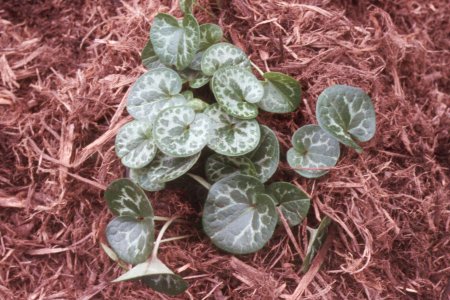
Probably better known as Asarum europaeum, and probably the easiest
of all the "Evergreen Gingers" to grow. Its glossy evergreen foliage bears
adorable little cup like flowers in the early Spring. Makes a good-sized
clump quickly and will self seed itself into an attractive colony in just
a few years. [Article: Walking Gingerly through the Woods]
Hexastylis shuttleworthii
[Photo:
sm
med
lg]
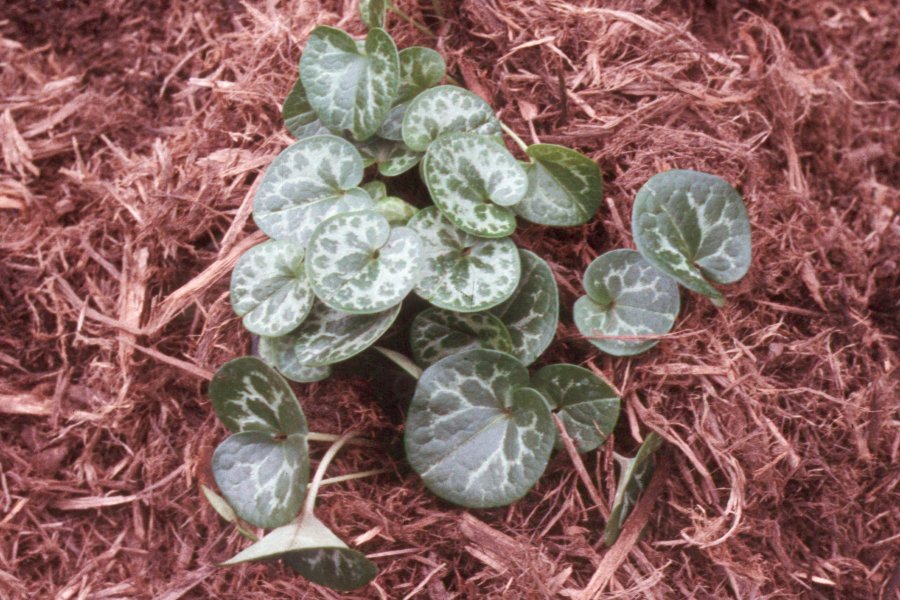
"Shuttleworth's Ginger" is an
East Coast species with variable, roundish sometimes cordate
foliage, beautifully-marbled with silver veining. In early Spring its center
is filled with unique, darkly marbled cup like flowers.
[Article: Walking Gingerly through the Woods]
Hexastylis splendens
[Photo:
sm
med
lg]
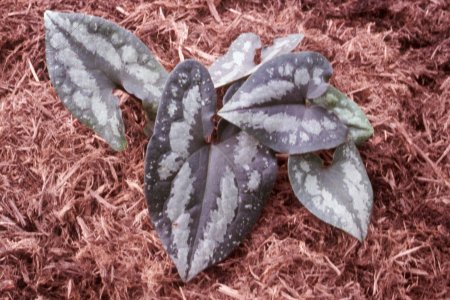
If the dramatic 7" long, 3" wide silvery mottled foliage wasn't enough,
wait till you see the beautifully bizarre silver dollar sized flowers.
A very prolific rhizomatus spreader, this plant brightens up the shade
and is a real conversation starter in any garden.
[Article: Walking Gingerly through the Woods]
Hexastylis virginica
[Photo:
sm
med
lg]
Round, almost cordate, tough, leathery silver streaked and mottled evergreen
foliage make this native ginger stand out in the shade garden. Quick to
make a nice 8"-12" clump in the deepest of shade. Interesting little flowers
in early Spring. 3"-6" in height.
[Article: Walking Gingerly through the Woods]
Hosta laevigata
[Photo:
sm
med
lg]
Recently discovered in Korea, this species was selling for $200 in 1996.
The clone that we are producing was selected by George Schmid, the man
who literally wrote the book on Hosta. It is currently sold out at Naylor
Creek Hostas on the West Coast, where it was selling it for $75.00. Now
just because a plant is expensive, it doesn't always hold true that it
has garden merit. Hosta laevigata, however, does! The undulation on
its long strapping, glossy leaves alone make this species very desirable.
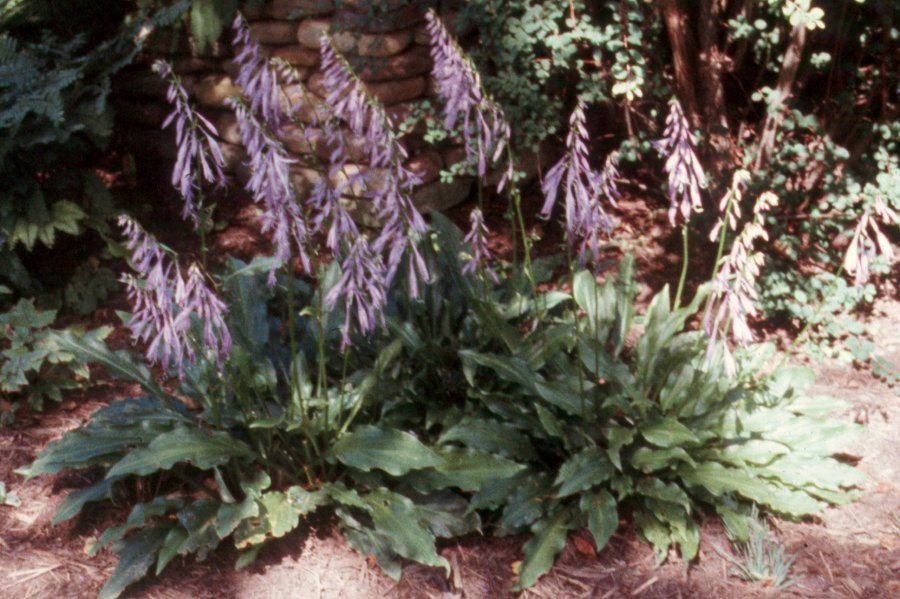
It forms a large display very quickly and produces many stems of star like,
violet flowers. We are pleased to be the first grower to make this wonderful
plant available and affordable.
Hosta 'Pauls Glory'
Hosta 'Pacific Blue Edger'
Hosta 'Stiletto'
Hosta ventricosa
Probably the first species of Hosta to be introduced into the United States
back in the mid 1800's.
Hosta 'Vera Verde'
Hydrastis canadensis
Hymenocallis occidentalis
Hypoxis hirsuta
[Photo:
sm
med
lg]
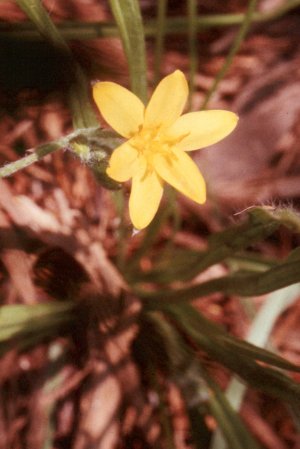
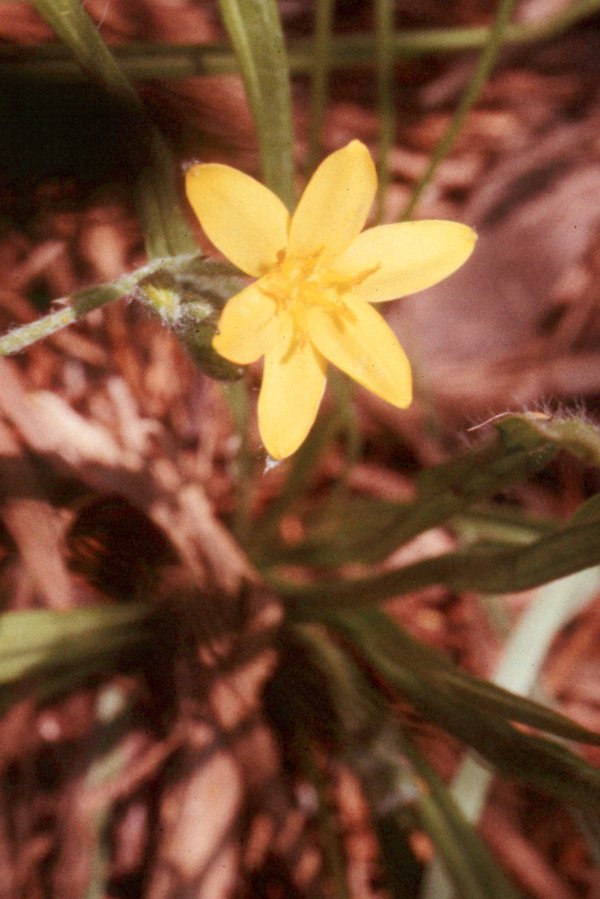
Dainty, dime- to quarter-sized, primrose yellow Amaryllis type flowers over
hirsute grass like foliage on 6"-12" plants. Full sun to part shade. Flowers
in early Summer and then sporadically throughout the growing season.
Hystrix patula
I'd read about this wonderful ornamental grass for the shade
in several books, but it wasn't until Dale Hendricks of North Creek Nurseries and I were
hiking the mountain on my farm that I found out that it was growing all
over my woods.
Iris cristata
[Photo:
sm
med
lg]
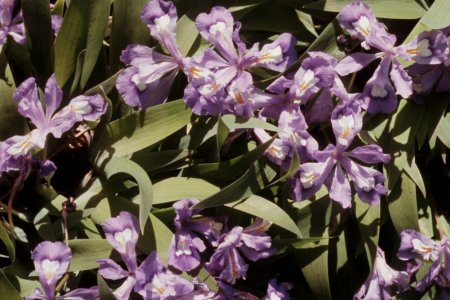
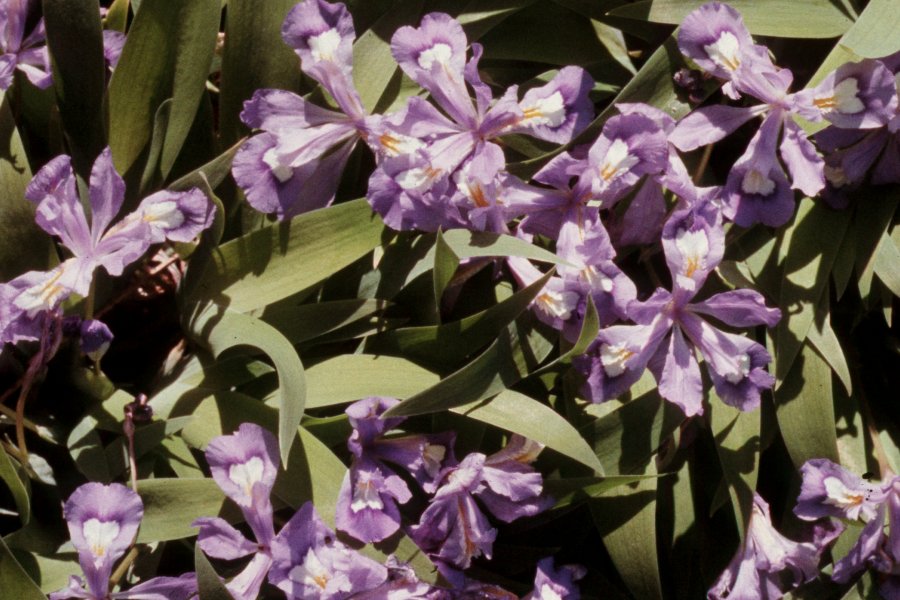
The
native "Crested Iris" forms a tight mass of ground covering Iris foliage
in part sun to full shade. I've never seen a plant with such variable colored
flowers. From light pale blue to the deepest almost purple color. Blooms
last quite a while on short (3"-6") plants. Several named cultivars exist,
but our selections provide a range of the entire spectrum of available
colors.
Iris foetidissima
Iris foetidissima 'Albo fructa'
[Photo:
sm
med
lg]
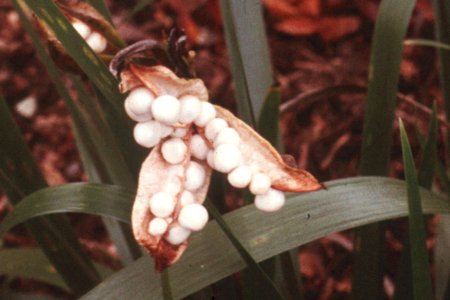
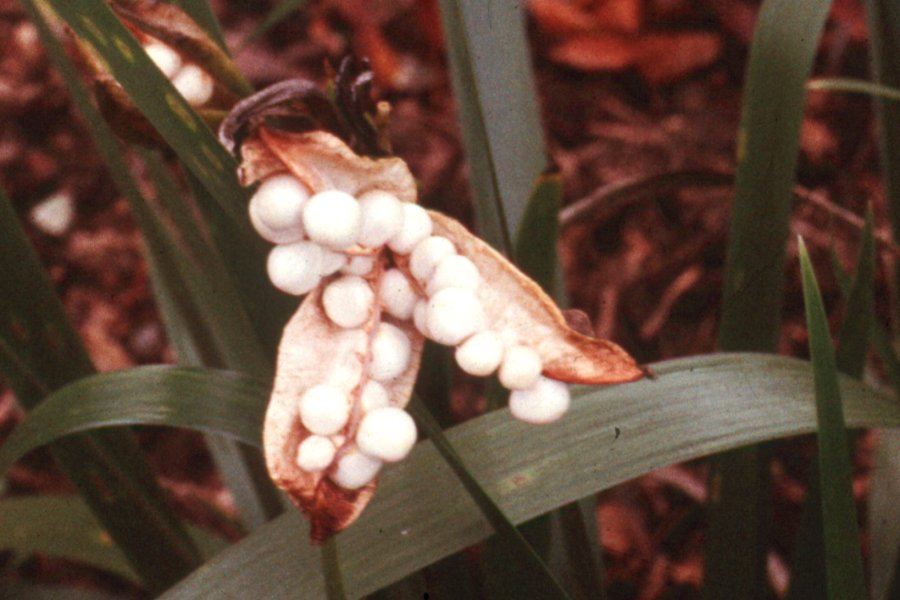
Awesome, huge, alabaster white berries in split open upfacing triangular
seed pods instead the usual red ones. Very vigorous grower. 8"-12" tall.
Full sun to full shade, this plant is very easy to please.
Iris foetidissima variegata
Iris japonica 'Aphrodite'
100% stable variegation
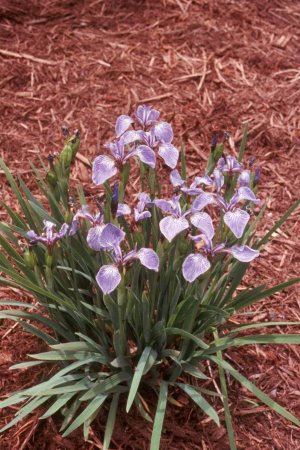
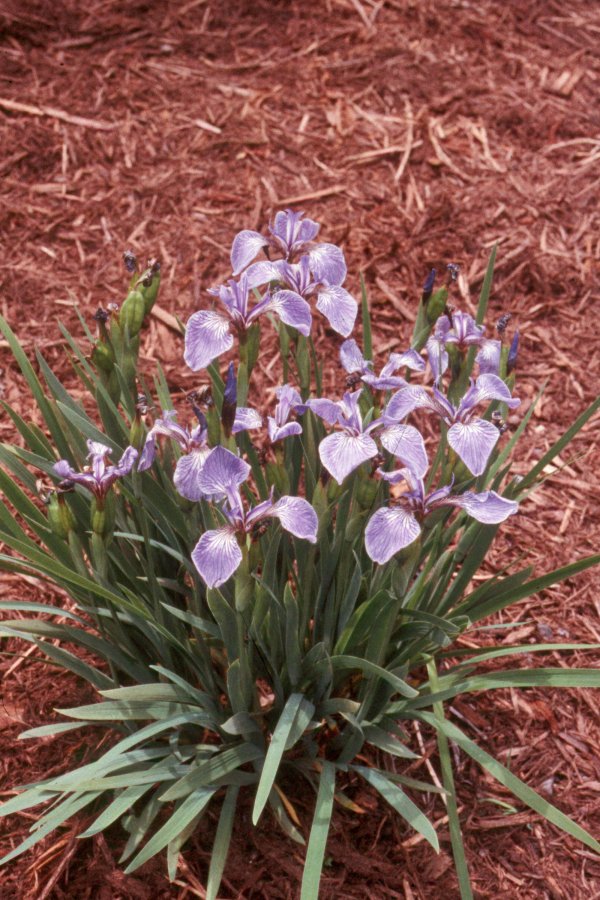
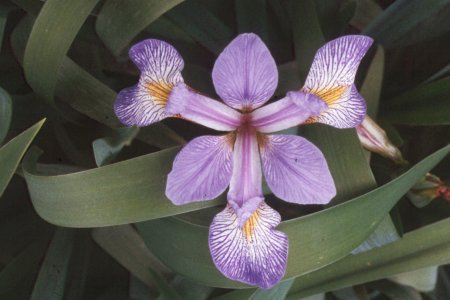
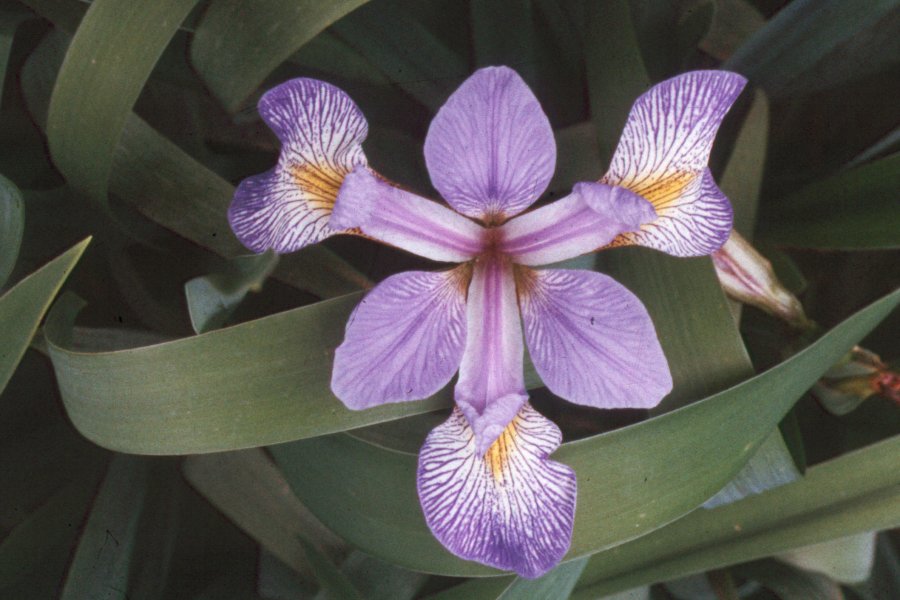
Iris setosa
[Photo:
sm
med
lg]
Iris verna
Iris virginica 'Tetraploid Form'
[Photo:
sm
med
lg]
What a monster plant,
a 4" pot makes a 12"-18" clump in a year with 3-6 new full size plants.
In early Summer, a bounty of delicate blue, slightly fragrant flowers are
produced in copious quantities and last a while they do as they are sterile.
Isopyrum biternatum
Somewhat similar to Anemonella thalictroides and flowering about the same
time (early Spring). Flowers somewhat resemble Hepatica, no surprise here
as they are members of the same family, Ranunculaceae. It's about 3-6"
tall and more delicately dissected than
Anemonella thalictroides. It prefers a somewhat moist soil and part to full shade.
Jeffersonia diphylla
[Photo:
sm
med
lg]
Named
in honor of Thomas Jefferson, third president of the United States, this
early Spring flowering plant has charming white, ephemeral flowers and
set a unique seed pod that resembles a little hooded pouch. The plant itself
however is not ephemeral at all and provides great foliage in part to full
shade all Summer. The common name is "Twinleaf" because of its attractive
double leaf structure. Plants are moderate( 12-18") in height
and will soon form a colony from self seeding.
Jeffersonia dubia
Juncus effusis spiralis
What a novel little cutie. This form of Juncus has the tightest little
coils of wiry foliage. It is a moisture loving plant and will do well around
a pond in a bog or in good rich, moist garden soil.
Kalimeris yomena Aurea
Very stable variegation on this 6-12" tall Aster relative. Kind of
aggressive in full sun, but by no means a problem. In late Summer,
lavender-blue Aster-like flowers make a stunning appearance.
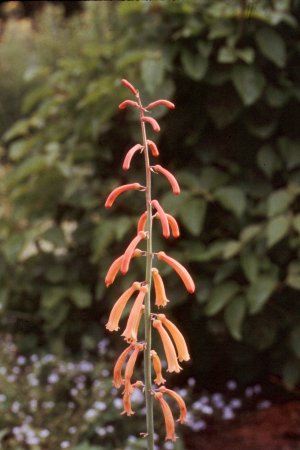
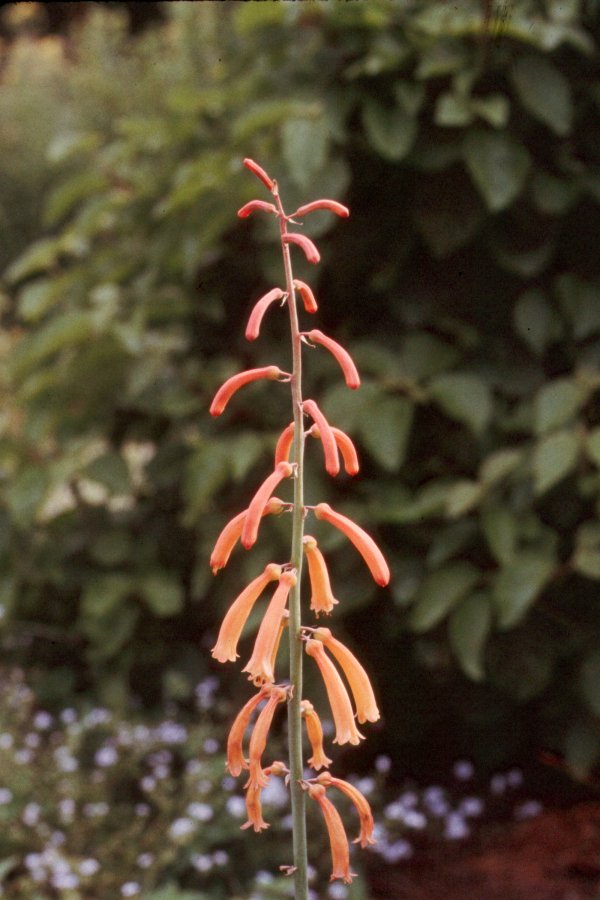
Kniphofia thompsonii snowdenii
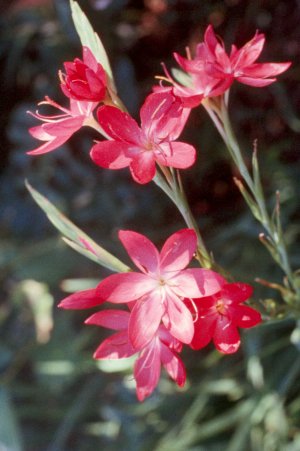
[Photo:
sm
med
lg]
Even my bulb hero, world renowned expert, Brent Heath, was fooled by this
unusual plant. He thought it was an undiscovered Lachenalia or Watsonia
species. It is a rhizomatus species from South Africa that sports attractive
foliage, but the flowers, oh my, 5 to 6 foot stems of weeping pale orange
trumpets about 1" apart. Quickly spreads to form a stunning display.
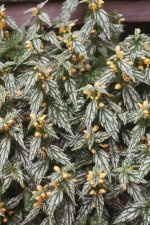
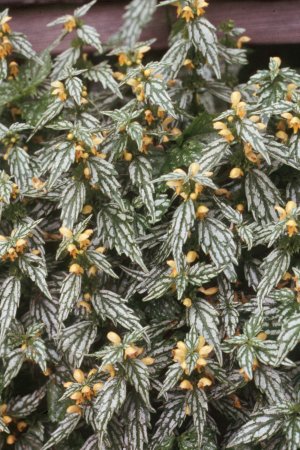
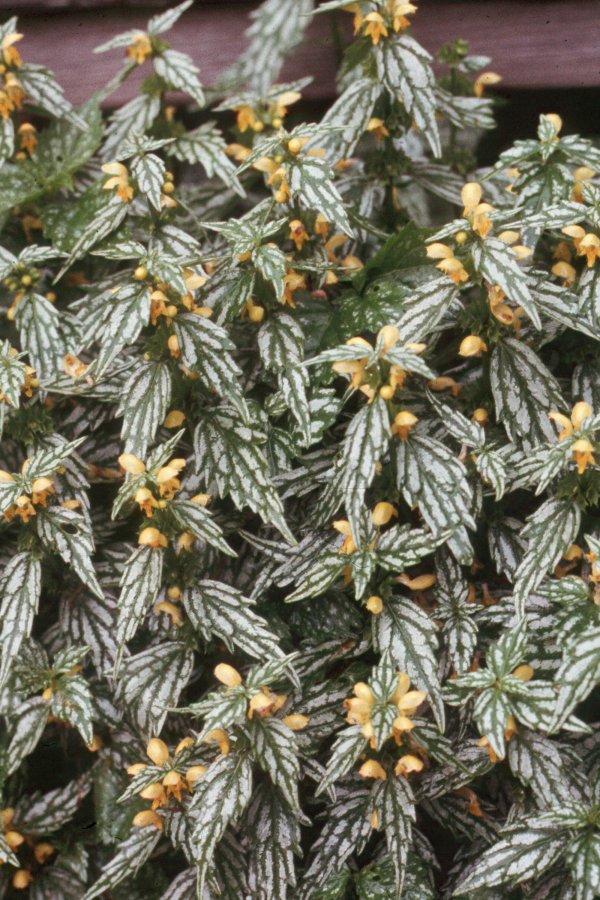
Lamiastrum galeobdolon 'Hermann's Pride'
[Photo:
sm
med
lg]
Silvery mottled
foliage with bright yellow flowers in early Spring make this mint relative
a very useful ground cover. It will fill in an area quickly in full shade
to full sun and has never gotten out of hand. I have it sprawling out from
under a bench and it looks great.
Liatris pycnostachya alba
The pure white form of a species
native to ???
Liatris scariosa
Ligularia sachalinensis
[Photo:
sm
med
lg]
Lilium superbum
[Photo:
sm
med
lg]
Lindera benzoin
Lobelia cardinalis
Named
for the fact that the shape and color of the flowers resemble the miter
of a Cardinal. A moisture loving plant that occurs naturally along moist
stream beds. It'll do just fine in average garden soil and flower brilliantly
in late Summer on 16-60" stems. In the garden of Kathleen Kust,
a Washington, DC area Landscape designer, I've discovered a colony of reds
to pinks to pure white. The pure white clone appears to have much larger
flowers than the species and we currently have it in propagation. In addition,
we are growing seeds from plants within the colony to select a complete
range of colors from red to white. Stay tuned folks.
Lobelia siphilitica
Formerly reputed to be a cure for Syphilis, these tall, blue late Summer
flowering plants make an interesting addition to the middle of the herbaceous
border. Full sun or part shade, they do well in average to moist garden
soil. 12-24" tall.
Lobelia 'Compliment Scarlet'
Lonicera sempervirens 'Holbrook'
[Photo:
sm
med
lg]
Luzula multiflora
Forming tight, dense 6" clumps
very quickly, this wood rush would be a great garden addition even if it
didn't sport a bouquet of soft, fluffy chestnut brown flowers in late Spring.
Lysimachia ciliata atropurpurea
[Photo:
sm
med
lg]
Lysimachia clethroides
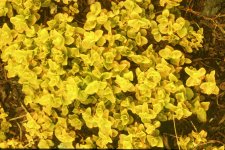
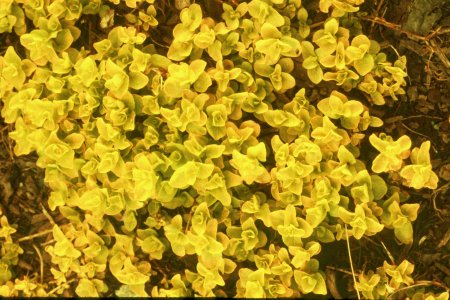
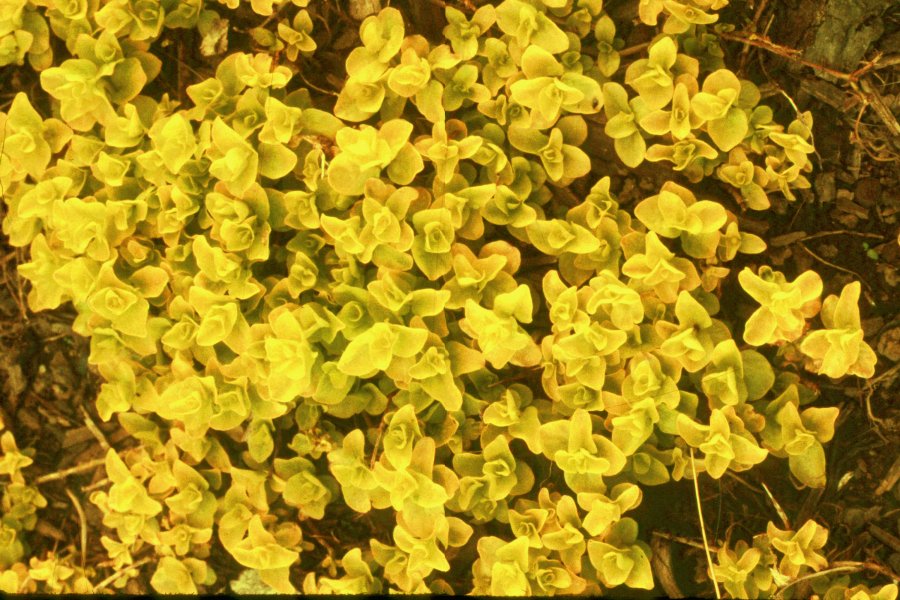
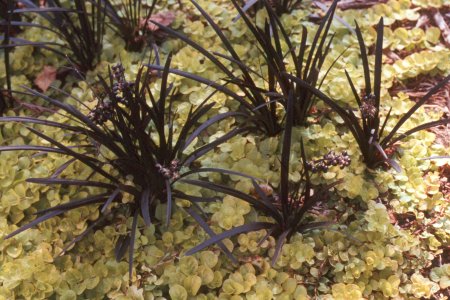
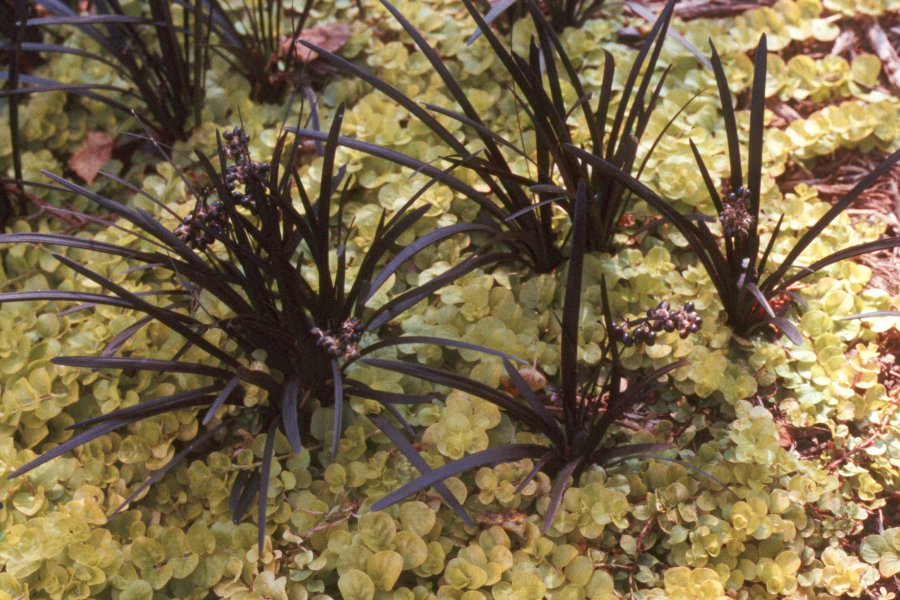
Lysimachia nummularia aurea
[Photo:
sm
med
lg]
One of my favorite ground covers. I use its bright yellow foliage as a foil for
Ophiopogon planiscapus nigrescens and things like blue Hostas.
It's quick to fill in an area, but by no means invasive.
Maianthemum canadense
[Photo:
sm
med
lg]
Sometimes
referred to as "False Lily of the Valley" for its diminutive resemblance
to its namesake. Only about 3-6" tall and flowering in mid Spring
with cute little white flowers. Full shade to part sun. Stoloniferously
forms a nice colony.
Marshallia grandiflora
[Photo:
sm
med
lg]
[Photo flower:
sm
med
lg]
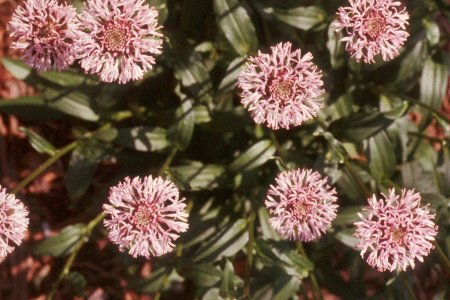
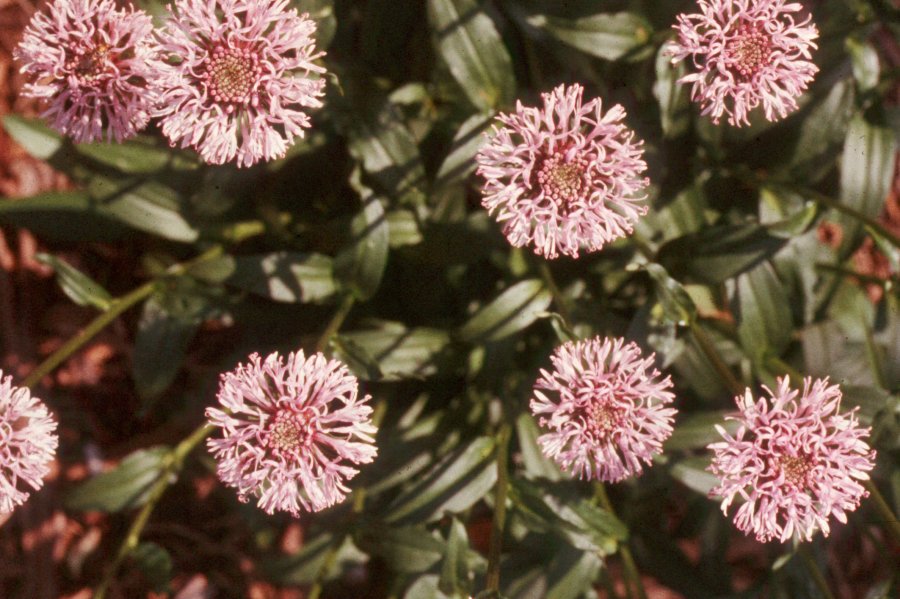
Deep pink silver dollar-sized flowers with black anthers over luscious
foliage on a plant that is so rare that its on the federally endangered
list. I've grown it in full sun and in full shade for years and it always
performs well. It seems to favor the sunnier location a tad. Easy to propagate
from seed or division. There are several other Marshallia
species that I am evaluating and hope to introduce shortly.
Matteuccia struthiopteris-
The Ostrich Fern as it is commonly known is probably one of the tallest
growing ferns that occurs naturally in the Eastern US. It's tall, dark
green fronds can reach up to 6 feet in the wet marshy soil that it calls
home in the wild. In the garden, it usually reaches 4 to 5 feet. It grows
well in part shade top full sun and spreads rather quickly by underground
rhizomes.
Mazus miqueliana
A white flowered species similar in culture, size, shape and form to the
species listed below.
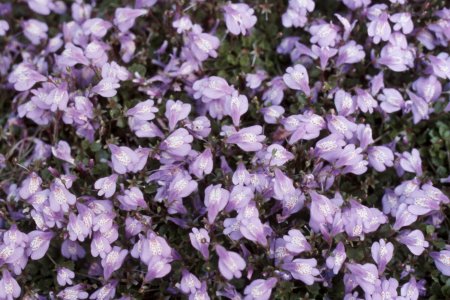
Mazus reptans
[Photo:
sm
med
lg]
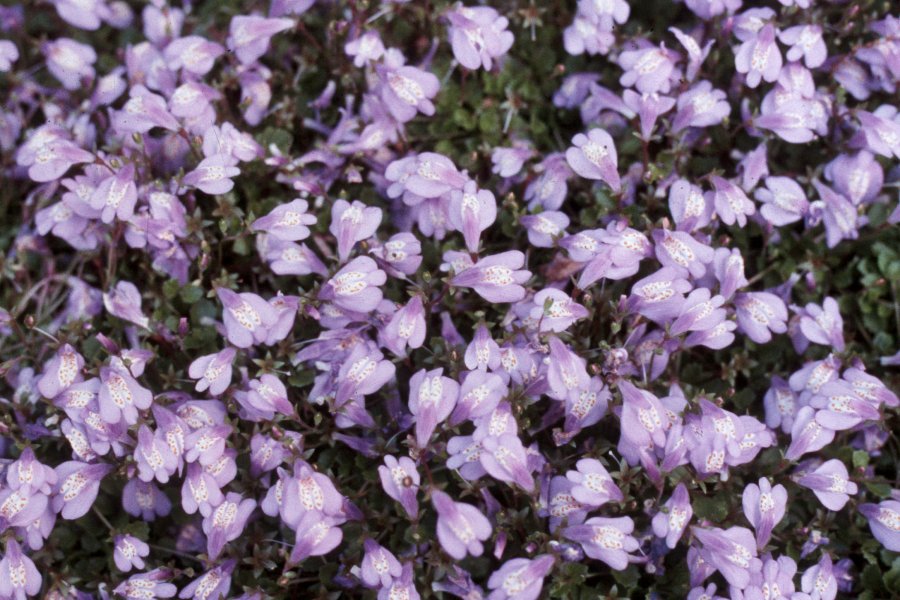
It's hard to describe the interesting shape and coloration of these unique
flowers with purple speckles. There's really nothing to compare
them to. A quickly spreading ground cover for sun or shade. Fast but not
invasive. Flowers in late Spring to early Summer.
Meconopsis cambrica
Medeola virginiana
[Photo:
sm
med
lg]
"Indian Cucumber Root" is quite the appropriate common name for this Liliaceae
plant. I can verify with first hand knowledge that the small white fleshy
tubers really do taste like cucumbers. I love how the foliage whorls around
the stem in layers, increasing in number as the plant matures. Easy to
grow in full shade to part sun. Small yellowish green flowers produce black
berries in the autumn that look really cool over the yellowing foliage.
8-12" tall, moist woodland conditions.
Meehania cordata
[Photo:
sm
med
lg]
One of the coolest little ground covers. Even though its in the Lamiaceae
family, its not aggressive or invasive. Dark green, slightly glossy, 1"
cordate leaves are somewhat evergreen. In the early to mid Spring, lavender
1" trumpet like flowers persist over a long period.
One of its greatest merits is that it will practically grow in the dark.
This makes
it especially useful in those foreboding dark corners of the garden where
you haven't been able to sustain any plant life.
Mertensia virginica
[Photo:
sm
med
lg]
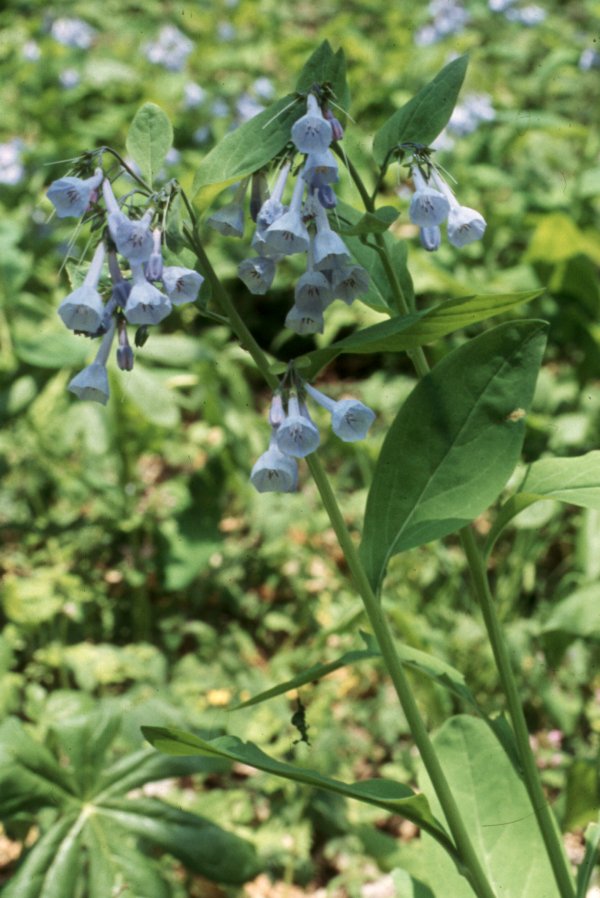
Heralds of Spring, its pink buds open into beautiful flowers in an indescribable
shade of pale blue and make a wonderful mass if you plant them in a colony.
Easy to grow and quick to flower, but also quick to depart. Best interplanted with ferns that come up a little later to fill in the void. Full
shade to part sun, they get up to about 12-24".
Mitchella repens
An interesting evergreen groundcover that has pairs of dimorphic (dissimilar)
white flowers united at the base and bear red berries in the Autumn. The
4-12" trailing stems root at the nodes in moist rich soul and
produce a mat like groundcover. The common name "Partridgeberry" comes
from the fact that small birds such as partridges eat the berries, duh?
Oenothera 'Cold Crick'
[Photo:
sm
med
lg]
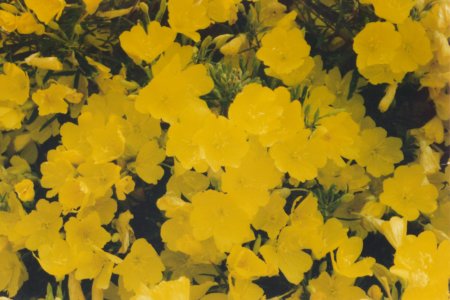
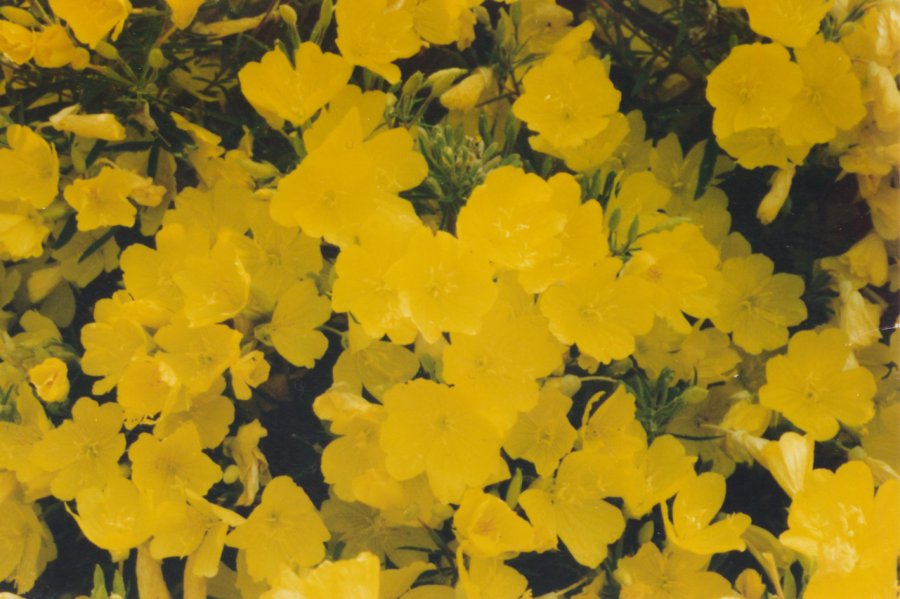
Brilliant yellow, day blooming flowers are so prolific that you can't even
see the plant underneath them. This dwarf, non invasive, native "Evening
Primrose" was discovered by Polly Rowley at her Middleburg VA, Cold Crick
Farm. It forms a clump about 8-12" in diameter and has the most
adorable tiny leaves. It has all of the merits of a well-behaved useful
garden plant in a genus of usual misfits.
Omphalodes verna
Ophiopogon 'Jaburan'
Ophiopogon 'Kisima Fukiauma'
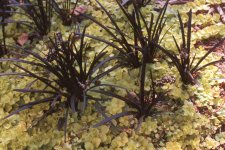
Ophiopogon planiscapus nigrescens
[Photo:
sm
med
lg]
Smooth black lily-like foliage flows gracefully from this interesting little
plant. Looks great in the front of the border and when underplanted with
Lysimachia nummularia aurea. 3-6" tall, full sun to part shade. Comes
70-80% true from seed.
Origanum vulgaris aurea
Origanum 'Herrenhausen'
Origanum'Hopley's Purple'
Origanum 'Wellsweep'
The stable, uniform variegation on this somewhat prostrate form of Oregano
brighten up the front of a sunny border or rock garden. It prefers well
drained, but not too dry soil.
Ornithogalum umbellatum
Some
folks consider this visitor from Europe and naturalized bulb, a weed, but
I've always found it to be well-behaved in my garden. Its 4" to 10" tall,
supple grass-like foliage makes a nice clump and the starry white flowers
are always welcome in mid to late Spring.
Osmunda cinnamomea
Ahhhh, the Osmunda gang, my favorite genus of ferns.
Osmunda claytoniana
Osmunda regalis
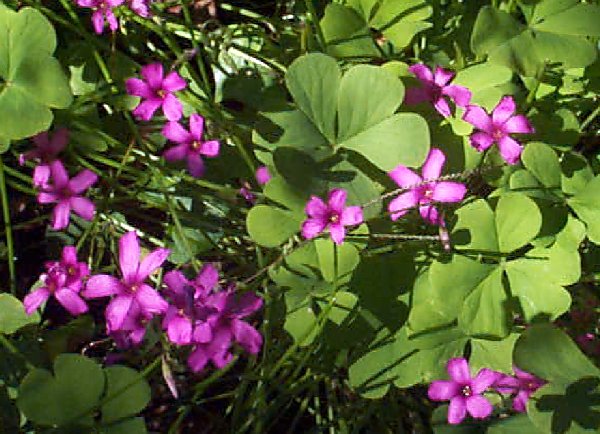
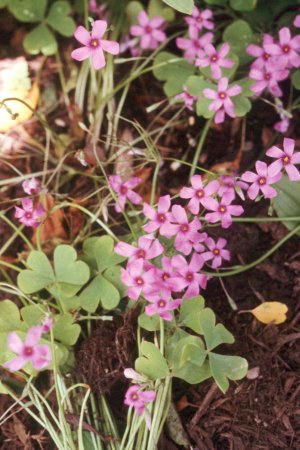
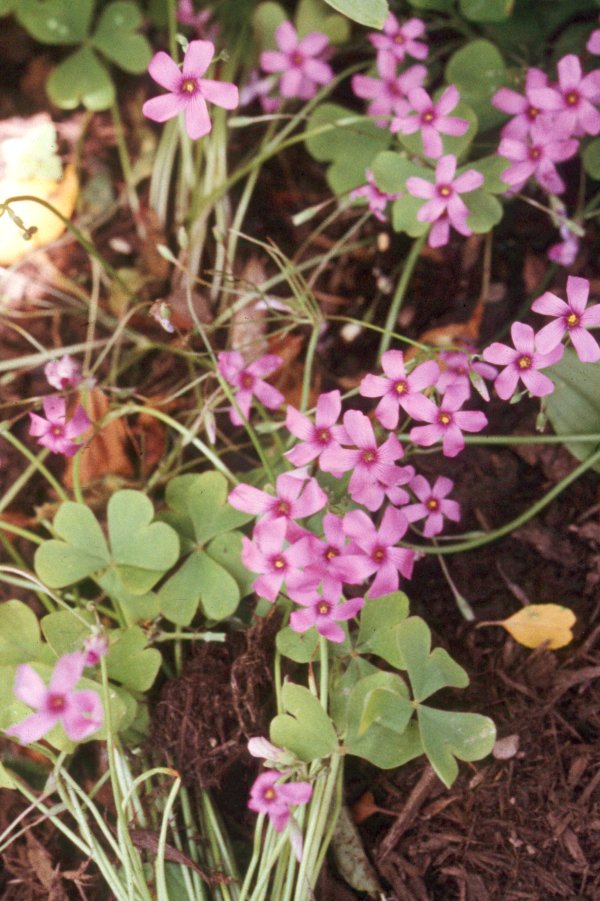
Oxalis violaceae
[Photo:
sm
med
lg]
Oxalis violaceae alba
Pachysandra procumbens
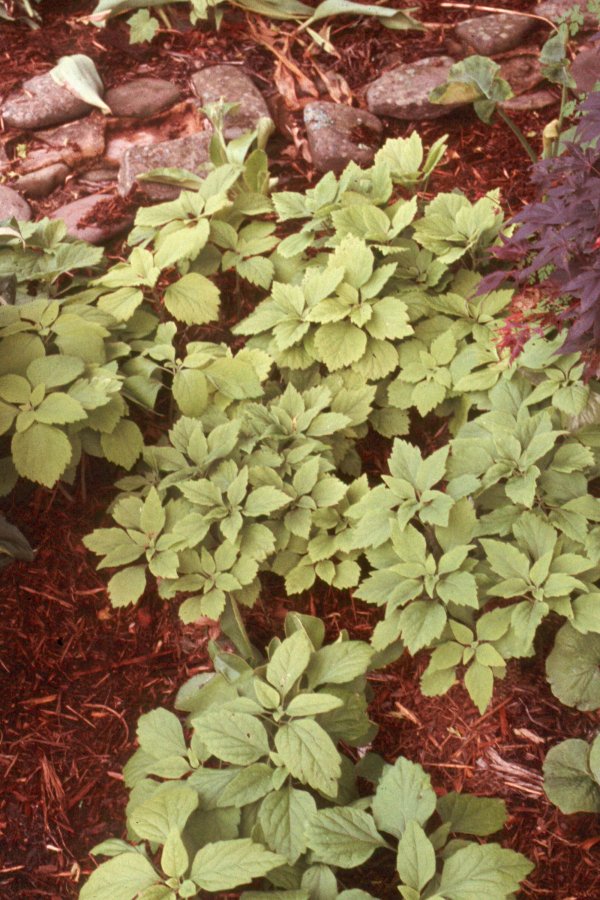
[Photo:
sm
med
lg]
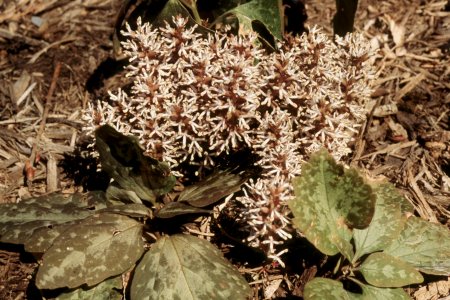
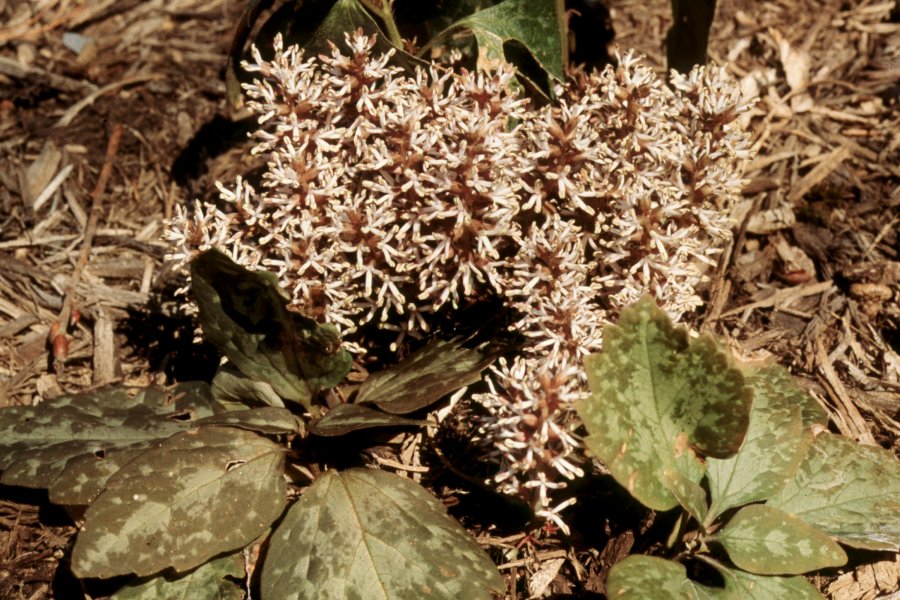
I could go on for miles here about my favorite groundcover for the shade.
This plant for all seasons has the most interesting fragrant, white spikes
of flowers in early Spring and light, almost olive-green foliage all Summer.
[Photo of foliage:
sm
med
lg]
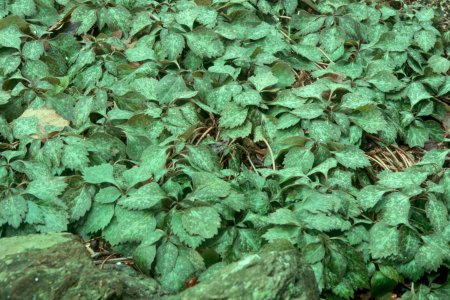
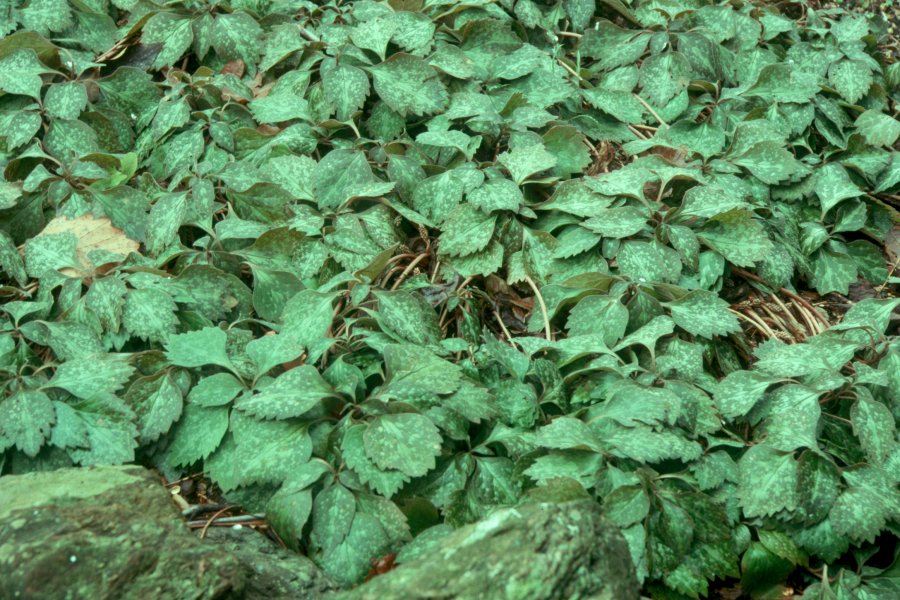
Virtually untouched by insects and disease, it begins to pick up a silvery
sheen by early Autumn and by the middle of Autumn, look out, every plant
has a different pattern of the most brilliant silvery mottling.
[Photo of fall foliage:
sm
med
lg]
Not at
all invasive like its Asian cousin.
Pachysandra terminalis
It slowly
makes a very distinct and sophisticated appearance in any garden. Great
around trees, or alone in the border or bed. [Article:
An exception to a rule]
Pachysandra terminalis variegata
Not at all invasive like its green brethren, and extremely
stable in its coloration. A slow growing ground cover with medium
(4" to 6") height and texture.
Panax quinquefolius
[Photo:
sm
med
lg]
"Ginseng" is quite easy to grow in light to deep shade. It's quite an attractive
ornamental plant. The dark green, palmately divided foliage whorls around
its stout stem. In early Spring it produces an umbel of greenish/yellow
flowers that turn to deep ruby red berries as the seasons head toward Autumn.
Plants grow from 6" to 18" tall.
Peltiphyllum peltatum
[Photo:
sm
med
lg]
This native of the Pacific Northwestern parts of the US is one of the largest
foliage plants that we can grow in our temperate climate. Even before the
huge foliage emerges, large drumsticks of pink flowers appear. Appreciating,
but not requiring moist soil, this plant will make a massive clump 3 feet
tall by 3 feet wide in no time at all.
Penstemon 'Ruby Tuesday'
[Photo:
sm
med
lg]
OOOPS, somebody made a big mistake and it tweren't me. Many of our unusual
introductions come from seed exchanges from the many societies that we
are members of. When I read the description of Penstemon eriantheros, a
West Coast native in the Penstemon Society Seed Exchange List, it piqued
my interest. Turned out to be the darkest ruby red selection of Penstemon digitalis
that anyone has ever seen, almost black! And the flowers, HUGE, white with
a bluish blush. Plants average 18"-24". Very easy to grow.
Phlomis sp.
[Photo:
sm
med
lg]
I collect
the seeds for this strain from a bed where several species i.e.
P. fruticosa,
P. samia,
P. russelliana, and
P. orientale grow. I suspect that
there is also some interspecific shenanigans going on as the resulting
seedlings produced are extremely vigorous and make an impressive display
of 24" - 36" candelabras with several tufts of soft yellow flowers ringing
the stem in early Summer.
Phlox buckleyii
Phlox divaricata
[Photo:
sm
med
lg]
Fragrant flowers in varying shades of blue are an early Spring treat in
the woodland garden. There are several named forms of this plant, but I
prefer the diversity of the species. Plants are about 6" to 18" inches
tall and can take part sun to full shade.
Phlox 'Jeana'
Phlox 'Morris Berd'
Now here's a great plant surrounded by a great controversy that I haven't
had the time to sort out. All I know is this Phlox is as wonderful as the
person whose honor it was named for, my friend Morris Berd, a gentleman
and scholar who gardens for over a half century on 17 acres in Media PA.
The large pink flowers on this 12-18" plant are stunning. The
plant itself is trouble free and has no powdery mildew or any other disease
or insect problems. The controversy stems from the fact that Charles and
Martha Oliver of Primrose Path Nursery in Scottdale Pa and Don Hackenberry
of Appalachian Wildflowers in Reidsville Pa, all of whom I love, admire,
respect and revere, disagree as to the species of the plant. The Olivers
insist on
Phlox pulchra and Hackenberry says
Phlox glaberrima
I ain't getting in the middle of this
one. I'll keep you posted as the dust settles. But whatever the name is,
this is certainly a plant well worth growing.
Phlox stolonifera
Again, a Phlox species that's had many wonderful cultivars named over the
years. We provide the straight and not so variable species with early Summer
blooming, deep pink flowers. I don't know where people have discovered
all the different colors, ranging from pure white to purple, because all
the colonies that I've cruised here in the mountains are identically colored.
It spreads along the ground by stolons and plants its little rosettes here
and there. Flowers stems are about 6" to 8" tall.
Phuopsis stylosa
[Photo:
sm
med
lg]
In the Rubiaceae family and closely related to Galium is this indispensable
ground cover. A Mediterranean plant, all of the books that I've read say
to give it hot, dry baking soil, but I've been growing it in a rich, moist,
shady bed for over 10 years. Atop each of the 8"-16" ferny type fronds
is a large cluster of medium pink flowers in mid Summer and sporadically
thereafter. [Photo of flowers:
sm
med
lg]
Pleioblastus distichus 'Okanazusa' ???
Pleioblastus distichus variegata
Podophyllum peltatum
Polemonium paucifolia
[Photo:
sm
med
lg]
Fernlike in foliage and very delicate. Bright yellow trumpet like flowers
that are a whopping 2-4" long. Plant height is 6-12". Readily sets
seed for future generations.
Polemonium van Bruntiaea
Polemonium yezoense
[Photo:
sm
med
lg]
Polygonatum biflorum
Similar to the species described below, but much shorter, only reaching
about 6-36" in height.
Polygonatum canaliculatum
The common name "Great Solomons
Seal" hits the mark with this tallboy. In the perfect location these tall
giants can get raise their heads over 6 feet. Pendulous, greenish-white
flowers produced in early Spring and turn to dark berries as the seasons
flow to Autumn. Part sun to full shade, moist rich soil is preferred for
optimum growth.
Polygonatum 'Grace Barker'
Polygonatum pubescens
Somewhat similar to the above species, but a much shorter stature,
12-36" in height.
Poteranthus trifoliatus
[Photo:
sm
med
lg]
I love the frilly, wispy white flowers on this almost shrub like,
24-36" tall, native plant. It can be found growing in the wild on semi-shady
road banks. In the garden its happy in part shade to full sun and flowers
in late Spring to mid Summer.
Primula 'Barnhaven Mixed'
[Photo:
sm
med
lg]
Without a doubt, the best of
all the x polyanthus primula (a cross between Primula veris
and Primula vulgaris). These strains were developed by Florence
Bellis in Bellingham Washington in the 1920's through the 1950's. When
she retired in the 1950's, she passed along the torch to Jared and Sylvia
Sinclair in the UK, who just recently passed it again to Angela Bradford
in France. The colors, vigor and overall appearance of the plants are beyond
description except to say that the color range covers the entire spectrum.
We grow over 100 of the 600+ strains and offer them as a mix. As time permits,
we will be offering them by color and shade. Plants prefer full shade in
warmer areas of the US, but can take full sun in the North and in the higher
elevations. The plants are evergreen for me and flower very early in the
Spring.
Primula pulverentula 'Bartley's Strain'
A selected strain of Primula
pulverentula, a species in the
Candelabra section of the family Primulaceae.
Very closely related to
Primula japonica, but seems to require less
shade and moisture and produces similar, but larger flowers, (See
Primula japonica below)
Primula 'Copper Kettle'
[Photo:
sm
med
lg]
Our own selection of Primula x polyanthus with the
deepest copper coloring.
The color holds up well over a long period of bloom in early Spring.
Primula japonica
[Photo:
sm
med
lg]
A quite variable species in colors ranging from pure white to deep red
and every color in between. "Candelabra" like stems of whorls of color
are produced in early to mid Summer and can reach heights of 12" to 24"
and taller. Plants require part to full shade and good moist soil. Self
seeding will occur to make a fantastic display.
Primula japonica 'Miller's Crimson'
A selection of the above described species with very deep
Crimson colored flowers.
Primula japonica 'Postford White'
Another selection of Primula japonica with very large, pure white flowers.
Primula pulverentula 'Bartley's Strain'
I've grown
other members of the Proliferae series of the Primulaceae family and they've
all performed well given lots of shade and moisture. Now comes this wonderful
strain of the species pulverentula, that holds up well even under drier,
brighter conditions. From a basal rosette, in late Spring, early
Summer, comes 24"-36" candelabras with 3-8 rings of Primrose flowers in
shades of white, pink, magenta and red and every shade in between. They
will self-sow into a striking communal display over the course of a year
or two.
Primula seiboldii
[Photo:
sm
med
lg]
A cult has formed around these Primroses in Japan and even in the US, a
Society has been formed to disseminate information, trade seeds and share
new strains and cultivars. Probably one of the most carefree Primroses
to grow, I grow it in every imaginable condition from full sun to full
shade and they do equally as well. 3- 6" plants with 12" flowers spikes
of varying colors from whites to soft pinks and everything between. Fun!
Primula seiboldii 'Snowflake'
Primula 'Orange Sunshine'
Primula 'Vivid'
[Photo:
sm
med
lg]
Pulmonaria 'Blue Ensign
[Photo:
sm
med
lg]
Reineckea carnea
Interesting little (3"-6") tall plant in the Liliaceae family. Glossy rich
supple foliage and interesting flesh pink flowers that become cool berries.
Quick to multiply. Can't comment on the hardiness yet as I haven't had
a chance to plant it out. Jelitto and Schacht observe that in order to
survive the Winter, they need a hot dry Summer location to harden off.
This is one of those plants that would be easy enough to pull in a little
piece and grow as a house plant over the Winter just in case.
Rhexia virginica
Curious outfacing pink flowers with large yellow anthers
Rhodea japonica
Rhodea japonica variegata
Rhodea japonica cristata
Rosa glauca rubrifolia
Rubus calcynoides
[Photo:
sm
med
lg]
What a great, impenetrable to weeds, groundcover this Himalayan species
makes. With its stippled, textured, ivy shaped foliage and very vigorous
growth, you'd be hard pressed to find a better plant to cover a large area
quickly.
Rubus odorata
[Photo:
sm
med
lg]
Sanguinaria canadensis
[Photo:
sm
med
lg]
One of the first and showiest of the early Spring bloomers,
"Bloodroot" as
it is called because of its red sap, has 2-3" large, ephemeral
white flowers. Grows well in part shade to full sun and produces a seed
capsule that will spill its cargo around your garden to produce a nice
little colony.
Sanguinaria canadensis 'Multiplex'
The "Double' form of the above described species.
Sanguisorbia tenuifolia atropurpurea
[Photo:
sm
med
lg]
[Photo of foliage:
sm
med
lg]
Virtually no insect, pest or disease problems on this shrub like perennial.
It forms a huge clump about 12" in diameter the first year and doubles
the following year. Height is about 4 feet, extending another foot when
flowering. Native to Korea and Manchuria, it can be found on moist stream
and riverbanks. I've grown it successfully in every type of light and soil
condition. In late Summer its covered with 3" pendulous, dark purple flowers
on 12" wiry stems.
Saponaria 'Max Frei'
Saruma henryi
Sasa japonica
Sasa veitchii
Saxifraga cuscutiformis
Saxifraga
fortuneii 'Beni Fuji'
Wait till you see the
foliage on this baby, somewhat Heuchera like but covered with the neatest
red hairs. Juicy and supple, emerging a light green with purplish tinges
on the margins and then acquiring ruby highlights. In late Autumn, deep
pink 1" flowers with bright yellow anthers appear. Part shade to full sun.
8-12".
Saxifraga micranthidifolia
Saxifraga stolonifera
[Photo:
sm
med
lg]
Saxifraga veitchiana ???
Saxifraga virginiensis
[Photo:
sm
med
lg]
Schizostylis coccinea cvs
[Photo:
sm
med
lg]
I say cultivars because we've mixed
up two of them, 'Sunrise' and 'Oregon Sunset'. A third, 'Big Mama' is safe
and sound. This Iris family member is quick to form a huge clump with very
long, graceful Iris foliage up to 36". It flowers late in the year (Sep
- Oct) with very lovely oriental looking flowers in pinks and reds. If
you can't wait until we sort out the two cultivars, we'll give you a great
deal at your guess.
Scilla 'Excelsior'
Scilla 'Queen of the Pinks'
Scilla scilloides
[Photo:
sm
med
lg]
This Japanese native bulbous plant provides attractive lily like foliage
all the growing season long. In September its 3"-6", rounded spike of deep
pink flowers brighten up its surroundings. Plenty of seeds are set each
season ensuring the development of a large colony. Clumps of bulbs can
also be divided in the early Spring and reset to flower the same year.
Scutellaria altissima
[Photo:
sm
med
lg]
The specific epithet altissima refers to the 12"-24" tall flowering stems
of this curious European native. It has bicolor, purple and white horizontal
trumpet like flowers and will self seed to make a charming little colony
that's bound to evoke comment and conversation.
Scutellaria
indica japonica
The soft, deep lavender trumpets of this plant last for weeks over its
soft 1" cordate foliage. Height is 3" - 6" with 6"- 10" flower spikes.
Very cool!
Sedum 'Autumn Joy'
[Photo:
sm
med
lg]
Sedum 'Cape Blanco'
[Photo:
sm
med
lg]
Small glaucous, very succulent rosettes on wiry little stems make this a great
addition to the front of the border or a rock garden.
Sedum 'Joyce Henderson'
Sedum nevii
Sedum seiboldii
Sedum ternatum
[Photo:
sm
med
lg]
Walking
through these mountains in late Spring, early Summer, you'd think that
it was Winter when you come upon a huge boulder covered in white. It's
not snow, its Sedum ternatum.
Sedum 'Vera Jameson'
Semiaquilegia eclaracata 'Flore Plena'
[Photo:
sm
med
lg]
Dark red, clear, red
wine colored, double flowers with no spurs, hence the genus Semiaquilegia,
instead of Aquilegia. Plants are 8-12" tall with the flower stems shooting
up another 12" or so. Possibly an influence in the genetics of Aquilegia
'Nora Barlow'. If you like Aquilegias and their allies, this plant could
provide blood for some very rewarding breeding.
Shortia galacifolia
Silene virginica
[Photo:
sm
med
lg]
Sisyrinchium 'Devon Skies'
Sisyrinchium convalatum
Sisyrinchium 'Devon Skies'
Sisyrinchium striatum
Smilacina racemosa
Solidago 'Golden Fleece'
Solidago rugosa 'Fireworks'
[Photo:
sm
med
lg]
Spigelia marilandica
[Photo:
sm
med
lg]
Large upfacing bright red trumpets with brilliant primrose yellow centers
in early to mid Summer on 12"-18" stems. Slow to establish, but eventually
forms a lush colony that's bound to be a focal point in any garden.
Spiranthes cernua f. odorata 'Chadds Ford'
[Photo:
sm
med
lg]
No matter how many
of these, one of the easiest plants in the world to propagate, plants we
produce in a year, we always sell out. Imagine a native orchid that has
fragrant white flower spikes in October. [Photo of flower:
sm
med
lg]Although primarily a bog plant,
its perfectly happy in a normal garden situation and very easy to grow.
We have quadrupled production this year and hope to not have to disappoint
anyone in 2000. [Article: A Garden-Friend Native Orchid]
Streptopus rosea
[Photo:
sm
med
lg]
Stylophorum diphyllum
Symplocarpus foetidus
Syneilisis palmata
Tellemia grandiflora
[Photo:
sm
med
lg]
Thalictrum rochebronianum
[Photo:
sm
med
lg]
Tiarella cordifolia
[Photo:
sm
med
lg]
Tiarella 'Oak Leaf'
Tipularia discolor
[Photo:
sm
med
lg]
An adorable woodland native orchid species that asks very little in the
way of attention and gives so much. The common name "crane Fly Orchid"
says it all. In fact the scientific name for the Crane Fly is Tipula. When
in flower, the 6"-8" wiry stems are decorated with orchid flowers that
resemble crane flies lighting on it.
Tolmea menzesii 'Taffs Gold'
[Photo:
sm
med
lg]
Tradescantia
Trautvetteria caroliniensis
[Photo:
sm
med
lg]
When
I first discovered "Tasslerue", I rightly thought that I had stumbled upon
an unnamed Thalictrum species
[Article: Mystery solved on Spring Creek]
Tricyrtis 'Angels Halo'
[Photo:
sm
med
lg]
Tricyrtis 'Miyazaki'
Tricyrtis 'Snow Fountain'
[Photo:
sm
med
lg]
[Photo of flower:
sm
med
lg]
Tricyrtis 'Sharkskin'
Trillium chlorapetalum
Trillium erectum
[Photo:
sm
med
lg]
Trillium grandiflorum
The plants that we are offering for sale are 2-year-old bulblets from rhizome
divisions of our flowering-size stock plants. They are in 2" pots and should
be flowering in about two years. This is the easiest of all Trilliums to
grow and propagate and one of the earliest to flower in the Spring.
Trillium luteum
Trillium nivale
[Photo:
sm
med
lg]
Trillium recurvatum
Trillium sessile
Trillium undulatum
[Photo:
sm
med
lg]
Trillium viride
Trollius laxus
[Photo:
sm
med
lg]
Uvularia grandiflora
[Photo:
sm
med
lg]
Uvularia perfoliata
Veratrum viride
[Photo:
sm
med
lg]
Verbascum chaixii 'Alba'
[Photo:
sm
med
lg]
Veronica 'Water Perry'
[Photo:
sm
med
lg]
Veronicastrum sibiricum
[Photo:
sm
med
lg]
Even if there weren't dense spikes of the coolest shade of lavender flowers
in mid Summer, you'd want to grow this plant for its palmate, whorling
foliage. It's somewhat similar to Veronicastrum virginicum,
described above, but has much more texture and makes a bolder overall
appearance.
Veronicastrum virginicum
Veronicastrum virginicum 'Alba'
[Photo of foliage:
sm
med
lg]
[Photo of flowers:
sm
med
lg]
Viola canadensis
Probably my favorite native Viola. It's a tall grower, 12-18"
and prefers moist shade, but can take a little sun. From the axils of its
deep green, cordate foliage come slightly fragrant, white flowers with
a yellow splotch and deep purple veining late Spring through early Summer.
[Article: Viola in the West Virginia Mountains]
Viola cucculata 'Freckles'
[Photo:
sm
med
lg]
On a pale bluish/purple background, are dark pale/bluish "freckles", that's
the most appropriate way to describe them! A very vigorous plant that will
self seed around happily and come 100% true from seed. Plants do well just
about anywhere and are 6-12" tall.
Viola dissecta
Very attractive, dark green, finely dissected foliage on a 6-12"
plant. Attractive white flowers with blue stripes. Self seeds around gently.
Full to part shade.
Viola hastata
The variable, silvery mottled, arrow-shaped leaves on this low growing Viola
alone, make it a worthwhile addition to any shade garden. And then in mid
Summer you get yellow flowers as a bonus.
[Article: Viola in the West Virginia Mountains]
Viola
labrodorica
If you have
a large space to fill and little patience, plant a few of these around.
The burgundy foliage is a nice contrast with the pale blue flowers and
before you know it, they will seed around and you'll have a Gazillion of
them to give to all of your gardening buddies. 4" to 8" tall, just about
anywhere you plant them will make them happy.
Viola 'Molly Sanderson'
This perennial violet has black flowers, now I don't mean dark purple,
but REALLY BLACK. 3-6" tall, nice foliage. Full sun to part shade.
Viola pedata
[Photo:
sm
med
lg]
You don't have to stretch your imagination a great distance to know why
the common name for this plant is "Bird's Foot Violet". The foliage really
does resemble cute little bird's feet. The flowers are a variable multitude
of sky to deep to royal blues. You must give it good drainage, though. It's
the prefect candidate for a hot, dry sunny location. Blooms in early Summer
and then sporadically throughout the season. Can you say Xeriscaping?
[Article: Viola in the West Virginia Mountains]
Viola rotundifolia
The very first violet to bloom in the Spring, stemless, bright yellow flowers,
chocolate brown stripes on the lower petals. Easy to grow in average soil.
3-6" tall.
[Article: Viola in the West Virginia Mountains]
Waldenstenia fragararoides
Great native groundcover with
strawberry like foliage and bright yellow flowers in early Spring. Full
sun to part shade, no special requirements. Quick to establish with a tight
mat that defies weeds, but by no means invasive or difficult to control.
Xanthorhiza simplicissima
[Photo:
sm
med
lg]
[Photo of foliage:
sm
med
lg]
The only woody member of my favorite
family, Ranunculaceae, is an under story shrub with small but interesting
yellowish brown flowers. Fantastic divided foliage is reminiscent of Cimicifuga.
18"-36" in height, but wait until Autumn, the fall foliage is quite spectacular
with variable hues of purple.
Zizea aurea
[Photo:
sm
med
lg]
Bright umbels of yellow flowers on this native plant. Dark green glossy,
dissected foliage. Height is about 12"-24".
Back to top
 | Home |
About Us |
Specials |
Plant List |
Focus on Hellebores |
Garden Tours |
| Home |
About Us |
Specials |
Plant List |
Focus on Hellebores |
Garden Tours |
| Lectures and Workshops |
Glick Picks |
Ordering |
Request Info |
Email Barry |
Copyright © Barry Glick 1996-2026. All Rights Reserved.
Barry Glick, Sunshine Farm and Gardens
696 Glicks Rd, Renick, WV 24966, USA
Phone: (304) 497-2208
E-mail: barry@sunfarm.com
Last modified February 19, 2020
URL: https://www.sunfarm.com/plantlist/plantlist.phtml